
Author Patricia Raybon’s World War II historical, The Sedalia Code, combines a love story with a code-cracking mystery, while also addressing issues that Black Americans dealt with at the time.
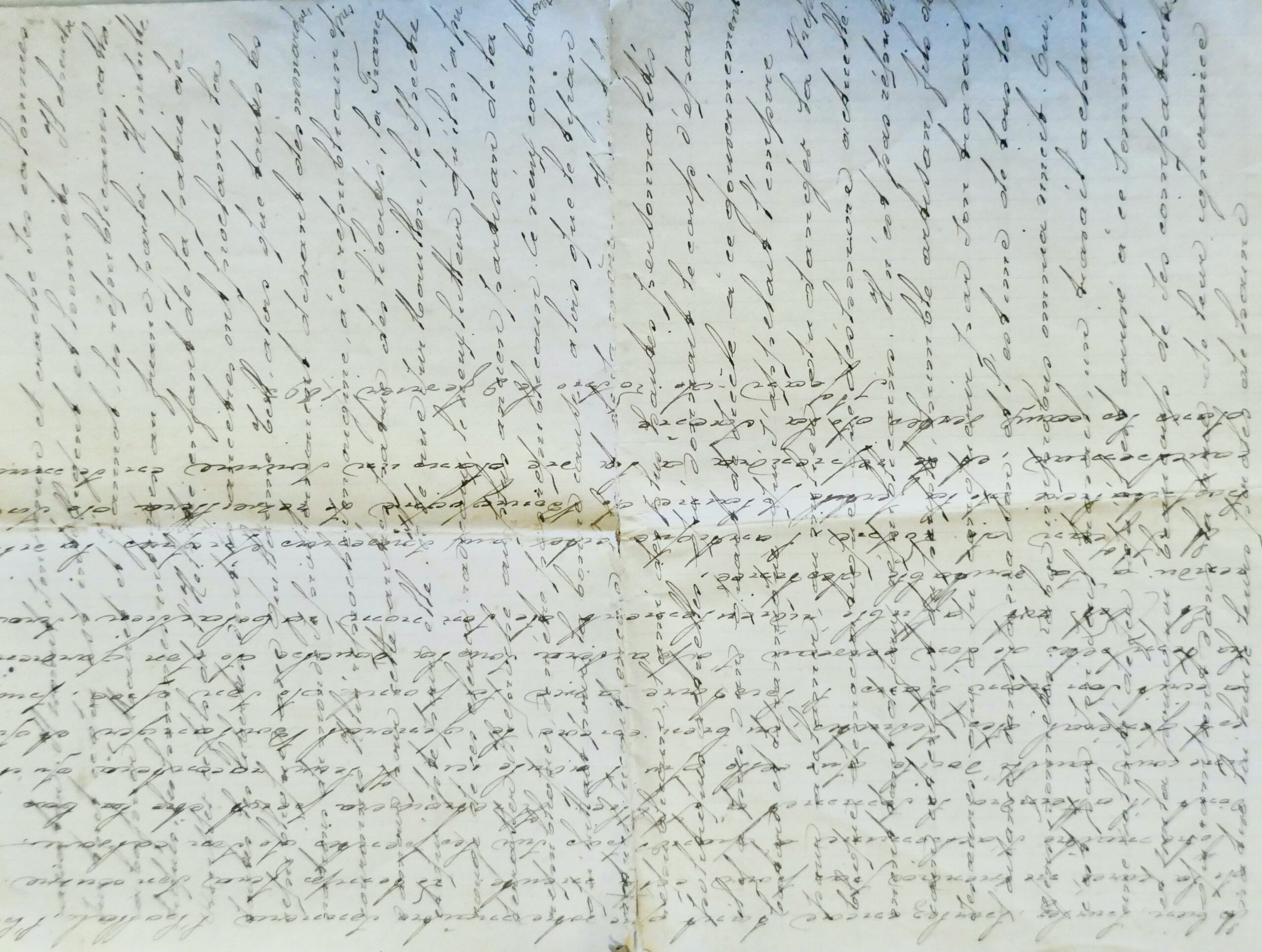
At a prestigious Black finishing school in North Carolina, math teacher Laurette Lowe is asked to look at a cryptic message from an Italian POW by Lieutenant Nev Pierce, who is stationed nearby. That request sets Laurette and Nev on a course to uncover—and stop—a secret plot threatening the country.
In this Q & A with Patricia, she tells us what real-life stories inspired the novel and what themes were important to her to include. Patricia also tells us which Bible verse was integral as she wrote and what she hopes readers will come away with.
If you like what you read, get access to the entire first chapter of The Sedalia Code. Or find your own copy in softcover, e-book, or audiobook at a retailer near you.
How did you come up with the idea for The Sedalia Code? Was there a particular moment or experience in your life that inspired you to write this book?
Two life events inspired my story: my parents’ wartime romance in North Carolina in 1943 and my mom’s working-class fascination with a prestigious Black prep school in Sedalia, a short hour from her home in Durham, the tobacco town. Both elements got my juices flowing. My dad, a young lieutenant, was stationed at segregated Camp Butner, a sprawling US Army camp where 35,000 US soldiers were stationed and thousands of German and Italian POWs were held, almost everybody’s emotions on high. Could I turn these WWII tensions into a story? That’s where I started.
What special messages, themes, or symbols are included in The Sedalia Code? Why are they important to you and to the book’s story?
At its heart, The Sedalia Code is about love and bravery during the pressures of war when life is pounding back. For a poor math teacher like my character Laurette Lowe and her love interest, Lieutenant Nev Pierce, the struggle to decode life and conflict in a culture that says you don’t count meant rethinking all they knew—spiritually and personally—especially while fighting a deadly Nazi threat. So how would Laurette and Nev unravel family hurt, romantic love, and the codes of secret Nazi messages while daring to love the God they hoped loved them back, all during the crucible of war? Those were questions I wanted to explore.
Was there a specific Scripture passage or spiritual theme that guided you while you were writing The Sedalia Code?
The book of Jeremiah shined like a lighthouse when the prophet praised God for his counsel and might, saying, “Ah Lord God! . . . there is nothing too hard for thee” (Jeremiah 32:17, KJV). I’d heard that exaltation in a Sunday school class at my church not long after my husband of 49 years passed while I was halfway through writing the novel. I seized on its promise that God’s wisdom and power are without limit. My character Laurette needed to grasp that uplift, too. A Nazi would try to kill her in this story. She needed to know God’s might. The words also kept me writing. They inspire me to this day.
Who do you think will most enjoy this book, and what do you hope readers will remember long after they’ve finished it?
Fans of historical fiction are already reaching out: “I can’t wait!” I’m also hearing from people whose loved ones were World War II veterans or have other connections to the war and are eager to read Laurette’s story. As we know, everyday people became heroes during that war and they still inspire. Just today, I saw a Goodreads review saying, “I was completely drawn into Laurette’s journey and found myself cheering her on every step of the way.” The war still renders inspiration, suspense, rich personal growth, and riveting surprises, even 80-plus years later. For those reasons and more, I’m thrilled to share this story.

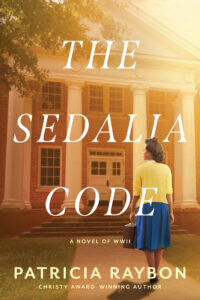
The Sedalia Code by Patricia Raybon
Sedalia, North Carolina, 1943. While war rages overseas, Laurette Lowe faces a more personal battle when she lands a job teaching math at La Porte Academy, a prestigious Black finishing school. Determined to rise above her sharecropping roots, deep family hurt, and the suffocating limits of Jim Crow, Laurette quickly learns that survival and success demand constant vigilance, carefully measuring every step and word to earn her place among the social elite.
A chance encounter with Nev Pierce, a handsome Army lieutenant from nearby Camp Butner, threatens to derail her plans. Though she first dismisses him as an unwelcome distraction, she’s drawn in by his request to decipher a cryptic message passed to him by an Italian POW. What begins as an intellectual puzzle becomes a chilling revelation: details of a Nazi plot to assassinate the US president.
Cracking the cipher, however, only brings a more troubling puzzle. Army officials at the segregated base are unlikely to heed a Black schoolteacher’s warning and Nev could land in serious trouble for involving an unauthorized civilian. With time running out, Laurette and Nev enlist a small circle of allies from the school in a cunning and courageous ploy, boldly risking their futures and lives to stop a deadly threat no one else sees coming.

A writer of faith by day and mystery by night, Patricia Raybon is the Christy Award–winning author of the Annalee Spain mystery series and a devotional content contributor for Our Daily Bread Ministries.
A longtime newspaper journalist, Patricia turned to mystery and suspense fiction during the pandemic with her debut novel, All That Is Secret, which won a Christy Award for first novel and was picked by NBA All-Star Steph Curry as a selection for his book club.
The sequel, Double the Lies, won the 2024 Christianity Today Book Award for fiction. The third in the series, Truth Be Told, was a New York Times Book Review pick among “4 Great Fictional Detectives.”
Winner of multiple awards for newspaper feature writing, Patricia worked a dozen years at two Denver papers—The Denver Post, where she was Sunday Contemporary Magazine editor, and the Scripps Howard Rocky Mountain News, where she was a magazine feature writer.
Midcareer she taught print journalism for fifteen years, commuting many miles to the University of Colorado at Boulder to teach bright, hardworking graduate and undergraduate students, many of whom still consider her a colleague and friend.
Patricia’s personal essays have been published in the New York Times Magazine, Newsweek, USA Today, USA Weekend, Guideposts, In Touch magazine, Christianity Today, the Washington Post, and for National Public Radio’s Weekend Edition. She has also authored nonfiction books including memoirs and devotionals. Patricia was inducted into the Colorado Authors’ Hall of Fame in 2021.
A lifelong Colorado resident, Patricia lives near Denver. She and her family enjoy movies, popcorn, college hoops, and historical dramas and mysteries on Masterpiece on PBS. Join her Readers’ Circle at patriciaraybon.com and get her free e-download, “The Busy Person’s Guide to Hearing God.”