
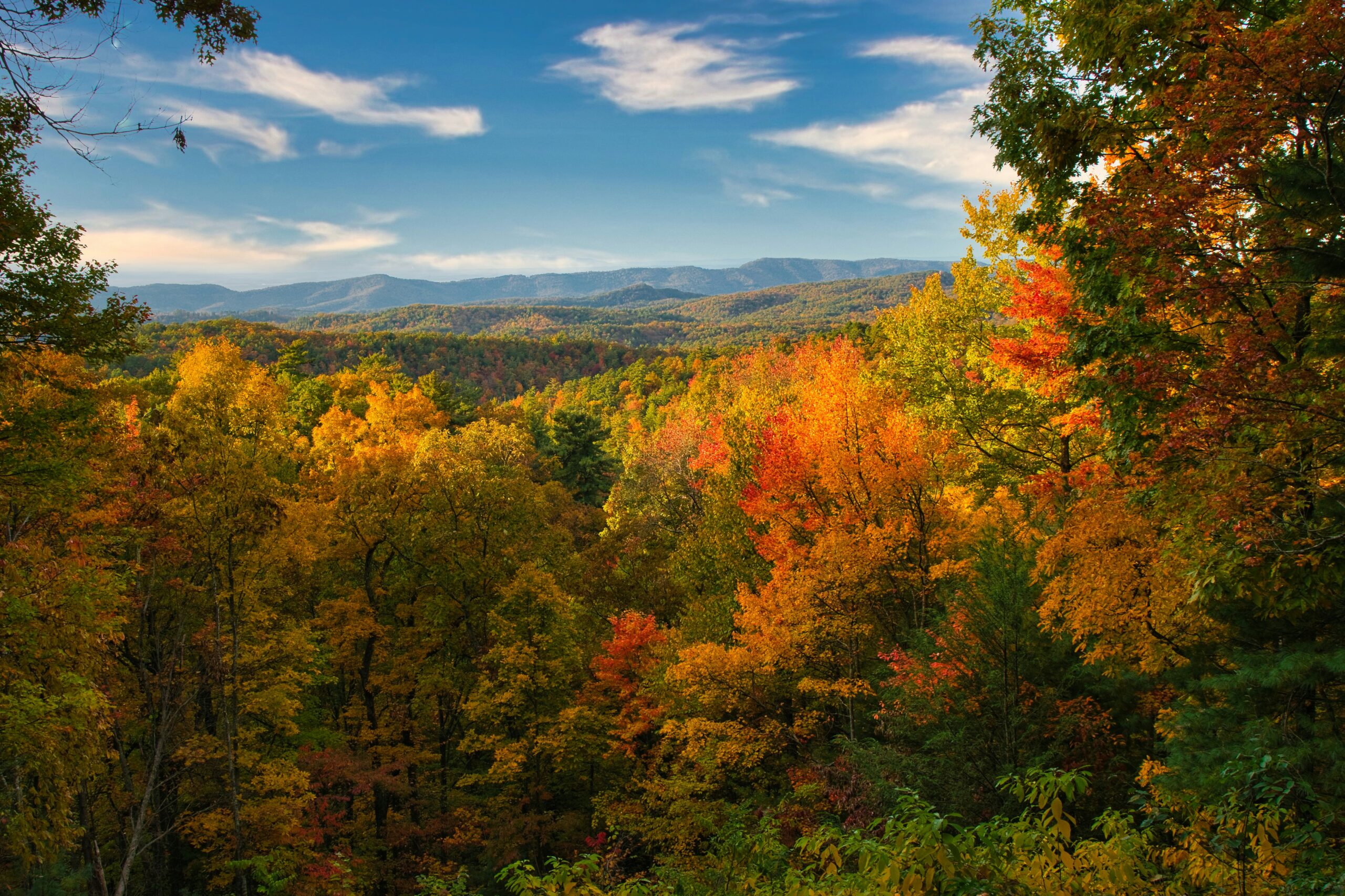
In These Hills is set in Lynchburg, Tennessee, home of Jack Daniel’s Distillery and Miss Mary Bobo’s Boarding House. But it’s also the home of author Tamera Alexander’s ancestors.
While the story of Josephine isn’t based on the life of a person in Tamera’s family, her familiarity with Lynchburg and her family connections to the area and to Jack Daniel’s Distillery helped this story feel more personal.
Continue reading to see what Tamera was able to weave into the novel and how she’s able to craft historical stories that are based on historical fact.
If you like what you read, get access to the entire first chapter of In These Hills. Or find your own copy in softcover, e-book, or audiobook at a retailer near you.
Your family has a history in Lynchburg. What did you learn about your heritage while writing this book?
I grew up knowing my family had ties to Lynchburg, but researching and writing In These Hills brought those connections into sharper focus and made the past feel more personal.
Reflecting on the lives of my great-great-grandparents, Ballard and Martha Jane Preston, gave me deeper respect for the quiet, often unseen, labor that builds a community. It reminded me that ordinary lives can leave extraordinary legacies. The story also deepened my gratitude for those who came before me—and the responsibility we each carry. As someone says to Josephine in the novel, “What we do with our lives matters. Not only for us, but for generations to come.” It has also impressed on me how precious it is to leave something tangible behind. What I wouldn’t give for a journal from my great- or great-great-grandparents. To glimpse their struggles, their joys, and the everyday rhythms of their lives. What a gift that would be.
You had the opportunity to write from the locations in your book. Describe this experience.
Since my dad was born near Lynchburg in the Gattis Town/Lois area, I grew up visiting family there. Walking those same hills again, revisiting the distillery, and spending time in Miss Mary Bobo’s home gave me a sensory richness and a wealth of detail as I crafted the setting for the novel. Having family ties to the area—my great-great-grandfather broke mules for the distillery—made writing this story deeply meaningful. I hope the love I feel for the town and its people found its way onto the page. And to be completely honest, I felt a measure of intimidation writing about Jack Daniel, Miss Mary Bobo, Nearest Green, Susan B. Anthony, Nannie Helen Burroughs, and other real-life figures who appear in the novel. Each is deeply loved and highly esteemed, and I felt a profound responsibility to honor their lives and legacies with care.
Historical fiction requires balancing fact with imagination. In this novel, where did you feel the most creative freedom—and where did history require you to stay carefully tethered to the record?
While the historical framework is real, I had the most creative freedom in shaping the inner lives of my fictional characters—their motivations, relationships, and spiritual journeys. Fiction allows us to explore the heart behind the history. When writing about real figures like Jack Daniel, Miss Mary Bobo, Nearest Green (and his family), Susan B. Anthony, and Nannie Helen Burroughs, and more, I felt a deep responsibility to remain faithful to the historical record and to the spirit of who they were. I wanted their portrayals to align with what is known of them in history and what is respected about their lives.
You mention in your author bio that you enjoy walking through old cemeteries and antique shops. What attracts you to study and write about history?
Old cemeteries and antique shops are filled with whispers of lives once lived—names, dates, once-treasured objects now covered in dust. Who were the people who owned these things? How did they come to part with them? What were their hopes and dreams? History reminds me that while times change, human nature does not. The longings, fears, doubts, desires, and failures we wrestle with today are not new.
As I wander through cemeteries and when I write about real people long passed, I’m reminded that we are a mist that appears for a little while and then vanishes (James 4:14 NIV). And as David wrote in Psalm 103:15-16 (NLT), Our days on earth are like grass; like wildflowers, we bloom and die. The wind blows, and we are gone—as though we had never been here. In studying and writing about history, I’m drawn to the ways God’s hand can be seen across generations—through the good events and the difficult. He is faithful through it all. His presence, his provision, and his redemptive work shine through every era.

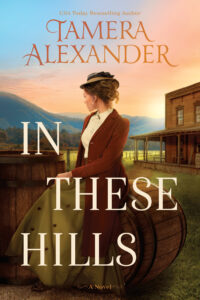
In These Hills by Tamera Alexander
1905. Josephine Dunham is running for her life. After a women’s suffrage rally in Atlanta turns deadly, she buys a one-way ticket on the first train out and lands in rural Tennessee. There, Dodge Coburn—a rough-edged stranger with undeniable appeal—begrudgingly offers her a ride to Lynchburg, a speck of a town where Josephine hopes to disappear.
Battered and desperate, Josephine has little to say when Dodge delivers her to Miss Mary Bobo’s Boarding House. Hoping to work in exchange for room and board, she soon discovers the only job matching her skills is at Jack Daniel’s Distillery, an irony not lost on a suffragist committed to prohibition.
Dodge is skeptical of Josephine’s claim that she’s on the run from an abusive husband. But between running Jack Daniel’s cattle farm and raising his young niece, he has little time or inclination to press her . . . at first. But when Josephine’s convictions and compassion draw him in, Dodge begins to reconsider the life he’s chasing, while Josephine must face a world far more complicated than the principles she’s held to.
As Jack Daniel’s Distillery gains national recognition, Josephine’s secrets resurface. In a place where whiskey making takes time but justice is too often hurried, Dodge and Josephine must decide what—and who—they are willing to risk everything for, and whether faith will hold when the cost is high and time is running out.

Tamera Alexander is a USA Today bestselling novelist and one of today’s most beloved authors of inspirational historical romance and women’s contemporary fiction. While being Gram Tam is her current favorite role, she’ll never turn down a stroll through an old cemetery or browsing through antique shops.
Her works have been awarded numerous industry-leading honors—among them the Christy Award, the RITA Award, the Carol Award, and Library Journal’s top honors—and have earned the distinction of Publishers Weekly starred reviews. In 2020 she was inducted into the Christy Award Hall of Fame which recognizes authors for their legacy and contribution to Christian fiction. Her deeply drawn characters and thought-provoking plots have earned her devoted readers worldwide.
Tamera and her husband love living in Nashville, Tennessee, and treasure the time spent with their grown children and grandchildren. They live a short distance from the Southern mansions that serve as the backdrop for many of her critically acclaimed novels. Tamera views her writing as a way to grow closer to the Lord Jesus Christ—and her deepest desire is that those who read her novels will take steps closer to him as well.
Tamera invites you to connect with her at TameraAlexander.com.