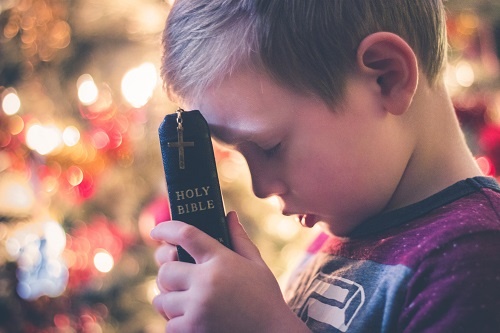
What’s the Greatest Gift for Mom This Mother’s Day?

by Kim Adetunji, Bible Brand Manager

You, of course! Your time, your smile, your kindness, a note, a call—or in some circumstances, your apology or forgiveness. That’s probably the absolute best gift you could give this Mother’s Day!

If you’re like me, you’re always looking for a meaningful gift to give Mom—so we pulled together a list for you:
5 Reasons a Bible Is the (Second) Greatest Gift for Mom on Mother’s Day

#1: Your Mom deserves the very BEST, and what gift could be better than the living and powerful Word of God? (Plus, there are so many options to choose from that you are bound to find one that she’ll love!)

#2: What other gift—besides prayer, maybe—connects Mom so directly to God than the Bible? When Mom (or you or I) reads through the Bible, God speaks to her (and us)!

#3: It will be a gift your Mom will cherish for a very, very long time—and not just because it’s from you (which is a really huge reason!), but also because being a student of the Word and growing in knowledge of God and his plan for us is a life-long journey. We will never fully mine the riches and depths of this treasure house that is the Bible.

#4: No matter where your Mom is (or isn’t) on her spiritual journey, a new (or first!) Bible could be the fresh inspiration she needs to make spending daily time with God a (new or renewed) priority in her life.

#5: As Mom reads her Bible and reflects on its truths, the more she will become transformed into Christlikeness. The Bible promises us that time spent in God’s Word will never return void! (We saved the very best reason for last!)
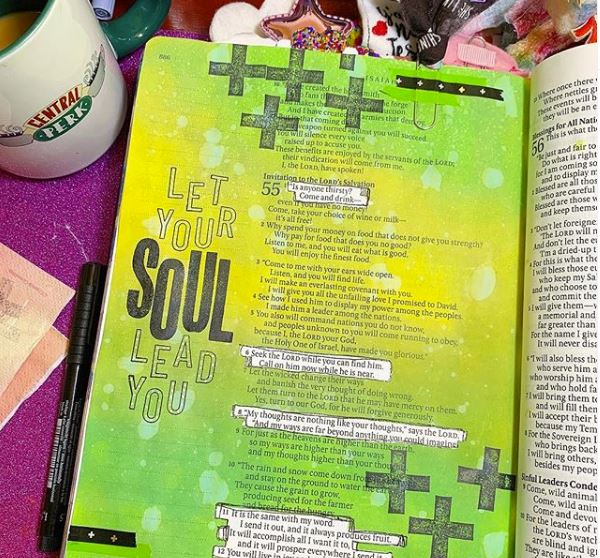
Inspire Mom This Mother’s Day!
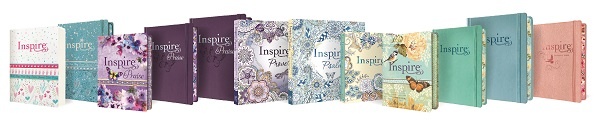
The #1–selling Inspire Bible line is available in 6 unique editions (pictured above, from left):

Inspire Bible for Girls

Includes 500+ illustrations to color, 300+ devotional readings and prayers, 160+ journaling prompts, fun facts, a beautiful two-color interior & so much more!

Inspire PRAISE Bible

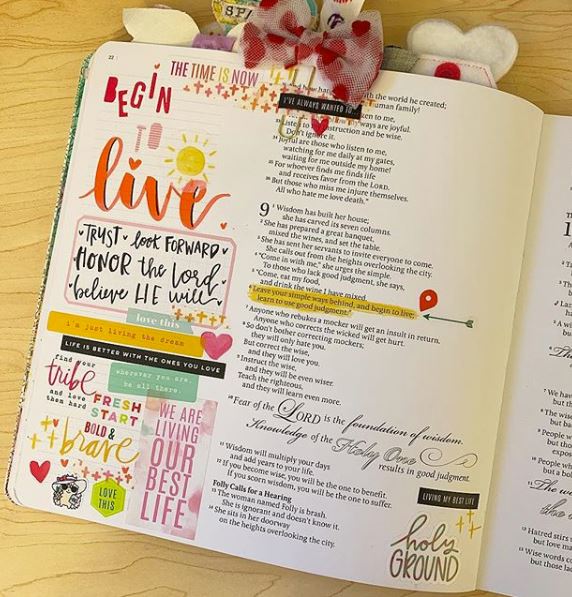
Over 500 all-new Scripture line-art illustrations to color, wide margins for journaling, plus 32 beautiful full-color vellum pages (pictured below). It’s the only Bible with vellum pages! Now available in large print.

Inspire: Proverbs

A square-trimmed, coloring-book-style complete book of Proverbs that is beautifully designed with line-art illustrations to color and extra-wide margins for journaling. Printed on thick art paper.

Inspire: Psalms

A square-trimmed, coloring-book-style complete book of Psalms that is beautifully designed with line-art illustrations to color and extra-wide margins for journaling. Printed on thick art paper.

Inspire Bible (the original)

Over 400 Scripture line-art illustrations to color, plus wide margins for journaling. Available in full-size and large-print editions.

Inspire Catholic Bible NEW!

Our latest addition to the line, the beautiful rose gold Inspire Catholic Bible has over 450 Scripture line-art illustrations to color, plus wide margins for journaling.
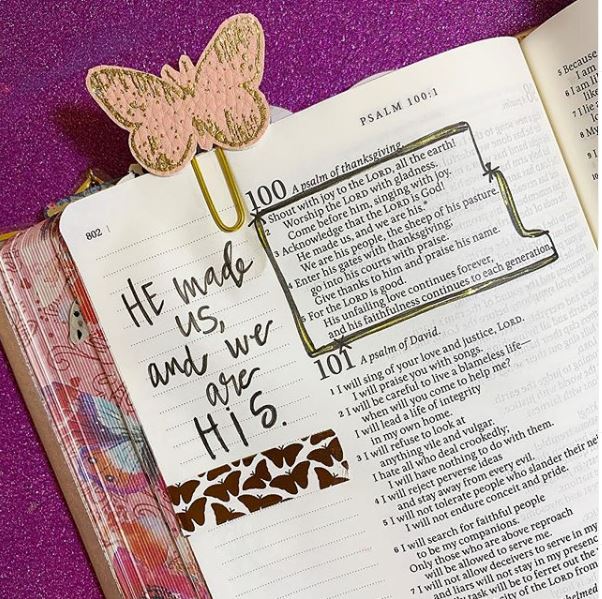
Inspire has drawn people of all ages and stages of faith deeper into God’s Word.

Let the Word of God Inspire You.™

All Scripture is inspired by God and is useful to teach us what is true and to make us realize what is wrong in our lives. It corrects us when we are wrong and teaches us to do what is right. – 2 Timothy 3:16, NLT


What Does It Mean to Be Saved?

Taken from the HelpFinder Bible

The scene is played out before us many times every year: A man is dramatically rescued from a swollen river; a child is pulled by firefighters from a burning apartment building; a woman is delivered from a would-be assailant by a brave bystander. Each scenario includes a situation of impending peril or destruction, a rescuer or deliverer who intervenes, and a second chance at life for the one saved.

Although the word is rarely used in the media, each is a picture of salvation. The Bible teaches that sin threatens us with broken relationships, spiritual death, and judgment. But God, through the death and resurrection of Jesus Christ, has provided a way to rescue us from sin’s consequences. He offers us salvation so that we can have a second chance at life, an opportunity to experience a spiritual rebirth into a new and abundant life in the Spirit, and ultimately, eternal life with him forever.

If you’ve gone to church you’ve probably heard people talking about being saved. But what does the Bible say that it means to be saved? Using the HelpFinder Bible index let’s dig into that question.

ROMANS 4:8 | “What joy for those whose record the Lord has cleared of sin.”
ROMANS 3:24 | “Yet God, in his grace, freely makes us right in his sight.”


Being saved, spiritually speaking, means your sins no longer count against you toward an eternal death sentence. Instead, they are forgiven by the grace of God, and you are given the free gift of eternal life. Being saved does not spare you from earthly troubles, but it does spare you from eternal judgment.

PSALM 103:12 | “He has removed our sins as far from us as the east is from the west.”

Being saved means your sins have been completely forgiven and removed.

PSALM 51:9-10 | “Remove the stain of my guilt. Create in me a clean heart, O God.”

Being saved means the stain of guilt has been washed away. Guilt doesn’t just appear to be gone—it is gone! You are given a clean slate!

JOHN 10:28-29 | “I give them eternal life, and they will never perish. No one can snatch them away from me, for my Father has given them to me, and he is more powerful than anyone else. No one can snatch them from the Father’s hand.”
JOHN 5:24 | “I tell you the truth, those who listen to my message and believe in God who sent me have eternal life. They will never be condemned for their sins, but they have already passed from death into life.”


Being saved means you are assured of living forever in heaven, which will actually be a new earth where there will no longer be sin, pain, and suffering. What greater hope could you have?

Learn more about the HelpFinder Bible

It Doesn’t Take Much

How often do we think “I don’t have the skills to make a difference” or “I don’t have the resources to make it worth it”? Throughout the pages of Scripture we are reminded that it’s often the least likely people who can make the biggest impact, and the same is true today.

It’s so exciting to hear stories of how God uses everyday people who are sold out to him to accomplish things that they could never imagine (check out Jeff Hilliard’s story). But it doesn’t have to be on a large scale. Maybe it’s just talking to a friend who needs support, connecting with someone at an outreach event at your church, meeting a new neighbor, or being Christ’s hands of compassion to a person in need.

Here are a few inexpensive resources that can help as you reach out:

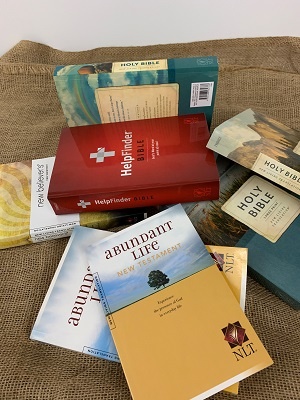
Abundant Life Bibles are value-priced and offer readers insights about living the abundant life through a relationship with Jesus Christ. They cover topics such as joy, peace, and dealing with life’s tough issues and offer practical guidance for daily life.

Economy Outreach Editions are softcover Bibles with the entire NLT text that come in three different editions, depending on audience, and can only be ordered in bulk.

The Economy Outreach and Large Print Editions feature resources such as “Welcome to the Bible,” “How to Know Jesus Personally,” “Where Can I Find It,” and “The Apostles’ Creed Bible Reading Plan” that provide helpful guidance to readers who may be encountering the Bible for the first time or are reconnecting with its words of hope and healing.

The Children’s Outreach Edition includes kid-friendly features that answer kids’ questions about the Bible, has a graphic of the books of the Bible, and has a quick guide to the Bible’s big story using 30 images—each described by a single sentence. It also includes first steps to following Jesus and a 10-day reading plan to help kids in their first steps after they accept Christ.

New Believers Bible is uniquely designed to help the new Christian read, study, and understand the Bible. It includes features that help Christians develop and deepen their faith while providing a foundation for their new life in Christ.

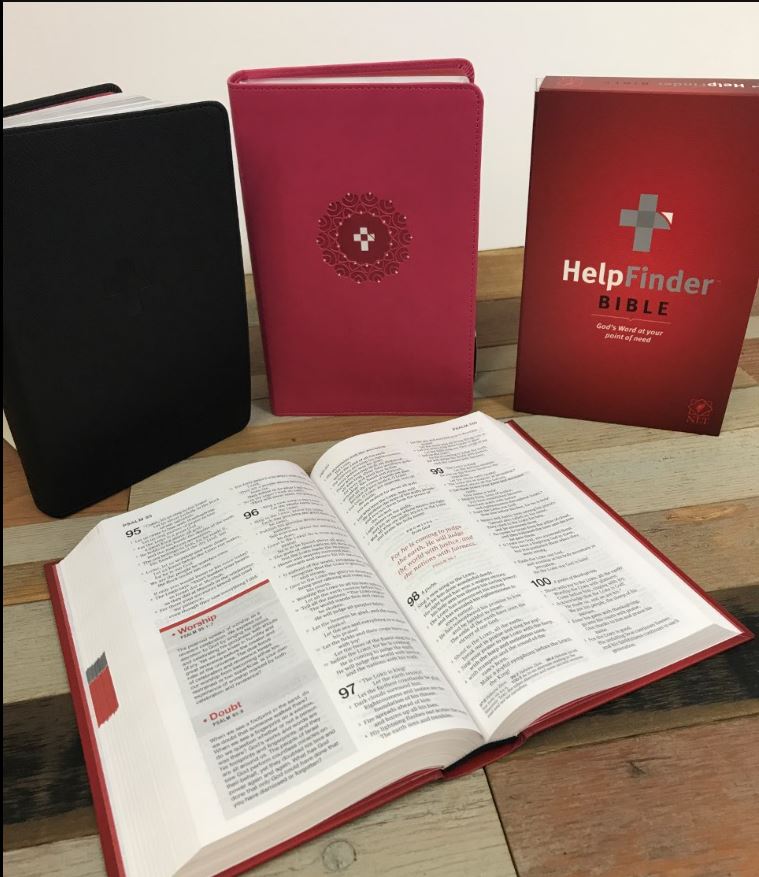
HelpFinder Bible makes it easy for anyone, whether familiar with Scripture or not, to find help in the Bible for their immediate needs. Application notes connect the Bible’s truths to today’s issues, and the extensive index points readers to verses where answers can be discovered, issues resolved, and freedom found. The HelpFinder Bible is God’s Word at your point of need.

Tyndale Bibles also has Scripture portions such as an Abundant Life New Testament or the Gospel of John that may be easier for someone just getting to know the Bible.

A verse often quoted by a member of our team reminds us of the power of sharing God’s Word.

“It is the same with my word. I send it out, and it always produces fruit. It will accomplish all I want it to, and it will prosper everywhere I send it.” Isaiah 55:11, NLT

How a Monkey Cannon Started a Bible Revolution

When Jeff Hilliard purchased a T-shirt cannon, he thought he would be blasting shirts into crowds at Christian concerts, not leading a mission to get Bibles into the hands of military personnel across the globe. But what Jeff is keenly aware of is when you leave something in God’s hands—even a T-shirt cannon—he will use it for his glory.

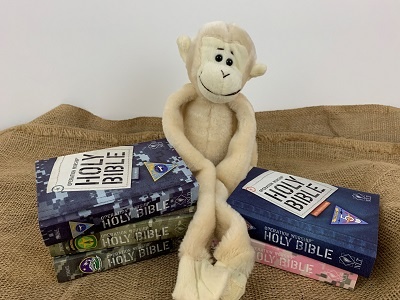
“When I got the cannon, I wanted to take it for a test run, and my buddy said, ‘why not put stuffed monkeys in there instead?’ I thought he was crazy, but when we gave it a try at the concerts, the people in the audience went nuts. That’s when I got the name ‘the Monkey Commando,’” said Jeff.

Though not Jeff’s favorite nickname, the Monkey Commando was soon well-known across Southern California.

“Totally out of the blue, I got a call from a chaplain of a military base near us. He asked if the Monkey Commando could come and shoot monkeys to the kids on the base during a concert. I, of course, said yes, and that is what started our connection with the military. Soon we found ourselves traveling to military bases to put on Christian concerts and, of course, shoot stuffed monkeys from the cannon, and Operation Worship began,” said Jeff.

While at one of these events, Jeff sat down with the chaplain on base and asked him, if the sky was the limit, what would he want for his military personnel?

“I was floored when he said Bibles. I said, ‘There are all kinds of places you can get free Bibles.’ He said, ‘But those aren’t the kinds of Bibles we need.’”

The chaplain shared three specifics: It must include both Testaments, you have to be able to carry it in your pocket, and the cover needed to be camo to match uniforms.

“I’m a web guy. I didn’t know anything about publishing Bibles, but I knew we had to make this happen. Through some friends, I reached out to Tyndale House Publishers, and they made the chaplain’s dream come true” said Jeff. “Not only did it include all the chaplain’s specifications, it was in the New Living Translation, which couldn’t be more perfect for this ministry.”

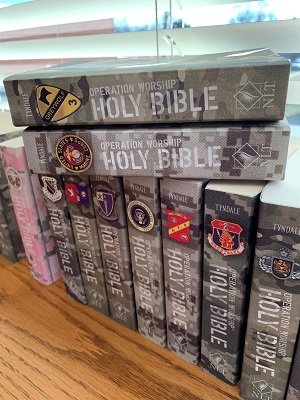
The first 25,000 copies of the first edition of the Operation Worship Bible in Army camo were sent to Fort Hood. Word spread quickly, and within a week the Bibles were gone. Since then, more than 1.5 million Operation Worship Bibles have been distributed to military personnel around the world. The Bibles are available in camo matching every branch of the military’s uniforms and with different unit insignias, signifying that the Word of God is uniquely personal for each one of us.

Recently, with the help of a donor, Operation Worship was able to give every member of the Belize Defense Force an Operation Worship Bible with the Belize military logo. (see the video)

“U. S. Military chaplains and commanders from all over the world have reached out asking, ‘Are you the Bible guy? How can I get Bibles?’ They know the importance of this ministry. When you get on a plane or a boat heading to who knows where and have no idea what you’ll be facing, you take a closer look at your life and you need the peace that only God gives,” said Jeff. “Each one of these Bibles is personal, and each person who receives one is precious. I hope that when they open that Bible they are able to understand who God is and that he has a purpose for them.”

From Monkey Commando to Bible Guy, Jeff has let God lead the way. Health issues, difficulty finding funding, and discerning the next step has brought Jeff and his wife, Patti, to their knees in prayer, asking for God’s leading.

“We told God, ‘This is your ministry, not ours. You tell us where to go and what to do,’” Jeff explained. “And God is always faithful.”

Operation Worship continues to look for partners to help them put the Word of God into the hands of soldiers all over the world. If you are interested in becoming a part of the Operation Worship story, visit OperationWorship.com. If you donate right now your donation will be matched up to 26,000 Bibles. Donate here

Finding Jesus in Genesis

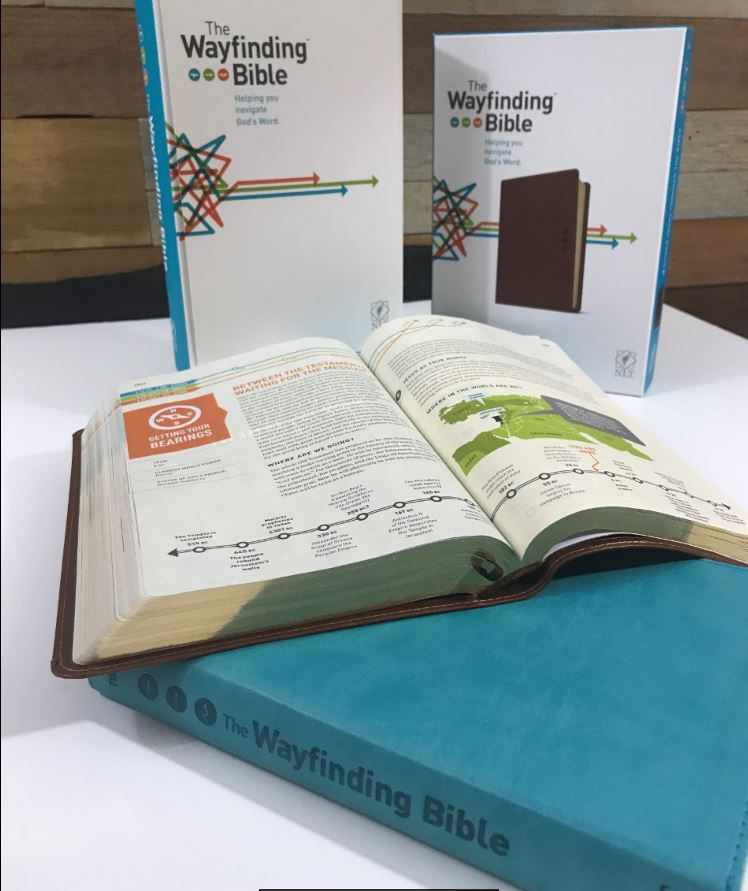
Taken from The Wayfinding Bible

Before the events in the book of Genesis even begin, Jesus is there. Jesus, the Word, already existed with God before the creation of the world (John 1:1). God created all things through his Son, Jesus.

You will catch glimpses of Jesus throughout the book: He is Eve’s promised offspring who will crush the serpent’s head (Genesis 3:15); he is Abraham’s descendant who will bless the whole world (12:2); and he is the ultimate king promised as a descendant of Judah (49:10). In the book of Hebrews, Jesus is likened to Melchizedek, the priest-king who appears in Genesis 14.

When Abraham climbs Mount Moriah, prepared to sacrifice his son Isaac on an altar, a ram is found to take Isaac’s place, prefiguring what Jesus would become for us: our substitute.

Look inside the Wayfinding Bible


What If I Make a Mistake?

Taken from the HelpFinder Bible

Although burning the breakfast toast is a mistake, it is trivial and leaves no lasting consequences. On the other hand, a doctor who misreads a chart has made a mistake of considerably greater implications. We all make mistakes. Some of our mistakes are innocent—we forget an appointment, we know the right answer on a math test but accidentally put down a different number.

Other mistakes are caused by bad judgment or a disregard for a rule or principle. For example, your boss asks you to do an important task and gives you detailed instructions on how to accomplish it. But you ignore those instructions because you think you know how the job should be done. You botch the job, and your company loses a lot of money. That is a significant mistake that could have been avoided if you had simply followed instructions.

The Bible is God’s instruction manual for life. If you neglect or ignore it, you will make many avoidable mistakes that will bring adversity and grief into your life. God wrote the Bible so that we could understand the rules, techniques, and principles for living the most effective, productive, and satisfying life possible. Follow its words, and many big mistakes can be avoided.

What does God think of my mistakes? Will he still love me if I’ve made a big mistake?
• PSALM 32:3, 5 | When I refused to confess my sin, my body wasted away, and I groaned all day long. . . . Finally, I confessed all my sins to you and stopped trying to hide my guilt. I said to myself, “I will confess my rebellion to the Lord.” And you forgave me! All my guilt is gone.
• 1 JOHN 1:9 | But if we confess our sins to him, he is faithful and just to forgive us.
• PSALM 51:7 | Purify me from my sins, and I will be clean; wash me, and I will be whiter than snow.
• PROVERBS 1:8-9 | My child, listen when your father corrects you. Don’t neglect your mother’s instruction. What you learn from them will crown you with grace and be a chain of honor around your neck.

If your mistake is sin, confess it as such! God will forgive you completely. When you make a mistake that isn’t a sin, learn from it so that you can grow in character and maturity.

P R O M I S E S F R O M G O D
• JAMES 3:2 | Indeed, we all make many mistakes. For if we could control our tongues, we
would be perfect and could also control ourselves in every other way.
• ROMANS 8:28 | And we know that God causes everything to work together for the good of
those who love God and are called according to his purpose for them.

Operation Worship Changing Lives in Belize

With the help and support of generous donors Operation Worship was able to give a Bible to every member of the Belize Defense Force. Each had the Belize Military Logo. Find out more about Operation Worship and how you can help share God’s Word with people in the military all over the world.

Kids and the Bible: Are We Discipling Nonreaders?

Many adults are struggling to read the Bible. We know this. At some level it’s understandable because the Bible is a big, complicated, and very ancient book. Yet the Bible is where Christianity gets its story, so the faith community needs to be deeply committed to knowing it well regardless of the challenges.

If adults are struggling, what should we expect from kids? If the Bible is tough going for the grownups, it’s going to be even tougher for young readers, right?

In a word . . . yes. But maybe it’s time to look at how we’ve been trying to introduce kids to the Bible. What, exactly, has been our goal? What’s the right expectation for kids reading, knowing, and understanding the Bible? And what would the path to solid Bible fluency look like for kids?

Where We’ve Been

Simply from looking at our standard Bible curricula, it would seem that what’s actually happening is that we have other goals besides fluency (spiritual formation, teaching morals, building faith, etc.) that cause us to use the Bible in certain ways. The intended purpose is not often to foster a deep engagement with Scripture itself. As a result, within any given lesson the Bible is encountered merely as either a theme verse or two, or a safely paraphrased version of a “Bible story.”

Perhaps this approach is seen as a good and necessary adaptation of the Bible for readers who are young and not yet proficient. That makes sense, right? Well. . .

The problem with giving children only a verse or two is that this approach tends to stick around as readers get older. Even into adulthood we continue to show and teach the Scriptures by referring to select Bible verses. The consequence of this is that many people persist in thinking the Bible is in fact a collection of these verses (and if they are honest, admitting that some verses are better than others).

And the problem with an ongoing diet of paraphrased Bible stories is that such narrations are not actually the Bible. They are typically told with any age-inappropriate elements toned down or taken out. And of course, any paraphrase represents someone’s interpretation of the essence of a particular story.

All of this is appropriate in a sense, but there’s also a danger here. Many of these “safe” versions of the stories are never replaced with the actual biblical texts as kids turn into teenagers and then young adults. This means that young readers often wind up not learning the way biblical language actually sounds and actually works. And older kids never learn to engage with the stronger, stranger, more complex versions of these stories that the Bible actually tells.

When do we get around to teaching young adults how to handle the real Bible?

Furthermore, these collections of paraphrased stories are often treated as stand-alone lessons, so kids don’t ever learn how the stories are connected and how they build on each other to tell the bigger biblical narrative. And rarely are different kinds of literary writings acknowledged. A curriculum constructed of “Bible stories” will naturally have difficulty incorporating letters, songs, wisdom sayings, and other literary varieties in Scripture.

So are we discipling kids into not being Bible readers?

What would the average child take away from their long-term experience with the Bible in our current teaching approach? Have they taken the first steps toward receiving the Bible on its own terms? Or have they been taught to use the Bible in simplistic and misleading ways?

I’m reminded of a conversation we had with a prominent publisher of children’s Sunday School resources and Bible curricula. After reviewing their programs and comparing them with our perspective on Bible engagement, one of their executives, deep in thought, looked up and said, “So you’re telling me that if our programs are successful, we are actually producing generations of non–Bible readers.”

Are kids growing up learning that the Bible is a book to be read? Do kids have any inkling of the big story? Are they falling in love with Jesus—that is, with Jesus as understood in the context of the overall narrative?

What To Do?

At the Institute for Bible Reading, we’re working on answers to these reading problems. As young people within the church grow up, graduate, and head out on their own in various ways, a healthy and hearty appetite for Bible reading doesn’t seem to be going with them. It shouldn’t be a surprise, then, that there is a low number of adults in the church who are engaged in Bible reading and comprehension. People are following the path that’s been laid out for them, and then we scramble to convert adults into Bible readers. We are failing to show them the way in the first place.

So what would change look like?

The downward trajectory of Bible engagement in the church needs to be reversed if we are to fully receive the profound gift that we have in God’s Word. A Bibleless Christianity won’t be a vibrant and affective Christianity.

Let’s chart a course for a new future for kids and the Bible, so that kids know the Bible the right way at the right age and stage, and appropriately grow into the Bible. We want kids who not only love the Bible but also learn how to read it intelligently and well, so they don’t turn away from it the first time they encounter its opponents.

Read more about Bible engagement from the Institute for Bible Reading

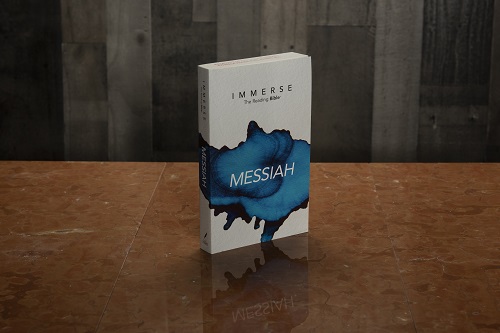
Learn more about Immerse: The Bible Reading Experience

Hear what happens when a group of high school students read the New Testament

What Happens When We Let Teens Actually Read the Bible?

“Our students have heard a lot of words about the words of the Bible. When it comes to actually reading or hearing the words of Scripture themselves, they find it more interesting than the words about the words of Scripture that they have been hearing their whole lives,” Matt Laidlaw, Dean of Students, Calvin Christian High School.

Hear what happens when the sophomore New Testament class at Calvin Christian High School is immersed in the life-transforming Word of God—not simply being told about the Bible but reading the Bible without distractions.

The Word

Taken from the Illustrated Study Bible

John raises the curtain on his Gospel with a stunning description of Jesus Christ as “the Word” (Greek logos, 1:1). Both Greek and Jewish listeners in the first century would immediately recognize the profound meaning of this title. Greeks would have thought of the seminal forces that sustain the universe. Jewish minds would have thought back to God creating the world with his word (Gen 1:3‑28). In Jesus’ day, the Word of God took on creative personal attributes (Ps 33:6, 9). Jews viewed God’s Word as personifying divine wisdom. Through Wisdom, God extended himself into the cosmos, creating the world (Prov 8:22‑31).


In John’s drama, Jesus shares the same essence as God; the Son existed before time, and he was the agent of all creation. John anchors the divinity of Jesus in this ancient Jewish concept of Wisdom. The divine Wisdom that has existed from before time with God can now be known in Jesus Christ. In perhaps the most outrageous verse penned by an apostle, John writes that this Logos, this Wisdom, became flesh and lived among us as a human (John 1:14). What God is, the Logos is, and the Logos is Jesus Christ.