by Stephen Arterburn, teaching pastor at Northview Church, Carmel, Indiana; founder and chairman of New Life Ministries; editor, Every Man’s Bible;and coeditor, The Life Recovery Bible
Is there anything that has not been written about biblical manhood? Books, articles, and videos abound with calls for men to demonstrate character, integrity, authenticity, and especially “servant leadership.” In an attempt to not write what has already been written over and over again, I present the following ideas.
First, the term servant leadership is an inaccurate and inadequate description of Paul’s instructions to men in the fifth chapter of Ephesians. A “servant leader” stoops to serve only when he chooses to do so; it is a very tidy role with a narrow focus on serving others. Yet it is already obvious to most Christian men that they need to avoid misinterpreting Scripture as a call to biblical demandhood instead of manhood. They understand that Paul’s words set a standard far beyond that of servant leadership.
Biblical manhood calls us to “Die to Yourself Leadership,” and it is not easy or tidy, which is perhaps why it is not taught in leadership seminars. It is not about coming in from a day of golf and helping with the dishes after dinner. The biblical mandate calls for sacrificing being the fourth man in the foursome outing whenever the family needs us to be present with them.
It is not just being willing to pay for a child to get Christian counseling; it is also getting help for ourselves so we can lead the way by modeling the humility and willingness required to obtain help.
Biblical manhood goes beyond playing catch with the kids and showing up for their games. It is showing up and supporting a son who would rather rock climb, bowl, dance, or sing because he doesn’t like contact sports.
Being a provider and protecting the family are important, but being present is a far greater priority. When we are with them, we need to be fully there, engaged and connected, rather than glued to a television screen, laptop, or cell phone. We need to be eyeball-to-eyeball with family members, downloading love to them.
“Die to Yourself Leadership” refuses to be a donor to the fatherless generation. Even when we’re tempted to abandon our families and let our kids be raised by their mother, we don’t follow through with it. We stay and work through the problems to prevent all sorts of new problems and traumas that come with divorce.
Biblical manhood requires us to do what we don’t want to do exactly at the time we don’t want to do it. We courageously do what needs to be done, when it needs to be done, no matter the consequences—because it is the right thing for any man to do. All our actions are based on the truths of the Bible—not popular philosophy, current culture, or feelings that would keep us from going beyond being just a man to being God’s man, daily dying to self.
“So be careful how you live. Don’t live like fools, but like those who are wise. Make the most of every opportunity in these evil days. Don’t act thoughtlessly, but understand what the Lord wants you to do. Don’t be drunk with wine, because that will ruin your life. Instead, be filled with the Holy Spirit, singing psalms and hymns and spiritual songs among yourselves, and making music to the Lord in your hearts. And give thanks for everything to God the Father in the name of our Lord Jesus Christ.” Ephesians 5:15-20, NLT
Ever since God gave the Ten Commandments, some have been tempted to think he enjoys making people miserable and taking away their happiness by denying them earthly pleasures.
The truth is, God wants to give us something much better. But in order for us to receive it, we need to clear some room in our lives. Often, that means getting rid of sins or bad habits that are using up the space God wants to claim. Instead of filling our lives with sexual immorality, impurity, greed, and obscene stories (Ephesians 5:3-4), God wants us to be full of thankfulness. Instead of drunkenness (5:18), God wants us to be filled with the Holy Spirit.
Suppose you’re walking along the beach and find an old treasure chest. But when you pry it open, it’s full of sand, not gold coins. Now suppose someone else comes along and offers to give you as much gold as you can fit into the chest. Sounds great, right? Except for one problem: The chest is already full. In order to accept the gold, you’d have to dump out the sand. You’d need to make as much room as possible for the more valuable treasure. Unless you get rid of the sand, the chest will never hold anything of value.
The same goes for the sins in our lives—the sand in the treasure chest. They may provide temporary pleasure, but they won’t deliver lasting fulfillment. Sexual promiscuity may provide an immediate thrill, but the long-term results are catastrophic—it will never provide real happiness. On the other hand, true love for another person and for God can fill us up to overflowing. Drunkenness provides a temporary giddiness or forgetfulness, but it’s nothing like the true peace and joy that come from knowing and loving God.
It’s our choice. We can fill up our lives with whatever silly or sinful things we choose, or we can let God fill us up with the things that will bring ultimate fulfillment.
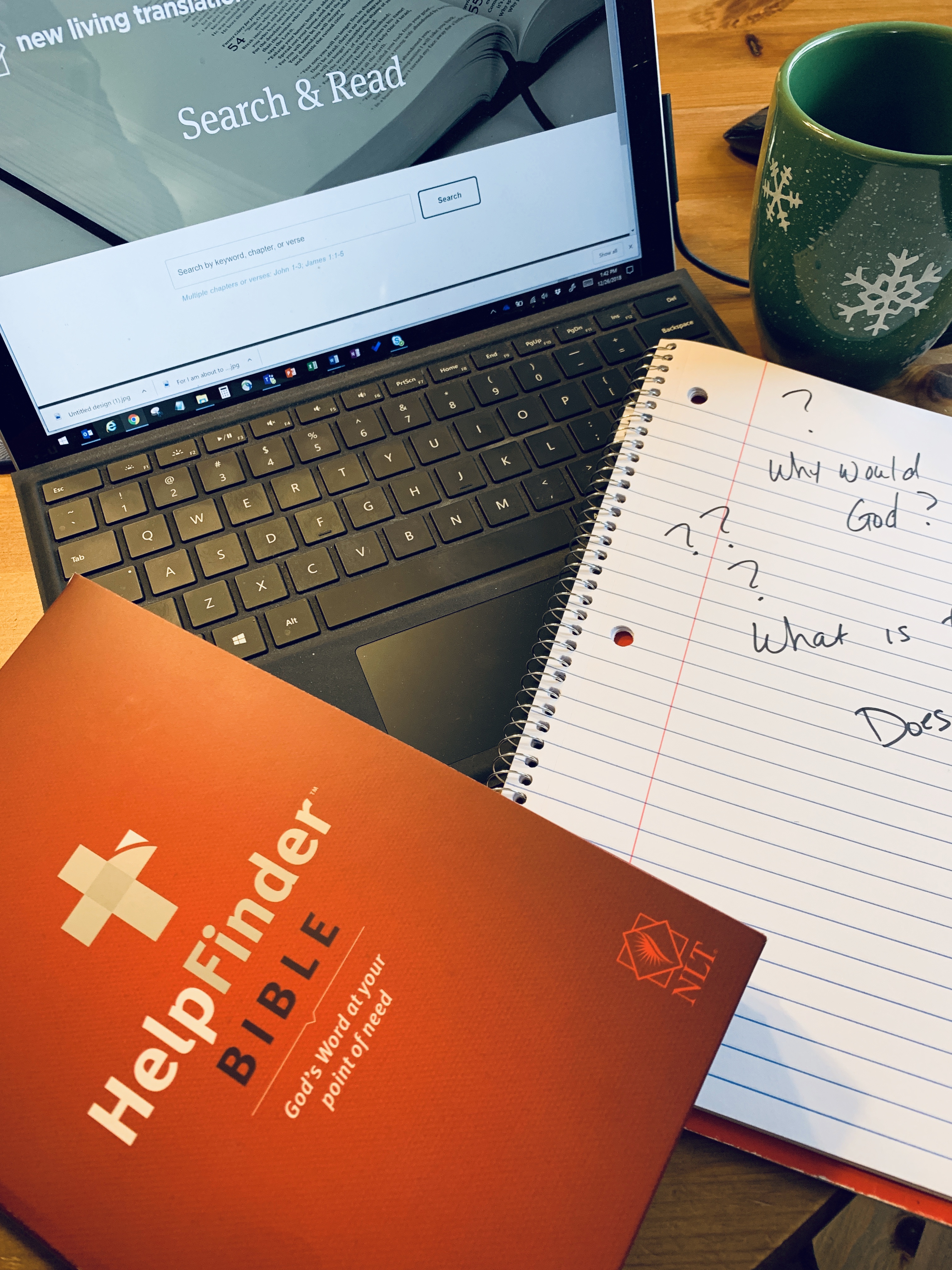
There is so much suffering in our world that it can be hard to know how to respond. We are going to use the HelpFinder Bible to see how the Bible answers questions about suffering and how we can respond.
Who among us does not suffer, bearing persistent pain and hurt? Sickness or disabilities, broken relationships, insufficient resources—these are all sources of pain and suffering. Some are by chance, like an auto accident that maims us or a disease that cripples or takes the life of a loved one. Some is by neglect, such as our failure to prepare for times of pressure. Some is by design, where we willingly take on enormous responsibilities in order to achieve some goal. Some are because of sin, where we willingly go against God’s commands and then must suffer the consequences. Whatever the source, we all feel the dark shadow of suffering. While the Bible never promises a life free from suffering, it does assure us that God is with us in our pain.
How do I stay close to God in times of suffering?
PSALM 126:5-6 | Those who plant in tears will harvest with shouts of joy. They weep as they go to plant their seed, but they sing as they return with the harvest. Recognize that suffering is not forever. In the dark hours of the night of suffering, it is hard to think of a morning of joy and gladness.
LAMENTATIONS 3:32-33 | Though he brings grief, he also shows compassion because of the greatness of his unfailing love. For he does not enjoy hurting people or causing them sorrow. Recognize that God does not want you to suffer and that his compassionate love and care will see you through it. A loving God does not enjoy the adversity and pain of life which must come your way.
MATTHEW 17:12 | “And in the same way they will also make the Son of Man suffer.”
LUKE 24:26 | “Wasn’t it clearly predicted that the Messiah would have to suffer all these things before entering his glory?”
JOHN 3:16 | “For this is how God loved the world: He gave his one and only Son, so that everyone who believes in him will not perish but have eternal life.” Recognize that Jesus himself suffered for you. He suffered the agonies of the cross, which embraced not only the incredible physical suffering but also the unthinkable suffering of bearing the sins of the entire world.
ROMANS 8:17-18 | And since we are his children, we are his heirs. In fact, together with Christ we are heirs of God’s glory. But if we are to share his glory, we must also share his suffering. Yet what we suffer now is nothing compared to the glory he will reveal to us later.
HEBREWS 2:18 | Since he himself has gone through suffering and testing, he is able to help us when we are being tested. Recognize that suffering is not forever and will end when those who believe in Jesus are welcomed into heaven.
How can I respond to the suffering of others?
1 CORINTHIANS 12:26 | If one part suffers, all the parts suffer with it, and if one part is honored, all the parts are glad. When one Christian suffers, it should hurt us all, for we are all members of Christ’s body—unified. If one part of our body hurts, sympathetic pain is sent throughout our entire body. So it should be in the body of Christ. If you know someone who is hurting, suffering along with that person can bring them comfort and hope.
GALATIANS 6:2 | Share each other’s burdens, and in this way obey the law of Christ. Seek to provide whatever practical support you can for a person who is suffering.
2 CORINTHIANS 1:3-4 | God is our merciful Father and the source of all comfort. He comforts us in all our troubles so that we can comfort others. When they are troubled, we will be able to give them the same comfort God has given us. Suffering enables you to comfort others. Wounded healers are more effective than healers who have never been wounded. Why? Because they have wrestled and agonized over the same questions, and they know they don’t have all the answers. Woundedness may appear to weaken you, but it actually makes you stronger.
Promises From God PSALM 147:3 | He heals the brokenhearted and bandages their wounds. 2 CORINTHIANS 1:5 | For the more we suffer for Christ, the more God will shower us with his comfort through Christ.
“When Timothy comes, don’t intimidate him. He is doing the Lord’s work, just as I am. Don’t let anyone treat him with contempt. Send him on his way with your blessing when he returns to me. I expect him to come with the other believers.” 1 Corinthians 16:10-11, NLT
Too many of us shrink back from ministry involvement because we tell ourselves we just don’t have the right temperament. We hear of the fiery fisherman Peter or the bold apostle Paul and think, Hey, I’m nothing like that. I could never get up in front of three people to speak, let alone a crowd. I’ll leave ministry to the professionals.
Yet God doesn’t think this way. Consider Timothy “Exhibit A.” Timothy grew up in a mixed home. While his Jewish mother became a Christian, his Greek father apparently never came to faith. It appears that both Timothy and his mother accepted Christ during Paul’s first missionary journey when the apostle visited their hometown, Lystra. On Paul’s second trip through the area, he took note of Timothy, a young man “well thought of by the believers in Lystra and Iconium” (Acts 16:2). Paul and Timothy developed a close bond, and the apostle became the younger man’s spiritual mentor.
From that time on, Timothy often accompanied Paul on his journeys, sometimes staying behind and sometimes working with others in “advance teams,” paving the way for Paul’s arrival (Acts 17:14; 18:5; 19:22; 20:4). Paul grew to love this young man as if he were his own flesh and blood.
He counted him a “fellow worker” (Romans 16:21) and “brother” (2 Corinthians 1:1); but more than that, he thought of Timothy as “my dear son” (2 Timothy 1:2), “my beloved and faithful child in the Lord” (1 Corinthians 4:17) and “my true son in the faith” (1 Timothy 1:2). And he could say, “I have no one else like Timothy, who genuinely cares about your welfare. . . . Timothy has proved himself. Like a son with his father, he has served with me in preaching the Good News” (Philippians 2:20, 22).
Yet Timothy was no Paul; Paul was an example and mentor for his son in the faith, but Timothy was not a mirror of Paul’s strengths. Timothy struggled with fear and hesitation. So Paul admonished his timid protégé: “God has not given us a spirit of fear and timidity, but of power, love, and self-discipline. So never be ashamed to tell others about our Lord. And don’t be ashamed of me, either, even though I’m in prison for him. With the strength God gives you, be ready to suffer with me for the sake of the Good News” (2 Timothy 1:7-8). The apostle instructed those who might be his hosts, “When Timothy comes, don’t intimidate him. . . . Don’t let anyone treat him with contempt” (1 Corinthians 16:10-11).
Timothy proves that God can and does use all kinds of temperaments in ministry. The big question for each of us is this: Do I want him to use me?
Immerse Receives 2022 Christian Book Award in the Bibles Category
Tyndale House Publishers
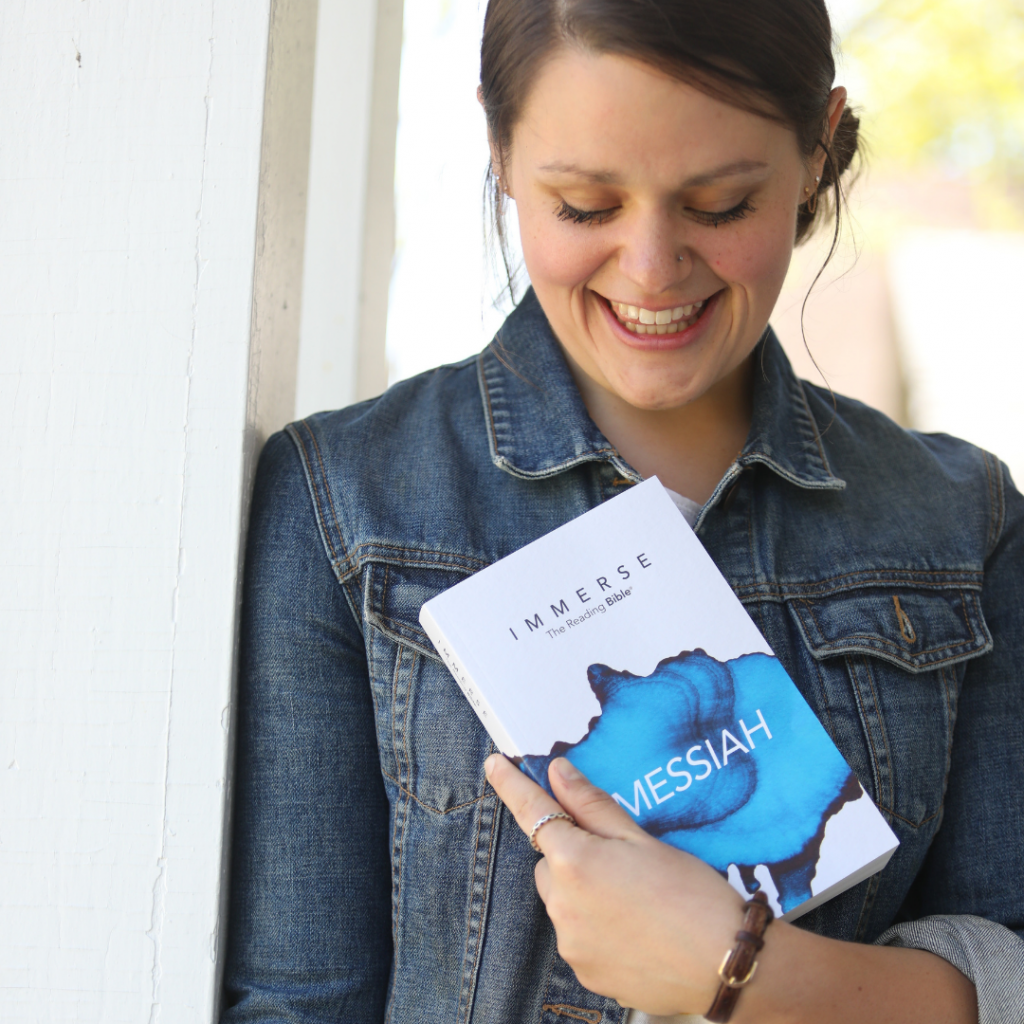
Immerse: The Reading Bible was awarded the 2022 ECPA Bible of the Year award during the Evangelical Christian Publishers Association (ECPA) annual Christian Book Awards.
“This honor for Immerse is so exciting,” said Tyndale Bible Publisher Amy Simpson. “Understanding the Bible changes everything, and as a Bible built for reading, Immerse has been providing new access and understanding of the Bible for individuals and groups, encouraging more reading of God’s Word by including fewer interruptions. We’re so grateful for this professional recognition.”
Created in partnership with the Institute for Bible Reading, Immerse is a reading Bible that is split into six books, created with one goal in mind: to provide the best reading experience possible. The text is laid out in an easy-to-read single-column setting with chapter and verse numbers, section headings, and footnotes removed and with the content of each book displayed according to its literary genre.
Immerse is in the clear and accurate New Living Translation, which conveys the precise meaning of the original languages in a flowing, effortless writing style that promotes comfortable and meaningful reading.
You’ll have a great experience using Immerse by yourself. But for an even richer experience, try reading with friends. Immerse: The Bible Reading Experience is an invitation to a different kind of community interaction with the Bible—less like a Bible study, more like a book club.
Whether finishing college, high school, middle school, or even kindergarten, graduation is a time of transition and change. It is an exciting time that also comes with a bit of trepidation about the future. What’s next? How does this change my relationships? Is the best really yet to come?
Change will always be part of our lives, but we can help our loved ones confidently take this next step, knowing they are grounded in the word of the Lord, which will help establish a firm foundation for the exciting adventures to come.
Here are some ideas for Bible gifts for the graduates in your life.
Kindergarten Graduate
TheHands-On Bibleis a perfect first full Bible for young readers. The trusted and easy-to-understand New Living Translation text is combined with activities, crafts, games, recipes, and more to help kids engage with the truths of the Bible in a fun way. The whole family can be involved in the activities so you can get conversations started that bring you closer together as you grow in your understanding of God’s Word. Purchase here
Middle School Graduates
The Teen Life Application Study Bibleis packed with features designed to meet the challenges and needs of today’s high school students. Based on the bestselling Life Application Study Bible, it includes notes and features that help teens ground themselves in the truth of God’s Word and apply it to situations they face each day. Purchase here
Inspire Bible for Girlsis a coloring and journaling Bible uniquely designed for girls. This Bible includes over 500 full- and partial-page Scripture line-art illustrations for coloring right alongside the New Living Translation text. It includes more than 300 devotionals and more than 160 journaling prompts, and it has lots of wide-margin space for creative journaling and art. Purchase here
EPIC Bibleis a visual journey through 169 Bible stories designed for fans of graphic novels. It was created by some of the best comic book artists from DC and Marvel. The Epic Bible transports readers through a visual journey of Scripture from Eden to eternity. It engages even the most reluctant readers with brilliant and dramatic full-color graphic art and uses the New Living Translation for conversation text. Purchase here. Also available in Spanish
High School Graduates
Linking to remarkably creative audio and video resources, the NLT Streetlights New Testament explains Christian truth to young people and serves as a basic discipleship tool. Its unique tone and approach to the gospel appeal strongly to those in an urban culture. The features focus on helping readers engage with the Word of God through unique audio and visual content, such as putting the New Living Translation to beats and street art that reflects people in the New Testament. Purchase here
The HelpFinder Biblemakes it easy to find the Bible’s answers to life’s difficult questions. Application notes connect the Bible’s truths, and the extensive HelpFinder topical index at the front of the Bible provides instant access to thousands of verses and notes on well over 100 key topics that are important and relevant for today’s issues, pointing readers to where God’s answers can be discovered. Purchase here
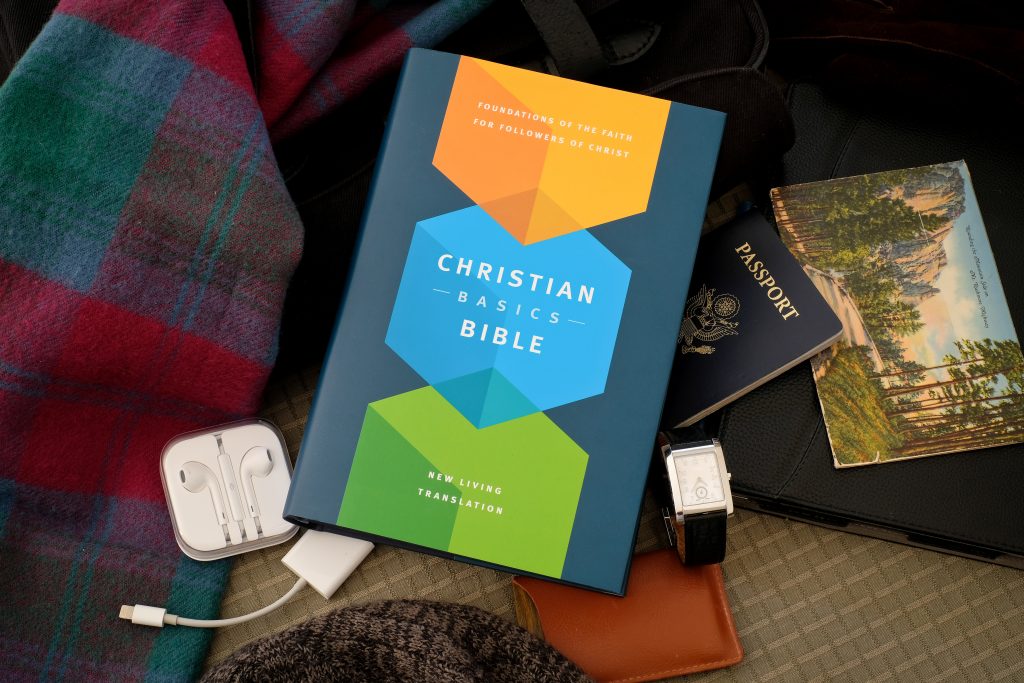
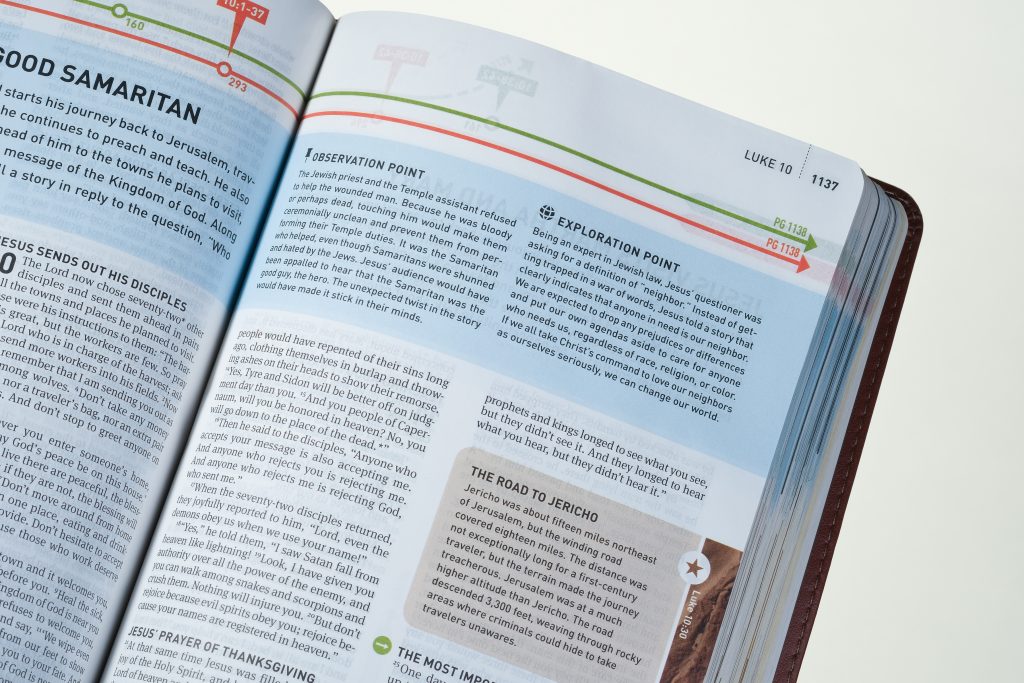
Christians Basics Bible is filled with features designed to help readers connect biblical teachings to Christian beliefs and see how those beliefs apply to their lives. By delivering the right amount of both information and application, the Christian Basics Bible can become the catalyst for living a vibrant Christian life. Purchase here
With innovative, full-color visual guides at the top of each reading, The Wayfinding Bible provides readers with three paths through God’s Word: the flyover route, the direct route, and the scenic route. The flyover route covers the most important events in the Bible in about 40 readings, giving a fresh overview of how these events tell the Bible’s big story of God’s redemption. Following the direct route, readers will develop a better understanding of how God’s story unfolds throughout history in about 200 readings. The scenic route helps readers explore new territory and discover the richness and depth of God’s Word in about 400 readings. All without the discouragement of getting bogged down in any single book. Purchase here
College Graduates and Beyond
The remarkable Filament Bible Collection features comfortable reading Bibles in a variety of easy-to-carry sizes, covers, and styles. But there is so much more: Mind-blowing study notes, devotionals, videos, worship music, and more are curated for the page you are reading through the Filament Bible app. Just scan the page number with your phone or tablet to be seamlessly connected to vast and varied in-depth content related to what you are reading. Purchase here
When you put a Bible translation that can be trusted and understood together with one of the most valued Bible study assets in history, what do you get? Tyndale’s Life Application Study Bible in the New Living Translation. This Bible overflows with resources that help readers not only study God’s Word but also apply it to their lives. It includes more than 10,000 notes and features, including profiles of Bible characters, in-depth charts and maps for reference, extensive book introductions, a vast index, a Bible dictionary, and more. Purchase here
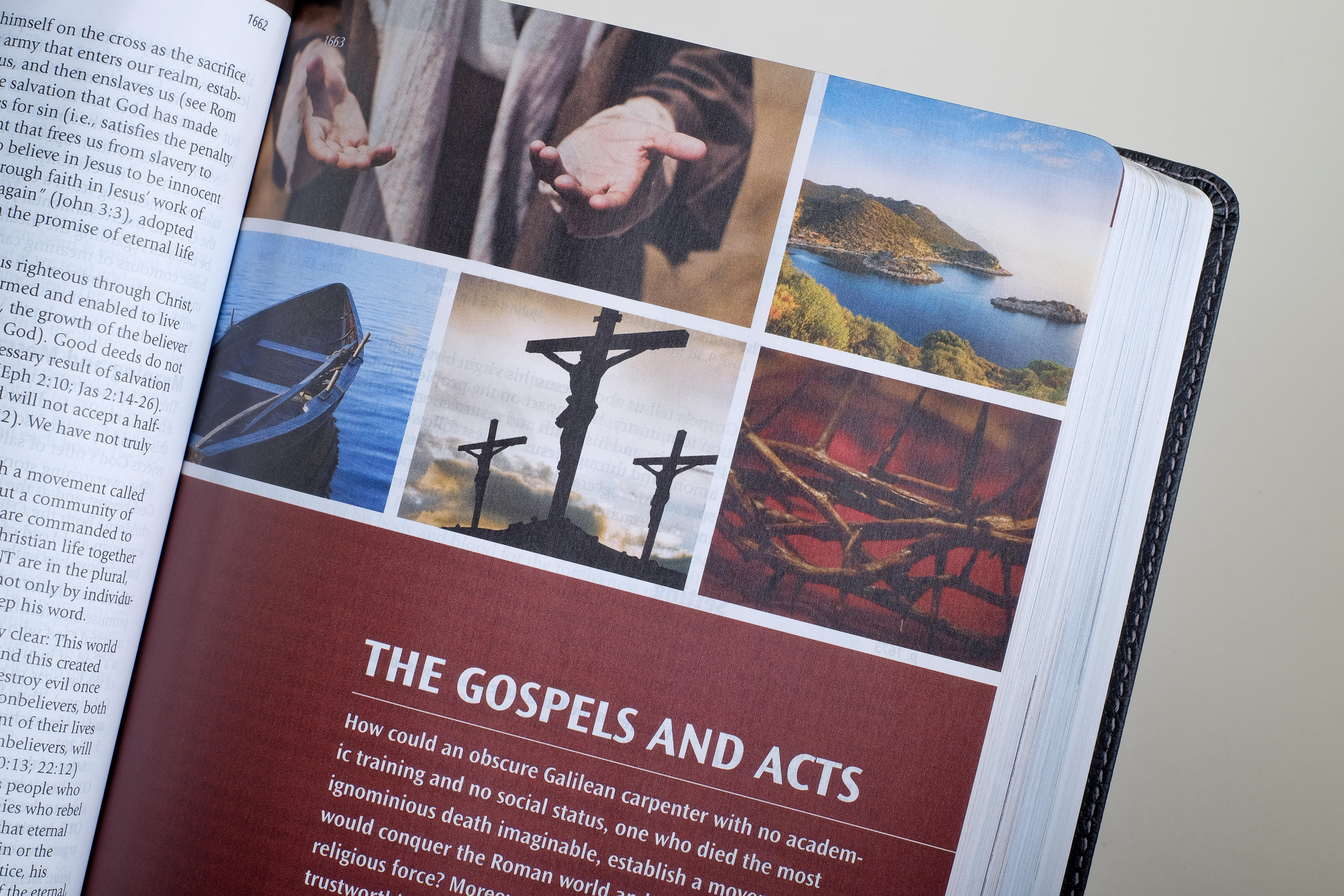
The Illustrated Study Bible brings Scripture’s message to life by giving readers a gorgeous visual study experience. Hundreds of information-rich windows to the Bible world instantly communicate foundational truths and complex information in an understandable, compelling way for today’s visual generation. The who, what, where, when, and why of the Bible come alive with stunning photos, illustrations, infographics, and full-color maps integrated seamlessly with background material, study notes, and theme articles. Purchase here
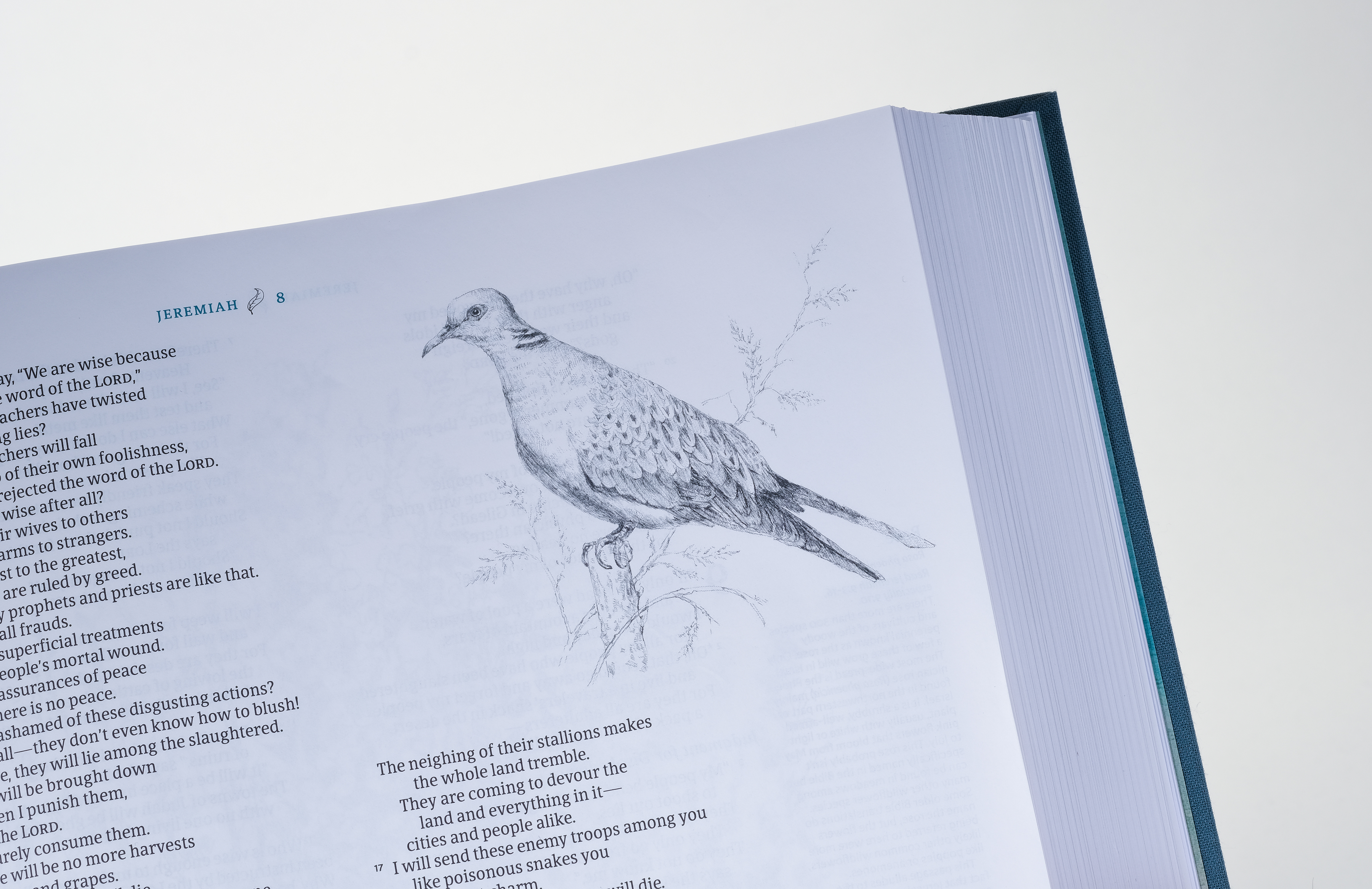
NLT Art of Life Holy Bibleweaves the beautiful NLT text into a rich tapestry of artwork illustrating many living things mentioned in Scripture—people, plants, and animals. Captions highlighting the significance of each illustration and the wide-margin design offer readers a unique way to meditate on Scripture by focusing on God’s creation. Featuring 450 original, hand-drawn illustrations in a unique style, this Bible encourages contemplation and visual interaction with the Word. Purchase here
The complete 16-volume set of Swindoll’s Living Insights New Testament Commentary draws on beloved pastor and author Chuck Swindoll’s more than 50 years of experience studying and preaching God’s Word. Each volume includes both the NLT and NASB translations of the Bible, verse-by-verse commentary, charts, maps, photos, key terms, and background articles with practical application.
PASSION WEEK: RESURRECTION SUNDAY
Tyndale House Publishers
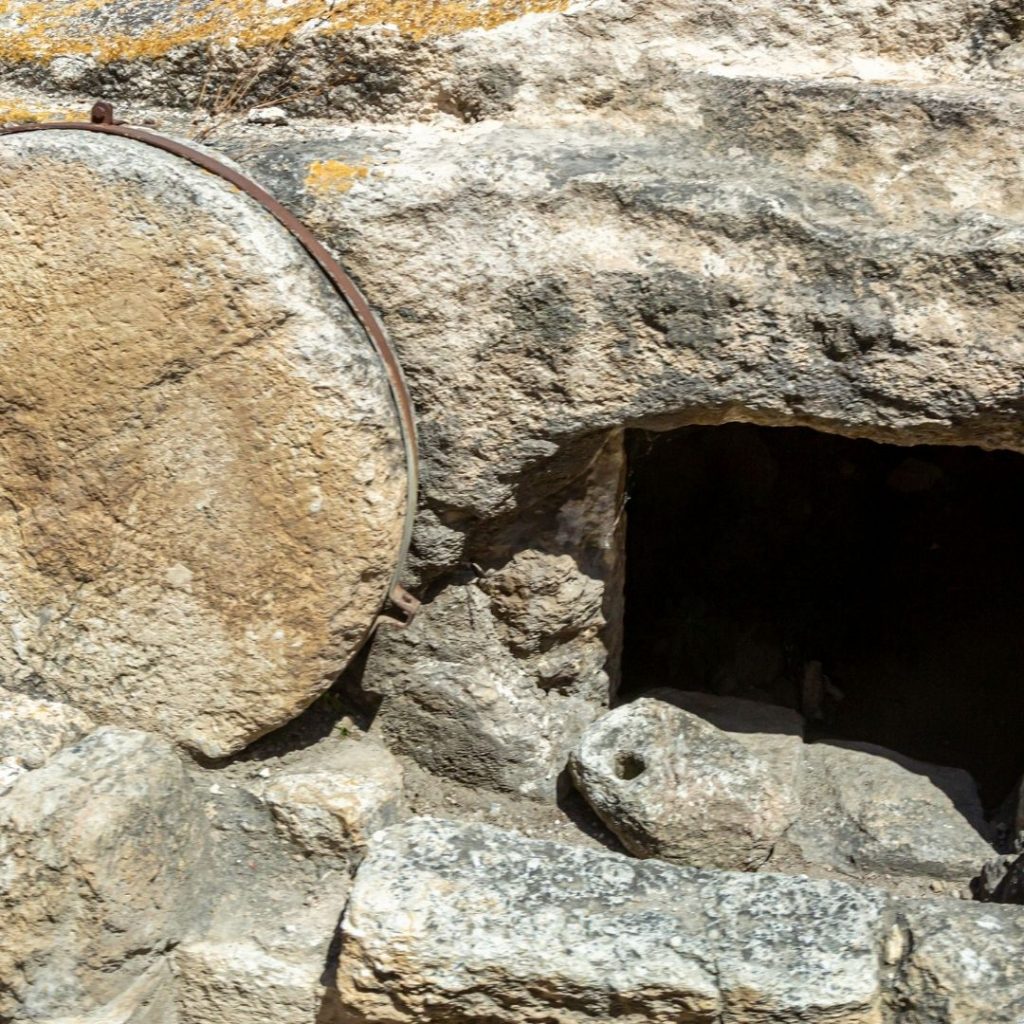
When they entered the tomb, they saw a young man clothed in a white robe sitting on the right side. The women were shocked, but the angel said, “Don’t be alarmed. You are looking for Jesus of Nazareth, who was crucified. He isn’t here! He is risen from the dead! Look, this is where they laid his body. Now go and tell his disciples, including Peter, that Jesus is going ahead of you to Galilee. You will see him there, just as he told you before he died.” Mark 16:5-7
Today is Resurrection Sunday! There is no greater day in the history of the universe—nothing trumps it. Today Satan is stomped, sin subdued, and death itself is turned backwards. Easter is the defining day of humanity. There is no other day more provocative or preeminent in the history of mankind. Christ’s birth is amazing, but without the crucifixion it is just a miraculous birth story. The crucifixion is remarkable, but without the resurrection there is no victory and Jesus is just another religious teacher whose bold claims are shattered each moment the stone stayed in place. The resurrection shows without doubt that Jesus was and is God and that the price has been paid.
For believers, today is the day of true, real, and lasting hope. Today Christmas is the most prominent Christian celebration—whether or not the people celebrating are Christians at all! Historically though, Easter, Resurrection Sunday, has been the most celebrated Christian holiday. The birth of Christ is essential to Christian orthodoxy. We look at Christmas with great hope and joy, celebrating God coming near to us. We decorate our homes, have parties, our streaming platforms are populated with favorite Christmas movies, we take days off, kids are granted a break from school, participate in family traditions and all because of the birth of a baby.
But Resurrection Sunday is different. Not as many people observe or participate in it. On the surface, it’s much easier to get behind the birth of a baby than to celebrate the crucifixion of a 33-year-old Jewish carpenter. It’s much harder to find your favorite crucifixion movie. What happened on the cross is not something we invite our friends over to celebrate. Most of us don’t have many resurrection celebrations, our traditions surrounding this historic day are generally relegated to a single Sunday afternoon meal. While Christmas is essential, even foundational for understanding who Christ is, only two Gospels—Matthew and Luke—refer to it. All four Gospels spend considerable time recounting the details of Jesus’ death and resurrection. This significant focus on the crucifixion and resurrection of Christ over against the incarnation is because the resurrection proved everything Jesus said was true.
While celebrating Jesus’ death and resurrection goes largely overlooked in wider society, these are precisely the days we must remember most. The crucifixion is a time of solemn remembrance as we seek to understand in greater depth what God did for us by sending his Son to die for us. But the resurrection gives us hope. We all need hope—the belief that things will get better for us in the future. Even as our world seems to erupt with one controversy after another, as politicians promises prove to be cannon fodder for disenfranchised and frustrated constituents, and as the endless banality of our online existence seems to lull us into a cultural slumber, the person of Jesus on the other side of the resurrection is a shock to the doldrums of a worldly status quo. It is a hope that awakens us to what is real and true. Jesus’ life and words are validated by the resurrection. His teaching on the end of time is given a glorious exclamation point rather than a question mark.
We have hope. We need not be afraid at what the future holds. We need not be afraid that present injustices will escape future punishment. God will do everything he has ever said. We can bathe in the hope that springs up from that dusty old tomb and joyously swim in it. There is hope beyond the grave! Every single word from Jesus’ lips was validated that day. His claims to forgive sin, to give us life, to judge wickedness and reward righteousness, to satisfy our every need took on new meaning on Resurrection Sunday. We have hope for today and for tomorrow! We can be courageous, because in the resurrected Jesus we have eternity as our inheritance and nothing can take that—him!—away from us! Praise the name of the Lord both now and forevermore. Amen.
Travis Michael Fleming is Founder and Executive Director of Apollos Watered, a ministry dedicated to helping believer of Jesus Christ to love and live like him in our global village. As the voice of Apollos Watered, Travis hosts a weekly podcast with listeners across the United States and in 50 countries. The podcast features conversations with Christian leaders as well as teaching that helps Christians around world to engage their cultures and learn from one another how to live out their faith Travis grew up in the farmlands of east central Illinois and has been a pastor for over 20 years from the urban center of Chicago to the north shore of Massachusetts and back to the suburbs of Chicagoland. Under his leadership each church grew in spiritual depth and diversity. Now living in Jacksonville, Florida with his wife and four children, Travis is a gifted speaker, frequently addressing churches, Christian camps, and conferences around the world. He boldly combines the deep truths of Scripture with a winsome, energetic and often entertaining style.
The next day, on the Sabbath, the leading priests and Pharisees went to see Pilate. They told him, “Sir, we remember what that deceiver once said while he was still alive: ‘After three days I will rise from the dead.’So we request that you seal the tomb until the third day. This will prevent his disciples from coming and stealing his body and then telling everyone he was raised from the dead! If that happens, we’ll be worse off than we were at first.”
Pilate replied, “Take guards and secure it the best you can.” Matthew 27:62-65
We have all experienced disappointment, failed dreams, heartbreak and perhaps even death. Jesus’ death on Good Friday brought them all. Hope was crushed. Dreams were dashed. The shock was still there the next morning. He was dead. How was he dead? What about all that he had taught? How had everything gone so badly so quickly?
The crucified Son was buried, and the hopes of the disciples were buried with him. One wonders what thoughts filled their minds the next day. Everything that they knew, loved, and hoped for was gone. In an ironic twist, the chief priests and the Pharisees prove to be greater men of faith and better theologians than the disciples. They remembered Jesus’ words, so they went before Pilate with a request: have the tomb secured. They remembered Jesus saying he would rise from the dead after three days. Curiously, the disciples didn’t expect this even though they had walked, talked, ate, slept, and spent almost every waking moment with Jesus for the last three years. Their understanding was clouded. It wasn’t until after the resurrection that everything Jesus taught them made sense.
It was the time in-between. It was the time when the hammer of truth shaped the sword of faith. And it was the time when fallen man tried to thwart the plan and purpose of Almighty God.
Men may try and disprove or even try to stop Christ, but all our attempts are ultimately futile. Protestations may find a sympathetic crowd for a time, but truth will ultimately silence the objections of faithlessness.
God cannot be stopped any more than an ant can stop a tsunami. The chief priests and Pharisees didn’t actually have more faith than the disciples. They believed that the disciples would steal the body and plant the rumor that he was alive. They understood that if that were to happen, then “we’ll be worse off than we were at first.”Pilate agreed to their request and provided soldiers to guard the tomb. The soldiers didn’t know it, but they didn’t need to guard against someone breaking into the tomb—they needed to try to keep Jesus from getting out!
Jesus did rise from the dead. The Jewish leadership couldn’t stop him. Glorious Rome couldn’t stop him. Sin couldn’t stop him. Not even death could stop him. One day later he would rise and turn the world upside down.
As we look forward to celebrating his resurrection tomorrow morning, let’s pause and thank God for his indescribable gift:
Father God, we are thankful that you sent your Son to die for us. And we thank You that He rose from the dead! Thank you for forgiveness and thank you for the new life and hope that we have in Jesus Christ! The old is passing away and the new has come! May you be praised both now and forevermore! Amen.
Travis Michael Fleming is Founder and Executive Director of Apollos Watered, a ministry dedicated to helping believer of Jesus Christ to love and live like him in our global village. As the voice of Apollos Watered, Travis hosts a weekly podcast with listeners across the United States and in 50 countries. The podcast features conversations with Christian leaders as well as teaching that helps Christians around world to engage their cultures and learn from one another how to live out their faith Travis grew up in the farmlands of east central Illinois and has been a pastor for over 20 years from the urban center of Chicago to the north shore of Massachusetts and back to the suburbs of Chicagoland. Under his leadership each church grew in spiritual depth and diversity. Now living in Jacksonville, Florida with his wife and four children, Travis is a gifted speaker, frequently addressing churches, Christian camps, and conferences around the world. He boldly combines the deep truths of Scripture with a winsome, energetic and often entertaining style.
There are mysteries in our world that most of us struggle to understand. There are events that stick in our minds because of their significance. Rarely do these mysteries and events come together, but they do in the crucifixion of Jesus. This event is a mystery that astounds philosophers, provokes unbelievers, silences doubters, and awakens a sense of awe, invoking a holy hush across creation.
Good Friday was the holiest of days. God in flesh reconciling a sinful world to himself is beyond unfathomable. That Jesus—the Son of God, Creator, Sustainer, and eternal Word, the purest of the pure, the second Adam, in whom is the fullness of Deity—could be crucified by his sinful creation extends past the limits of our finite reasoning.
The night had been exhausting. After observing the Passover Seder with his disciples in the upper room, he went with them to Gethsemane (Matthew 26:36-56). There he poured out his heart to his Father in prayer as his disciples slept. But their brief respite gave way to anger and fear as Judas arrived with an armed mob to arrest Jesus and take him away. The disciples all fled, leaving Jesus utterly alone. Perhaps no one was hurting more than the bold and zealous Peter, who just a few hours before had pledged that he would die with Jesus (Matthew 26:31-35). But overzealous declarations in peacetime all too often flee in the face of conflict. Fear and self-preservation rear their heads. What could make Peter deny Jesus? An angry mob? The Pharisees and Sadducees? No, a simple servant girl’s question was all that was needed (Matthew 26:69-75).
Betrayed and abandoned, all four Gospels record the events of Jesus’ trial and crucifixion (Matthew 26-27, Mark 14-15, Luke 22-23, John 18-19). Jesus endured the kangaroo courts of the religious and secular leaders of the day: Caiaphas, the Sanhedrin (the religious ruling body), Annas, Pilate, Herod, and Pilate again, all acted as the judges and juries against God’s Son. No charges could be proven. Only false witnesses and the call for death by crowds spurred on by cruel jealousy and sanctimonious hypocrisy. The guilt of the crowds is seen most clearly in their call to free the rebel Barabbas instead of Jesus. Barabbas was an unrighteous man whose life was spared as a reward for others’ hypocrisy. Jesus was the righteous man who would give his life as a ransom for many.
Jesus was tried and convicted. He was then flogged—a cruel and horrific punishment that often proved fatal. The condemned was tied to a post and beaten with a leather whip, which was interwoven with pieces of bone and metal designed to tear into the skin and tissue, often revealing bones and intestines.
After the flogging, the soldiers wanted to have one last bit of fun. They gathered the whole battalion before Jesus, stripped him and put a scarlet robe on him. But their mockery was not yet complete. They twisted together a crown of thorns and placed it on his head and placed a reed in his right hand as a staff. In mockery and in jest they knelt before him as they would a Caesar, saying, “Hail, King of the Jews!” (Matthew 27:29). Then they spit on him, took the reed from his hand and struck him on the head with it. Their game over, they stripped him of the robe and put his own clothes back on him and led him away to be crucified.
Jesus made his way to Golgotha, barely able to walk, exhausted, beaten, and in great pain. When he could no longer carry the cross, Simon of Cyrene was drafted to carry it for him. Finally, they crucified him between two thieves.
Jesus’ suffering and humiliation was immense. Stripped naked and crucified as an enemy of Rome, his degradation was not yet complete. Pilate placed a sign written in Greek, Latin and Hebrew above His head: THIS IS THE KING OF THE JEWS. There was to be no mistake—Jesus was a king. And although the declaration was motivated by sinful mockery, it would prove to be an ironic sign of majestic and divine victory.
Jesus was and is the King. He died that Good Friday in order to provide us with redemption. We all deserve the wrath of God, but Jesus took God’s wrath upon himself. He endured the shame and humiliation for us. Through the mystery of Jesus’ death on the cross, God reconciled us to himself.
According to Scripture, we are spiritual criminals, enemies of God (Romans 5:8). The position Jesus took between two thieves should have been ours. But that holy day, the guiltless took the place of the guilty in order to pay the price our sins required.
There is a mysterious and almost surreal freedom that comes with the cross, but freedom does come. He paid the price that was beyond our ability to pay. He did not do it begrudgingly. He was not coerced or in any way forced. He did it freely and willingly so that we might be spared God’s wrath and have an eternal relationship with him.
On this good Friday, pause, reflect on what Jesus did for us. Confess any known sin to him. Freely embrace the forgiveness that is yours because of what Jesus did. Then marvel and praise him for the freedom, joy, and peace that is now yours because of the mystery of that wonderful cross.
Travis Michael Fleming is Founder and Executive Director of Apollos Watered, a ministry dedicated to helping believer of Jesus Christ to love and live like him in our global village. As the voice of Apollos Watered, Travis hosts a weekly podcast with listeners across the United States and in 50 countries. The podcast features conversations with Christian leaders as well as teaching that helps Christians around world to engage their cultures and learn from one another how to live out their faith Travis grew up in the farmlands of east central Illinois and has been a pastor for over 20 years from the urban center of Chicago to the north shore of Massachusetts and back to the suburbs of Chicagoland. Under his leadership each church grew in spiritual depth and diversity. Now living in Jacksonville, Florida with his wife and four children, Travis is a gifted speaker, frequently addressing churches, Christian camps, and conferences around the world. He boldly combines the deep truths of Scripture with a winsome, energetic and often entertaining style.
As they were eating, Jesus took some bread and blessed it. Then he broke it in pieces and gave it to the disciples, saying, “Take it, for this is my body.”
And he took a cup of wine and gave thanks to God for it. He gave it to them, and they all drank from it. And he said to them, “This is my blood, which confirms the covenant between God and his people. It is poured out as a sacrifice for many. I tell you the truth, I will not drink wine again until the day I drink it new in the Kingdom of God.” Mark 14:22-25
Christians all around the world observe communion, also known as the Lord’s Supper, but rarely do we understand the depth of history behind it or all that it points to. The Lord’s Supper provides us a visible and tangible reminder of who God is, who we are, what he has done for us, and what he is going to do at the end of time.
On his last night with his disciples, Jesus had one last meal with his disciples in an upper room (Luke 22:12-13). The meal was the traditional Passover Seder, instituted by Moses to commemorate the night God set the Israelites free from their slavery in Egypt (Exodus 12:1-28). Jews were told to sacrifice the Passover lamb and place its blood on the doorposts of their homes so that when the destroyer came to kill the firstborn in the land of Egypt, the firstborn in that house would be spared (cf. Exodus 11:4-7; 12:12-13, 22-28). It was only after the death of the firstborn sons in the land that Pharaoh finally released the Israelites from their slavery.
The Passover not only pointed back to what God had done, but also pointed forward to the day when God’s people be free from the greater bondage of sin and death through Jesus. The Israelites had the lamb’s blood over their doorpost, but Jesus would be the ultimate and final Passover Lamb (John 1:29), his blood would cover the hearts of all those who take refuge in him, protecting them from final judgment (1 Corinthians 5:7).
“This is my blood, which confirms the covenant between God and his people. It is poured out as a sacrifice for many.” Mark 14:24.
Jesus was presenting himself as the true Passover Lamb who would redeem his people from their sins. He was also looking to the day of ultimate redemption when the Kingdom of God would be realized in its fullness as seen in the marriage supper of the Lamb in heaven (Revelation 19:9-10).
The Lord’s Supper then is a visible reminder of what God has done in Jesus to provide us with salvation and what he will do at the end of time when Jesus comes again. Observing the Lord’s Supper together keeps these truths in front of us, focusing us on what is right and true so that we do not forget. The Passover Seder, this amazing memorial for all Jews to remember God’s deliverance from Egypt, now serves as a pathway to see Jesus, the true lamb of God, who did more than deliver us from an earthly tyrant, he delivered us from an even more evil and heinous enemy—the enemy of sin and death.
Today, take time to pause, reflect, and remember who God is and what he has given to you because of Jesus. Find a piece of paper and write out what God has done for you in Christ. Remind yourself that he freed you from your sin through Jesus. He doesn’t hold it against you any longer. He has made you into a new creation. Do not be caught up in the distracting headlines of the day or believe lie that sin still reigns over you. Instead, let the breeze of God’s Holy Spirit blow away the fog of sin, unbelief, and shame, focusing your mind and emboldening your heart to draw near to him in this time of grace.
Travis Michael Fleming is Founder and Executive Director of Apollos Watered, a ministry dedicated to helping believer of Jesus Christ to love and live like him in our global village. As the voice of Apollos Watered, Travis hosts a weekly podcast with listeners across the United States and in 50 countries. The podcast features conversations with Christian leaders as well as teaching that helps Christians around world to engage their cultures and learn from one another how to live out their faith Travis grew up in the farmlands of east central Illinois and has been a pastor for over 20 years from the urban center of Chicago to the north shore of Massachusetts and back to the suburbs of Chicagoland. Under his leadership each church grew in spiritual depth and diversity. Now living in Jacksonville, Florida with his wife and four children, Travis is a gifted speaker, frequently addressing churches, Christian camps, and conferences around the world. He boldly combines the deep truths of Scripture with a winsome, energetic and often entertaining style.