Taken from the Life Recovery Bible 12-Step Devotional for Step 6
“We were entirely ready to have God remove all defects of character.”
When we are upset, we often depend on our addictions to make us feel better. As we get rid of our addictions, we must face the deeper character defects that God wants to heal. Our addictions function as a place of “shelter” from our pain. But when that “shelter” is removed, deep anger may surface, exposing even deeper character flaws that need healing.
Jonah had a glaring defect of character: He couldn’t forgive and have compassion on the people of Nineveh, whom he hated. When God decided not to destroy them, Jonah threw a temper tantrum.
“The Lord replied, ‘Is it right for you to be angry about this?’ Then Jonah went out to the east side of the city. . . . And the Lord God arranged for a leafy plant to grow there, and soon it spread its broad leaves over Jonah’s head, shading him from the sun. . . . The next morning . . . the plant. . . withered away. And as the sun grew hot, God arranged for a scorching east wind to blow on Jonah. The sun beat down on his head until he grew faint and wished to die” (Jonah 4:4-8).
God did this to show Jonah that the real problem wasn’t the loss of his shelter. Hatred was the real problem. The removal of our sheltering addictions may expose deeper problems. This may spark defensive anger as God touches our deepest hurts. It is all right to let the anger out. But it is also important to let God take care of the real problem.
Real Freedom Found Behind Real Bars
Women in Prison Unlock Hope and Healing with The Life Recovery Bible
I was raised in Bryan, Texas, so I did not think it was unusual to be opening a letter from a woman who lived in Brazos County near Bryan. What follows was anything but usual. She wrote:
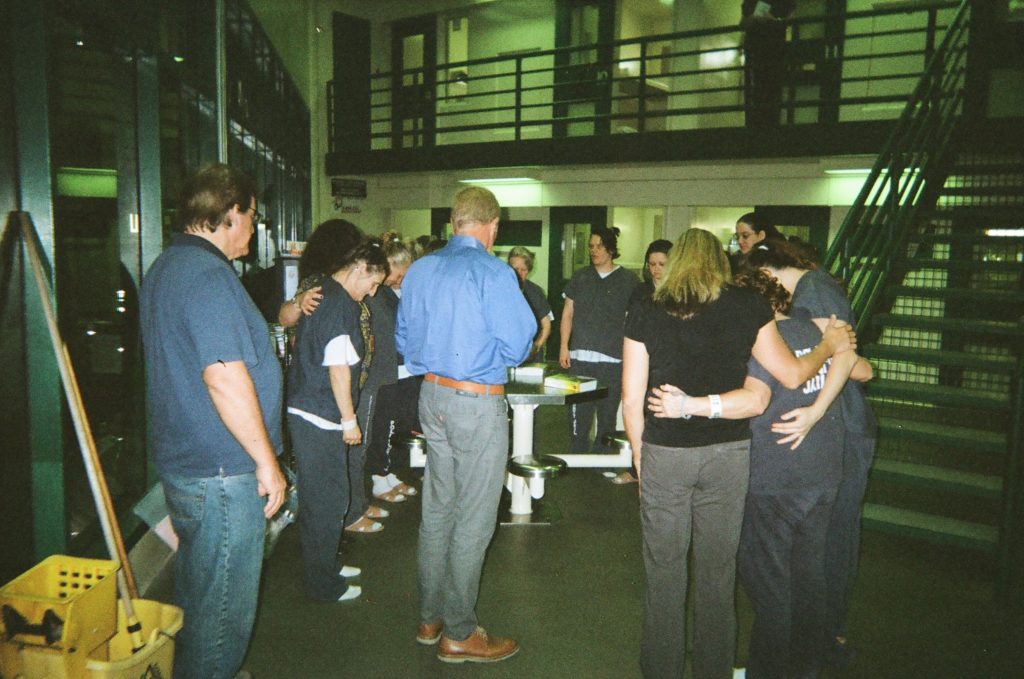
“I am filled with joy to inform you that your Life Recovery Biblehas changed about twenty lives filled with different kinds of addiction in my community. I regret to inform you that the women (including me) are all locked up in The Brazos County Detention Center in Bryan, Texas.
I was incarcerated on the 29th of March, 2018
Twenty-five years ago, I held the first Life Recovery Bible in my hands and quickly passed it on to a woman who was addicted to crack and headed for prison. She went home and, rather than allow herLife Recovery Bible to take on the role of most Bibles as Chief Dust Collector, she actually opened it up and started reading it. Through her drug addicted, half on and half off, cracked brain, she discovered that God could help her out of her addiction and that the path involved 12 steps based on and found within that Bible. The impact was so great and the transformation so radical that she was not incarcerated, and within six months she was helping other young women in their recovery.
Twenty years later I found myself in the midst of some very normal everyday housewives who just happened to be in the Polk County Florida prison after being arrested for making, selling, or being in possession of methamphetamines. These meth addicts, in a weak moment of desperation or a curious moment of living on the edge, decided to try using meth, just once, and never again. But that one time became a lifetime of using and finding ways to make stuff or sell stuff, including themselves, to be able to feed the addiction that seemed to develop instantly with that first hit.
I was invited to join these women, who looked and talked like anything but a hardened criminal, in their daily Life Recovery Bible study. This Bible was a reward for those entering the drug rehab program offered by a group of women who were once addicted and also had been incarcerated in the same prison. They loved this Bible because it was unlike anything they had ever experienced. Up until then, the Bible was just something that was old, difficult to understand, and even more difficult to apply to your life in any meaningful way. But this Bible is different, and there is a reason why.
When Dr. Dave Stoop and I developed this Bible we included many helpful features not found in other Bibles, including devotionals for each of the 12 Steps, The Serenity Prayer, and Recovery Principles. While those provide deep insights and spiritual inspiration, they are not the feature that make The Life Recovery Bible so amazing to anyone in recovery. The most valuable and unique feature is the study notes found at the bottom of each page. Why? Because they are written by recovering Bible scholars who teach at Universities and Seminaries all over the world. They not only have PhDs in Theology, but every one of them has had a problem that involved them in 12 Step Recovery. Rather than a study note having to do with some remote or abstract theological construct, the note speaks to the struggle for freedom within the heart of anyone imprisoned by the power of addiction, incarcerated or not.
The Life Recovery Bible does not bring the Bible into the recovery process. It brings the recovery process back to the Bible where it began. Bill W. and Dr. Bob worked together to develop the 12 Steps of Alcoholics Anonymous after they had found victory over an illness that rarely spared the life of anyone who contracted it. Both men had been members of the Oxford Group, which had purported 4 Absolute Truths: Absolute Honesty, Absolute Purity, Absolute Un-selfishness, and Absolute Love, which were all based in Scripture. In the transcript from the last talk ever given by Dr. Bob, he tells where he and Bill found the 12 Steps. He said “We got them from the Good Book. Especially the Book of James, the Sermon on the Mount and 1 Corinthians 13, the love chapter.” So The Life Recovery Biblebrings the 12 Steps full circle and identifies the true higher power of the 12 Steps as the God of the Old and New Testaments.
Twenty-five years ago, I couldn’t have imagined the impact The Life Recovery Bible would have on those around me both in Brazos County and many thousands of miles away from where I grew up. God has blessed this Bible and the people who read it, teach it, and share it, and for that I am thankful. He alone is the true source of recovery and the author of transformation—always has been, always will be.
Look Inside the Life Recovery Bible
Coming Together in God’s Word
Bethesda Community Church in Fort Worth, Texas, is a thriving multigenerational, multiethnic, multilingual congregation. Watch this video and discover howImmerse: The Bible Reading Experience has helped them grow together in unity and community.
Immersed as Family
I read an interesting article a few months ago that poses the question: As Christians, do we put our needs and wants for our families above our sacrificial living to God? It is an intriguing question and caused me to pause, pray, and reflect on my priorities.
As I continued to think about that question, I was reminded that as parents, mentors, teachers, and anyone who has influence in a child’s life, we are instructed to train the children in our lives in the truth of Scripture and to help them understand what it means to live a life fully surrendered to God. We do this when we live sacrificially. This is emphasized throughout Scripture, but check out Deuteronomy 6, Proverbs 22, and 2 Timothy 3 as a start.
In our house, we want reading the Bible together to be a priority, but it can be difficult with varied reading levels, maturity, and understanding. Immerse: The Bible Reading Experience offers us many options to overcome these hurdles, like audio of the day’s readings, videos to help us have an overview of what’s going on, and the family reading guides.
The family reading guides are resources designed to assist parents, guardians, and other family leaders in guiding their families through the transformative Immerse experience. Essentially, it’s an abridged version of each Immerse volume. So, it’s an excellent way for young readers in your family to participate in the Immerse experience without becoming overwhelmed.
The readings are shorter and always drawn from within a single day’s reading when following the volume’s reading plan. This helps everyone in the family to stay on the same reading path. Each daily Bible reading in the family guide is introduced by a short paragraph to orient young readers to what they are about to read. This paragraph will also help to connect the individual daily Scripture passages to the big story revealed in the whole Bible.
The readings end with a feature called Talking Together, created especially for young readers. These provide reflective statements and questions to help them think more deeply about the Scriptures they have read. (Talking Together is also useful for guiding your family discussions.)
Sometimes the best way to get everyone on the same page is to read something out loud together. If your family enjoys reading aloud together on a regular basis, that may be the most natural way for you to use the family reading guide.
For families that haven’t tried this, you may want to experiment. Begin each daily reading with the introductory paragraph to give context, followed immediately by the daily Scripture passage. Then the Talking Together feature can help you lead a family discussion. And don’t forget about the audio and video resources that are available at ImmerseBible.com.
This doesn’t have to be just your nuclear family. Why not get extended family involved so more generations can be gaining insight and wisdom from each other. The family guides are also a great way for full congregations to be immersed together in God’s Word. Bethesda Community Church in Texas is a multigenerational, multiethnic, multilingual congregation. Watch this video and hear how using Immerse has brought not only unity but community to this thriving family of God.
“I walked by the field of a lazy person, the vineyard of one with no common sense. I saw that it was overgrown with nettles. It was covered with weeds and its walls were broken down. Then, as I looked and thought about it, I learned this lesson: A little extra sleep, a little more slumber, a little folding of the hands to rest—then poverty will pounce on you like a bandit; scarcity will attack you like an armed robber.” Proverbs 24:30-34, NLT
Proverbs pokes fun at lazy people. They are
sarcastically compared to a door that swings back and forth (26:14), and
lampooned for their empty excuses (e.g., 22:13). Proverbs equates lazy people
with the foolish; their lack of productivity leads to poverty and death (6:6‑10;
10:26; 15:19; 18:9; 19:15, 24; 20:4; 21:25; 22:13; 24:30‑34; 26:13‑16). By
contrast, diligent people are seen as wise; their activities lead to wealth and
life (10:4‑6; 12:11; 13:4; 14:4; 20:13; 31:10‑27).
The theme of laziness arises in the contrast between the two
women, Wisdom and Folly (ch 9). The virtuous woman of ch 31 reflects the
industriousness of Wisdom (31:16‑18).
While it is true that ultimate meaning and fulfillment do not come from hard work (Eccl 2:17‑26), the lazy are still condemned (Eccl 4:5‑6). God created Adam and Eve and put them in the Garden to tend it, not just to sit back and enjoy it (Gen 2:15). Proverbs and the whole of Scripture support the truth that work is not a result of the Fall but rather is a dignified and important part of creation.
Look inside the Illustrated Study Bible
The Book of James
The Book of James is a short, but powerful book. Learn a bit more from TheSwindoll Study Bibleabout who wrote the book, the original audience, and why it’s important.
“So you see, faith by itself isn’t enough. Unless it produces good deeds, it is dead and useless.”
Who Wrote the Book? While he does not specifically identify himself as Jesus’ brother in the letter, the author of the book of James is widely thought to be the James who was the brother of our Lord. It appears that James was not a follower of Jesus during the Savior’s time on earth (Mark 3:21-35), but eventually he became an apostle after seeing the Lord post-Resurrection (1 Cor. 15:7; Gal. 1:19). Upon witnessing the Lord in His resurrected body, James came to believe that Jesus was the Messiah and later became one of the leaders of the church in Jerusalem. Peter singled him out among the other Christians there after Peter’s own miraculous release from prison (Acts 12:17). In addition, James made the deciding speech at the Jerusalem Council (Acts 15:13-21), and Paul called him one of the “pillars of the church” (Gal. 2:9).
Where Are We? As one of the chief leaders in the church at Jerusalem, James wrote from that city prior to the meeting of the Jerusalem Council, the account of which is recorded in Acts 15. At that council, James, along with Peter and Paul, affirmed the decision to take the gospel message to the Gentiles. This council met in ad 49, meaning that James likely wrote his letter between ad 45 and ad 49. Such a significant event as the Jerusalem Council would have warranted comment from James, especially because he was writing to a Jewish-Christian audience. But in the letter James makes no mention of Gentile Christians at all, so an early date for the letter seems most likely.
Why Is James So Important? The book of James looks a bit like the Old Testament book of Proverbs dressed up in New Testament clothes. Its consistent focus on practical action in the life of faith is reminiscent of the Wisdom Literature of the Old Testament in the way that it encourages God’s people to act like God’s people. The pages of James are filled with direct commands, and he makes no excuses for those who do not walk their talk. In the mind of this early church leader, Christians evidence their faith by walking in certain ways and not others. According to James, faith must produce real life change (Jas. 2:17).
Look Inside The Swindoll Study Bible
Jesus Is Coming
“I, Jesus, have sent my angel to give you this message for the churches. I am both the source of David and the heir to his throne. I am the bright morning star.” Revelation 22:16, NLT
In Revelation 22:16, Jesus clearly identifies himself and ties the past to the future. Long ago God promised his people that a star would come from Jacob (Numbers 24:17). To Isaiah he promised that a shoot would come from “the stump of David’s family” (Isaiah 11:1). When Jesus walked the earth, people knew he was the son of David (Matthew 22:42). What was promised so many centuries before has come true. In one statement, Jesus unites thousands of years of prophecies and history.
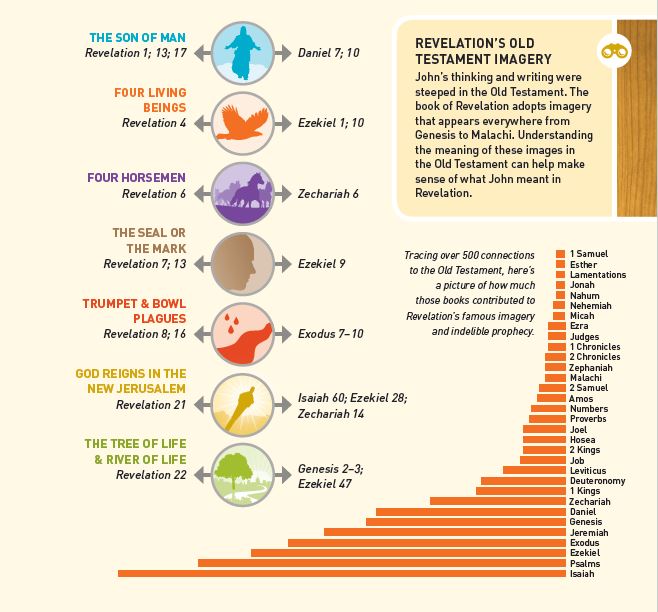
John’s thinking and writing were steeped in the Old Testament. The book of Revelation adopts imagery that appears everywhere from Genesis to Malachi. Understanding the meaning of these images in the Old Testament can help make sense of what John meant in Revelation. Check out the graphic below from the Wayfinding Bibleto see the connection of Revelation imagery to the Old Testament.
Look Inside the Wayfinding Bible
Run to Win
“Don’t you realize that in a race everyone runs, but only one person gets the prize? So run to win!” 1 Corinthians 9:24, NLT
Using the metaphor of running a race, the apostle Paul instructed the church in Corinth to be disciplined in the way they live their lives as believers. They
were to run with purpose, knowing their reward would be imperishable and eternal.
In his sovereignty, God has given each one of us a race to run. For Paul, that meant purposefully living in a way that would help bring the Good News to as many people as possible. However, that race will look different for each person. For example, Brandon, a young man with Angelman Syndrome, shows great perseverance in running his unique race. Because of his disability, Brandon experiences anxiety in social settings, which makes each step of going from home to school seem like running a marathon. Going out the front door, walking to meet the school bus, getting off the bus in a parking lot filled with many students, going through the school entrance, and finally walking into the classroom is the race Brandon runs each morning with perseverance.
For a person with a disability, the race may entail going to many, many breathing treatments. For parents of children with special needs, the race may include countless doctor’s appointments and therapy sessions. The daily race for people with physical impairments can mean a several-hours-long morning routine of getting dressed and preparing for the day ahead.
We do not run our race in vain. Christ is present with us, and we are surrounded by a “huge crowd of witnesses” (Heb 12:1). In the body of Christ
we are called to cheer each other on. We run the race with Brandon and the many others involved in managing disabilities who may grow weary and lose hope. We celebrate each victory, no matter how small, as we run with endurance the unique race set before us, keeping our eyes on Jesus, who “because of the joy awaiting him . . . endured the cross” (Heb 12:2).
Take a look inside the Beyond Suffering Bible
Making Courageous Changes
Social media posts reek of fake paradise. When asked, “how are you?” we respond, “fine” or “good.” We mask our hurts, hide our pain, and try to bury our fears and discomfort because we think being real exposes our weaknesses. We often feel we don’t live up to what others expect, that our walk with Jesus is something less than desired, or we aren’t filled with the joy of the Lord because our reality isn’t perfectly sunny.
“As a child I learned to turn a blind eye and pretend everything in life was perfect, even when it was far from it. I grew up learning not to rock the boat, and I carried that dysfunctional coping mechanism into all of my adult relationships, particularly into my marriage. Finding courage to change these bad habits took me a long time,” said Ann.
For 20 years she would take her Bible to church and bring it back, rarely opening it. Her idea of being a Christian was going to church and trying to be good. The word discipleship was just about Jesus’ first followers and had no meaning for her. But when she hit rock bottom and the fake contentment was shattered, God opened her eyes to how broken she was. In desperation she cried out, not for a soother but a Savior. (for more on Ann’s personal story you can read her bookCourage for Life.
“We try to fix everything ourselves, but I knew I couldn’t fix this. I needed total guidance from God. His Word brought me to a point where I could truly be strong and courageous—the end of my old self and beginning of my new self in him. I could finally say, ‘I’m messed up and that’s okay,’” said Ann.
She started getting into God’s Word every day. She was starving and thirsting for it. Her own strength was barely holding life together, but the foundation of God’s Word kept her from falling into despair. With God’s help and wisdom her husband came alongside, and together they faced the realities that were hiding behind their painted-on smiles and the façade they had created.
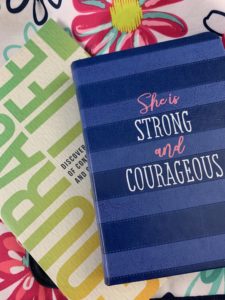
“When God saves your life, and your 26-year marriage, you want tell everyone about it. The Lord told me to birth a ministry, to reach out to women so they, too, could find their grounding and courage in God’s Word,” said Ann.
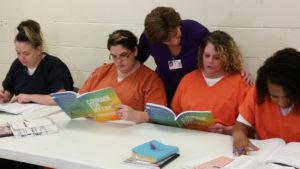
Ann obeyed God’s call, birthed CFL and started creating resources for women. She initially thought they would be taught in churches, but as she continued to follow God’s leading, the ministry grew. Around the world, CFL resources are helping women find their identity in Christ. From church groups to brothels and prisons, women are moving from fear to faith and through Christ are able to make courageous choices that bring change into their own lives and the lives of those around them.
“God is working miracles. Kathy Urbanick, our ministry director for CFL, was working with women in a local prison. She said to me, ‘I am blown away. These girls are leaning into the Lord, they are inspired to make courageous changes.’ So, we decided to make an 8-week study guide with women’s prison ministry in mind. It helps women find a life full of confidence, hope, and opportunity through studying God’s Word. And there is no better translation to study that speaks right to the heart than the New Living Translation (NLT),” said Ann.
“When we first thought about providing an audio Bible, we knew it would need to be in a woman’s voice. Since abuse and trauma are common occurrences in at-risk women’s lives, a man’s voice can cause them to relive horrific memories from their past by reminding them of their abusers. We knew we needed an audio Bible that would be like a mother, grandmother, or sister reading to you. We didn’t want anything to distract from the comfort and peace God’s Word brings,” said Ann.
In searching for this resource, they discovered that very few exist. Ann again heard God calling her out of her comfort zone to start a new project. Twelve women from different ethnicities, ages, and backgrounds came together to voice the first-ever all-women-narrated Bible app.
“As we were finishing this project we started talking to the prisons about it, and God confirmed that ‘for such a time as this’ the app was needed. Many of our state’s prisons have started giving women tablets filled with positive content. What better positive message is there than the Word of God?” said Ann.
But it wasn’t for the women alone. The prisons asked if they could upload it to the men’s tablets as well. With many children raised by a single mom, grandma, or aunt, men who have had negative experiences with their fathers and other men also respond better to women’s voices. It’s a vital reminder of someone in their lives who spoke encouragement and love. Two states are currently in the process of uploading the women’s NLT audio Bible—to 53,000 tablets in one state and over 30,000 in another. And the numbers continue to grow.
“When God called me, I never thought I would be working in jails or creating an audio Bible, but God’s passion is for everyone to be drawn to him, and this my passion too. My greatest prayer is that everyone will get into God’s Word. According to extensive research by Back to the Bible, if we are reading God’s Word four or more times a week, it changes our patterns, our behavior, our attitudes; it will change a culture,” said Ann.
Many at-risk women relive their mistakes over and over, judging themselves and drifting into despair. Even while in the dark night of the soul, Kathy has seen miraculous transformation when women read the NLT. The negative self-talk is replaced with God’s words of love and hope.
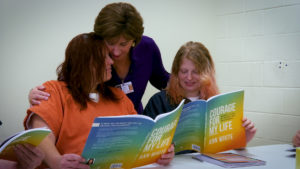
“Many of these women have been told and are treated as though they are less than nothing. They feel they are worthless and that there is no hope. The beautiful thing about the NLT is that it is uses gender-inclusive language. Women can see themselves right in the text, learn to believe God loves them in a very personal way,” said Kathy. “As they read it they can see women in Christ’s lineage, that Christ and Paul had encouraging and positive relationships with women. If they read it and hear it in a way they can understand, they can replace the lies the world has told them with the truth of Scripture.”
Imagine studying the Bible with pastor Chuck Swindoll sitting beside you – sharing his warm personal insights, gleaning wisdom from his over 50 years of ministry and being inspired by his passion for God’s Word. That is why he created the Swindoll Study Bible. Since he can’t physically be in all of our living rooms, he still wanted a way to encourage each of us to walk closer with Jesus. Hear about it his own words:















 For 20 years she would take her Bible to church and bring it back, rarely opening it. Her idea of being a Christian was going to church and trying to be good. The word discipleship was just about Jesus’ first followers and had no meaning for her. But when she hit rock bottom and the fake contentment was shattered, God opened her eyes to how broken she was. In desperation she cried out, not for a soother but a Savior. (for more on Ann’s personal story you can read her book
 “When God saves your life, and your 26-year marriage, you want tell everyone about it. The Lord told me to birth a ministry, to reach out to women so they, too, could find their grounding and courage in God’s Word,” said Ann.
 “God is working miracles. Kathy Urbanick, our ministry director for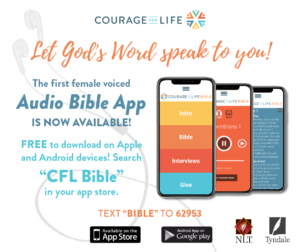
 “Many of these women have been told and are treated as though they are less than nothing. They feel they are worthless and that there is no hope. The beautiful thing about the NLT is that it is uses gender-inclusive language. Women can see themselves right in the text, learn to believe God loves them in a very personal way,” said Kathy. “As they read it they can see women in Christ’s lineage, that Christ and Paul had encouraging and positive relationships with women. If they read it and hear it in a way they can understand, they can replace the lies the world has told them with the truth of Scripture.”
 Learn more about Courage for Life and the first Audio Bible app fully voiced by women