Humble Prayers

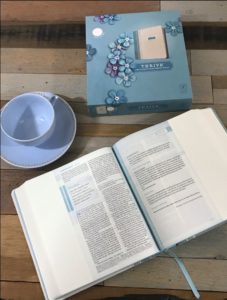
God calls us to humble ourselves before Him and this includes when we come to Him in prayer. Read from the Thrive Journaling Devotional Bible for Women about finding the courage to humble ourselves and pray.

“Then if my people who are called by my name will humble themselves and pray and seek my face and turn from their wicked ways, I will hear from heaven and will forgive their sins and restore their land.” 2 Chronicles 7:14

Love Letter from God

Beloved Daughter,

You are My child, and I love to answer you. There is great power in humility and prayer. Real change starts in your heart, permeates your home, and then echoes throughout the world. You have the ability to lift up anything in prayer, and I will hear you. You also have the gift of repentance, and in one prayer you can make yourself right with Me. I will forgive you, and that blessing will affect not only you but also the people around you. Don’t ever give in to hopelessness or sin. I have given you the power to live above such things. Walk with Me, bring everything to Me in prayer, and watch My mighty hand move in your life.

Love,

Your heavenly Father

Reflection

We tend to blame everything and everyone in this world for the condition that we are in, but our first response must be instead to humble ourselves and pray. According to God’s promise, He will then heal the land in which His children live, starting with their own hearts.

Treasure of Truth

Our humility and prayer invite God’s forgiveness and restoration.

Look inside the Thrive Bible

Reader Question: Is there a difference between being born again and being saved?

We received another excellent question on our Facebook page and wanted to share it with you.  This question was about the difference between being born again and being saved. Mark D. Taylor, CEO of Tyndale House Publishers and Director and Chief Stylist for the New Living Translation Bible Translation Committee, agreed to share his thoughts on this topic.

Question: “Is there a difference between being born again and being saved?”

Answer from Mark D. Taylor:

Good question! To find an answer, let’s look to the New Testament, where we find both terms.

In John 3:1-7 we read:

There was a man named Nicodemus, a Jewish religious leader who was a Pharisee. After dark one evening, he came to speak with Jesus. “Rabbi,” he said, “we all know that God has sent you to teach us. Your miraculous signs are evidence that God is with you.”

Jesus replied, “I tell you the truth, unless you are born again, you cannot see the kingdom of God.”

“What do you mean?” exclaimed Nicodemus. “How can an old man go back into his mother’s womb and be born again?”

 Jesus replied, “I assure you, no one can enter the Kingdom of God without being born of water and the Spirit. Humans can reproduce only human life, but the Holy Spirit gives birth to spiritual life. So don’t be surprised when I say, ‘You must be born again.’

Nicodemus thought Jesus was talking about a physical rebirth, but Jesus was talking about spiritual birth. We have all been born physically, but Jesus wants us to be born again, that is, to have a spiritual birth.

The Greek word that is translated “born again” is also found in 1 Peter 1:3 and 1:23:

All praise to God, the Father of our Lord Jesus Christ. It is by his great mercy that we have been born again, because God raised Jesus Christ from the dead. . . .

For you have been born again, but not to a life that will quickly end. Your new life will last forever because it comes from the eternal, living word of God.

Peter, who had been one of Jesus’ disciples, is saying that all who believe in Jesus as the Son of God have been born again.

The word “saved” is found many times in the New Testament. Let’s look at two examples in Acts 16:25-31, where we read about Paul and Silas having been imprisoned in Philippi:

Around midnight Paul and Silas were praying and singing hymns to God, and the other prisoners were listening. Suddenly, there was a massive earthquake, and the prison was shaken to its foundations. All the doors immediately flew open, and the chains of every prisoner fell off! The jailer woke up to see the prison doors wide open. He assumed the prisoners had escaped, so he drew his sword to kill himself. But Paul shouted to him, “Stop! Don’t kill yourself! We are all here!”

The jailer called for lights and ran to the dungeon and fell down trembling before Paul and Silas. Then he brought them out and asked, “Sirs, what must I do to be saved?”

They replied, “Believe in the Lord Jesus and you will be saved, along with everyone in your household.”

We can see from these sets of passages that being “born again” is the same as “being saved.” Both terms refer to the spiritual process of being accepted into God’s family.

If you have a question let us know in the comments or reach out on our social media pages. You can find us on Facebook, Twitter and Instagram. We will try to answer some here on the blog.

Meet the New Believers Bible

Becoming a Christian is a glorious thing. Figuring out what being a Christian means in everyday life can be a bit daunting. There are new ideas to absorb, a whole new vocabulary to learn, and then there’s the Bible. It’s not in chronological order, and more than a little of it can seem just plain weird and bewildering. That’s where the New Believer’s Bible comes in.

Download Psalms, John and Romans

Today Greg Laurie is a well-known pastor, evangelist, and author, but once he, too, was a new believer who didn’t really understand the ins and outs of the Bible. The New Believer’s Bible was developed to help new Christians grow in their faith through reading, studying, and understanding God’s Word. Four study tracks  present the essentials of the Christian faith in a way that is easy to follow and understand. As the reader progresses through the four tracks, they will gain a clearer understanding of who God is and how he wants us all to live.

The New Believer’s Bible also includes a number of other special features to help new Christians grow, including a glossary of Christian terms, charts, reading plans, an overview of the Bible, memory verses, and more.


Journaling Under the Bridge

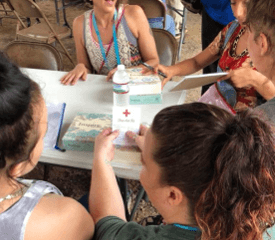
Tyndale House Publishers had the opportunity to partner with a Texas bookstore called Flint Gypsy, which frequently holds Bible-journaling activities, for their Journaling Under the Bridge event in Tyler’s tent city on Saturday. There may be no greater way to share the love of God than to meet tangible needs of those going through hard times. Flint Gypsy’s owners love Jesus, and they saw an opportunity to share God’s love with people in their community.

Journaling Under the Bridge was inspired by the story of a local woman who was living in tent city when her backpack was stolen out of her tent. Inside of her backpack were some of her most treasured possessions: her Inspire Bible and colored pencils. Reading, coloring, and journaling in her Bible had been a source of great hope, strength, and comfort to her through anxiety, depression, and abuse. After hearing this woman’s story, a vision was born!

Flint Gypsy set out to give each woman living in Tyler’s tent city an Inspire Bible of their own—and a Bible journaling workshop experience—so they, too, could discover the joy and hope found in God’s Word! Volunteers served breakfast and gave out toiletries, Bibles, and journaling supplies. They spent the morning worshiping, fellowshipping, and Bible journaling together.

We pray that all who received a Bible will draw ever nearer to God and discover the joy, hope, strength, peace, and so much more that God extends to each of them!

Learn more about the Inspire Bible Line

It’s Ok to Ask Why

Why do I feel so anxious? Why can’t I forgive? Why is my life so difficult?  Often, we get pelted with questions, turmoil and doubt when we feel at our weakest, stressed and overwhelmed. While Jesus cautioned us that we would have many trials and sorrows here on earth, it is encouraging to know that he overcame the world (John 16:33). He wants us to receive peace, hope, and understanding through the holy Word of God. But you might ask, how can I find all of this for my life, for my family’s life, or for my friend’s life? The Bible is so big and intimidating. I don’t know where to begin.

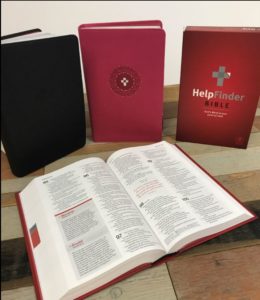
Well here is a great place to start! The new HelpFinder Bible was created with your questions, needs, and concerns in mind. The powerful HelpFinder index at the front of the Bible provides instant access to thousands of verses and application notes on well over 100 key topics like anxiety, death, marriage, fear, children, money, suffering and so many more that are relevant to whatever stage of life we are in today. The user-friendly index quickly and easily helps you zero in on  what God has to say in response to some of life’s toughest questions that we all have had on our minds at one time or another.

So know that you are not alone when you ask Why, and know that what you are looking for can be found in God’s amazing truth that’s not far away. It’s here for you, right at your fingertips, in the new HelpFinder Bible, God’s Word at your point of need.

Take a look inside the HelpFinder Bible

Can We Bless God?

We get so excited when we hear people are getting into God’s Word and wrestling with the text. Recently, we received a question on Facebook about blessing God. We thought others might be interested in the response, so we decided to create a blog post. Our Study Bible and Reference brand manager kindly agreed to share on this topic.

Question: “The only way I can see we can bless GOD is by obeying him. To say “bless you LORD” does not seem possible. . . . We can ask GOD to bless others or to bless us, but we are only man with no special powers to apply blessing to others. Your thoughts please!”


Answer from Kevin R. O’Brien, ThM, Study Bible and Reference Brand Manager:

First, thanks for reaching out with this question. Second, I completely understand why this is confusing for so many people. Many songs we sing include words like “I will bless the Lord” or “Bless the Lord, oh my soul.” It seems backwards because it is clearly God who blesses us, not the other way around, right? We see throughout Scripture that God blesses his people. God tells Abraham:

“I will bless those who bless you and curse those who treat you with contempt. All the families on earth will be blessed through you.” Genesis 12:3

We see it in the covenants of the Old Testament where God promises to care for his people:

If you follow my decrees and are careful to obey my commands, I will send you the seasonal rains. The land will then yield its crops, and the trees of the field will produce their fruit. . . . You will eat your fill and live securely in your own land.

“I will give you peace in the land, and you will be able to sleep with no cause for fear. I will rid the land of wild animals and keep your enemies out of your land. . . .

“I will look favorably upon you, making you fertile and multiplying your people. And I will fulfill my covenant with you. You will have such a surplus of crops that you will need to clear out the old grain to make room for the new harvest! I will live among you, and I will not despise you. I will walk among you; I will be your God, and you will be my people.” Leviticus 26:3-6, 9-12
We see it in the Psalms:

For you bless the godly, O Lord;

    you surround them with your shield of love. Psalm 5:12

The Lord remembers us and will bless us.

    He will bless the people of Israel

    and bless the priests, the descendants of Aaron.

He will bless those who fear the Lord,

    both great and lowly. Psalm 115:12-13

And we of course see it in the Beatitudes of Jesus and the writings of Paul.

“God blesses those who are poor and realize their need for him,

    for the Kingdom of Heaven is theirs.

God blesses those who mourn,

    for they will be comforted.

God blesses those who are humble,

    for they will inherit the whole earth.

God blesses those who hunger and thirst for justice,

    for they will be satisfied.

God blesses those who are merciful,

    for they will be shown mercy.

God blesses those whose hearts are pure,

    for they will see God.

God blesses those who work for peace,

    for they will be called the children of God.

God blesses those who are persecuted for doing right,

    for the Kingdom of Heaven is theirs.” Matthew 5:3-10

All praise to God, the Father of our Lord Jesus Christ, who has blessed us with every spiritual blessing in the heavenly realms because we are united with Christ. Ephesians 1:3

So how can we possibly bless God?

This is where the New Living Translation is so helpful. Just like in English, Hebrew words often have a range of meaning. When we read familiar passages like Psalm 100:4, Psalm 103:2, or Psalm 104:1, we can easily get confused. You are probably used to reading words like “bless his name!” or “Bless the Lord” in these verses. Here they are in the NLT (I have italicized the word that other translations often render “bless”):

Enter his gates with thanksgiving;

    go into his courts with praise.

    Give thanks to him and praise his name. Psalm 100:4

Let all that I am praise the Lord;

    may I never forget the good things he does for me. Psalm 103:2

Let all that I am praise the Lord.

O Lord my God, how great you are!

You are robed with honor and majesty. Psalm 104:1

In Hebrew the word is the same—barak—but there is a subtle change in meaning. God gives a blessing to us; we offer praise to him. His giving is downward, from a greater to a lesser. Our offering is upward, from a lesser to a greater.

The Scriptures show us that God blesses us in many ways—through material things, through the rain and good harvests, and most importantly, by his presence with us. In Genesis 48, Jacob blesses the sons of Joseph.

Here is what the article on blessing in the NLT Study Bible has to say:

Genesis 48:8-20

Jacob adopted Joseph’s sons and blessed them (Gen 48:3-7), just as his father Isaac had blessed him (27:27-29). Blessing enables, enhances, and enriches life, whereas a curse diminishes it (Lev 26:14-39). Blessing is issued publicly by a benefactor and provides power for prosperity and success. Blessing is essential to covenant relationships in that it guides and motivates the parties to obey the covenant’s stipulations (Lev 26:3-13; Deut 28:1-14). Obedience leads to blessing, whereas rebellion brings a curse.

The initial realm of blessing is creation, in which God as Creator is the ultimate granter of blessing for animals (Gen 1:22) and humans (1:28; see Ps 104; 128:3-4). Humans also serve as channels of divine blessing. Abraham was called to be a blessing to the nations (Gen 12:2-3). The institutions of family (27:27-29), government (1 Kgs 8:14, 44, 52, 66), and religion (Gen 14:19; Lev 9:22) are nurtured, commissioned, and purified through blessing. Israel’s priests mediated God’s blessing to Israel (Num 6:24-26; Deut 10:8).

Three basic characteristics can be observed in OT blessings: (1) They are conveyed from a greater party to a lesser one (Gen 32:26; Heb 7:6-7); (2) They are signs of favor that result in well-being and productivity (Deut 28:3-7); and (3) They acknowledge that all power and blessing stem from the Creator. All blessings have their source in God’s love (Deut 7:7-8, 12-15).

God’s blessings in Genesis are in striking contrast with the pagan religions of antiquity. For pagan religions, fortunes and fertility of flock, family, and fields came about in sympathetic magic through cultic observances at their shrines—profane customs that were designed to induce the deities to act on their behalf so that the cycle of life could be maintained. In Genesis, all of life, fertility, and blessing came by God’s decree, for he is the only true and living God.

In the NT, the emphasis of blessing shifts from the material to the spiritual, from the nation to the church, and from the temporal to the eternal (Matt 6:25; Eph 1:3; 1 Pet 3:9). In his death, Jesus bore the consequences of sin’s curse (Gal 3:13), established God’s kingdom (Matt 3:2; 5:3-20; John 3:3-5), and blessed its citizens with forgiveness of sin (Rom 4:6-25). Now believers are called to bless the world (Luke 6:27-28; Rom 12:14; see also Isa 19:24; Zech 8:13).

As you can see, our questioner was correct—obedience does have everything to do with how we “bless” God. It is our tangible response of praise to the God who blesses us.


Giving God Our Best

brian

It’s amazing how challenges and struggles that the men and women in the Bible faced are often similar to the ones we face today. Though the setting and context can be different, the heart issue is often very much the same. Read  from the Christian Basics Bible about Haggai’s struggle to get the returning exiles to get their priorities straight.


8


Haggai’s central challenge was that the returning exiles simply weren’t giving God their best. Of course they needed to build homes and plant fields, but this had become the sole object of their attention. They weren’t content with simple homes but wanted luxurious houses (Haggai 1:4). These personal projects had consumed their resources, leaving little to give to God’s work, meaning that his house (the Temple) remained a ruin (1:4). So God challenged them to bring timber and rebuild his house; then he would “take pleasure in it and be honored” (1:8). Only then could he lift the curse they had brought upon themselves (1:10-11; Deuteronomy 28: 38-40).


StockSnap_8Y19AAOHHJ


It is always easy to rationalize not giving God our best. Here the people were saying that the time wasn’t right (Haggai 1:2). But this was just an excuse. God is realistic – he knows we need a home, clothes, and food (Matthew 6:25-32) – but Jesus said our priority is to “seek the Kingdom of God above all else, and live righteously,” promising that “he will give you everything you need” (Matthew 6:33). When we get our priorities right, God’s provision is always released to us.


ChristianBasicsExplore3


Why is the 23rd Psalm So Beloved?

brian

Psalm 23 is the best-known psalm and the favorite biblical passage of many. Why? Because it does more than tell us that God protects, guides, and blesses. It shows us a poetic image of a powerless sheep being tended by an unfailingly careful shepherd. In a world of dangerous ditches and ravenous wolves, we need more than abstract explanations. We need pictures to hang on to. This is one of the best.
lightstock_8079_medium_david-620x413

God took David from tending his father’s sheep and made him a shepherd of Israel because David was able to care for this flock with a tender heart and great skill. That tells us volumes about not only the kind of shepherd God chooses but the kind of shepherd he is. God is a zealous protector of his sheep, training us to hear his voice, leading us into pleasant pastures, and even walking with us through the darkest valleys. And he is extravagant in his goodness. He doesn’t just feed us; he prepares a feast in the presence of our enemies. He doesn’t just bless us; he fills our cup to overflowing. He doesn’t just offer his goodness and love; he pursues us with them. We aren’t simply his assignment; we are his passion—forever.

ghoiyov2tsq-sam-carter

Read it again:
Psalm 23
The Lord is my shepherd;
I have all that I need.
He lets me rest in green meadows;
he leads me beside peaceful streams.
He renews my strength.
He guides me along right paths,
bringing honor to his name.
Even when I walk
through the darkest valley,
I will not be afraid,
for you are close beside me.
Your rod and your staff
protect and comfort me.
You prepare a feast for me
in the presence of my enemies.
You honor me by anointing my head with oil.
My cup overflows with blessings.
Surely your goodness and unfailing love will pursue me
all the days of my life,
and I will live in the house of the
forever.
Taken from the Dancing in the Desert Devotional Bible.
DancingIntheDesert

Take a look inside this Bible.

In the King’s Court

New situations are often a challenge. Starting a new job, first day of school or moving around the world, being plucked from what we know and understand can leave us feeling vulnerable and unsettled. Read from the Wayfinding Bible about how Daniel and his friends responded after being forcefully taken from their homes and thrust into the King’s Court.

StockSnap_5QRJ3CKJDI

In 605 bc Nebuchadnezzar, king of the Babylonian Empire, raids Judah and its capital city, Jerusalem. He captures noblemen’s sons and princes from the royal court, draining the country of its best and brightest individuals. After bringing them back to Babylon, he indoctrinates them in the ways of his nation. Four young men—Daniel and his three friends—are among this first group of captives.

Read the first chapter of Daniel:

During the third year of King Jehoiakim’s reign in Judah,  King Nebuchadnezzar of Babylon came to Jerusalem and besieged it. The Lord gave him victory over King Jehoiakim of Judah and permitted him to take some of the sacred objects from the Temple of God. So Nebuchadnezzar took them back to the land of Babylonia and placed them in the treasure-house of his god.

Then the king ordered Ashpenaz, his chief of staff, to bring to the palace some of the young men of Judah’s royal family and other noble families, who had been brought to Babylon as captives. “Select only strong, healthy, and good-looking young men,” he said. “Make sure they are well versed in every branch of learning, are gifted with knowledge and good judgment, and are suited to serve in the royal palace. Train these young men in the language and literature of Babylon.” The king assigned them a daily ration of food and wine from his own kitchens. They were to be trained for three years, and then they would enter the royal service.

Daniel, Hananiah, Mishael, and Azariah were four of the young men chosen, all from the tribe of Judah. The chief of staff renamed them with these Babylonian names:

Daniel was called Belteshazzar.

Hananiah was called Shadrach.

Mishael was called Meshach.

Azariah was called Abednego.

But Daniel was determined not to defile himself by eating the food and wine given to them by the king. He asked the chief of staff for permission not to eat these unacceptable foods.Now God had given the chief of staff both respect and affection for Daniel. But he responded, “I am afraid of my lord the king, who has ordered that you eat this food and wine. If you become pale and thin compared to the other youths your age, I am afraid the king will have me beheaded.”

Daniel spoke with the attendant who had been appointed by the chief of staff to look after Daniel, Hananiah, Mishael, and Azariah. “Please test us for ten days on a diet of vegetables and water,” Daniel said. “At the end of the ten days, see how we look compared to the other young men who are eating the king’s food. Then make your decision in light of what you see.” The attendant agreed to Daniel’s suggestion and tested them for ten days.

A glass of water macro shot

At the end of the ten days, Daniel and his three friends looked healthier and better nourished than the young men who had been eating the food assigned by the king. So after that, the attendant fed them only vegetables instead of the food and wine provided for the others.

God gave these four young men an unusual aptitude for understanding every aspect of literature and wisdom. And God gave Daniel the special ability to interpret the meanings of visions and dreams.

When the training period ordered by the king was completed, the chief of staff brought all the young men to King Nebuchadnezzar. The king talked with them, and no one impressed him as much as Daniel, Hananiah, Mishael, and Azariah. So they entered the royal service. Whenever the king consulted them in any matter requiring wisdom and balanced judgment, he found them ten times more capable than any of the magicians and enchanters in his entire kingdom.

Daniel remained in the royal service until the first year of the reign of King Cyrus.

Daniel and his friends were yanked out of their country and dragged off to enemy territory. They probably experienced a range of emotions—anger, fear, and grief—but their faith remained intact. Daniel obeyed God and rose to a significant position of power, authority, and influence in a hostile environment. He helped fulfill God’s purpose during seventy years of royal service. Like Daniel, we are called to remain faithful to God no matter where we live. God’s good will prevail in every nation and in every situation throughout time.

WayfindingBabylonCityGraphic

Look inside the Wayfinding Bible

Wayfinding Bible – The Backstory

I love anything that is “behind the scenes.” There used to be a show on the radio called The Rest of the Story hosted by a man named Paul Harvey. Even though I was little I couldn’t get enough of it. I wanted to know more. Whether building a bridge, creating Disneyland or inventing a zipper there is always a situation or personal story to go along with it. The same is often true when creating ideas for Bibles. Here at Tyndale we get the amazing opportunity to partner with people who have a passion to help others connect with God’s Word and want to break down walls that get in the way of people accessing the Bible. That’s exactly what Jeannette and Doris wanted to do with the Wayfinding Bible, eliminate the issues that often caused people to disengage with Bible reading. Here’s the “rest of their story”

WayfindingBible4

The idea behind the design for The Wayfinding Bible began with a bike ride.

Jeannette knew, from talking with people over the years, that two of the main reasons Christians struggled with consistently reading the Bible had to do with its length and its confusing chronology. If only there were a study Bible that could help people navigate the narrative more effectively, then perhaps they would remain more engaged and invested. But how to do this? Jeannette and her colleague Doris wanted to create multiple levels of reading plans that would follow the storyline of scripture, but they were stuck on how to present these plans in an inviting and compelling way.

lightstock_255492_medium_user_5910588

While out on her bike one day, puzzling about this Bible, a word popped into Jeannette’s head. Wayfinding. “I honestly knew right then and there that God had planted that word in my mind,” Jeannette says.

Back at her office, Jeannette researched the concept of wayfinding. One definition of “wayfinding” describes it as a system for helping people navigate a complex built environment such as a hospital, an airport, a college campus or a city. While the architect may have had a plan for the place, anyone unfamiliar with that plan can easily get frustrated and turned around. That’s where wayfinding signs come in. They help people discover the best way to navigate confusing spaces.

StockSnap_B36B747098

And what is the Bible, Jeannette thought, if not a complex built environment? There is a design and a plan behind Scripture, of course, but it’s not necessarily ordered in the most intuitive way from a reading standpoint. Wayfinding tools could help people find their way through God’s Word.

Building on this wayfinding theme, Doris and Jeannette developed three different ways to travel through the Biblical narrative. From “flyover” to “direct” to “scenic,” these routes would guide readers along their way and keep them on track.

Young man planning travel on vacation trip with map. Top view.

From there, the ideas continued to flow. They created “Getting Your Bearing” articles for key turning points in scripture, “Historical Markers” to provide helpful cultural information, and “Scenic Overlooks” when a map or diagram or infographic would be useful.

“I tell people The Wayfinding Bible wasn’t my idea or Doris’ idea. It was God’s idea that He graciously gave us to help people read His Word and not get lost or frustrated.”

The foundational verses for The Wayfinding Bible perfectly outline this Bible’s purpose:

Show me the right path, O Lord;

    point out the road for me to follow.

Lead me by your truth and teach me,

    for you are the God who saves me.

    All day long I put my hope in you.

                                           Ps. 25: 4 & 5

WayfindingAdish

Learn more about the Wayfinding Bible

You can follow the Wayfinding Bible on Instagram and Facebook too.