John the Baptist

Personality Profile taken from the Life Application Study Bible

There’s no getting around it—John the Baptist was unique. He wore odd clothes and ate strange food and preached an unusual message to the Judeans who went out to the wastelands to see him.But John did not aim at uniqueness for its own sake. Instead, he aimed at obedience. He knew he had a specific role to play in the world—announcing the coming of the Savior— and he put all his energies into this task. Luke tells us that John was in the wilderness when God’s word of direction came to him. John was ready and waiting. The angel who had announced John’s birth to Zechariah had made it clear that this child was to be a Nazirite—one set apart for God’s service. John remained faithful to that calling.

This wild-looking man had no power or position in the Jewish political system, but he spoke with almost irresistible authority. People were moved by his words because he spoke the truth, challenging them to turn from their sins and baptizing them as a symbol of their repentance. They responded by the hundreds. But even as people crowded to him, he pointed beyond himself, never forgetting that his main role was to announce the coming of the Savior.

The words of truth that moved many to repentance goaded others to resistance and resentment. John even challenged Herod to admit his sin. Herodias, the woman Herod had married illegally, decided to get rid of this wilderness preacher. Although she was able to have him killed, she was not able to stop his message. The one John had announced was
already on the move. John had accomplished his mission.

God has given each of us a purpose for living, and we can trust him to guide us. John did not have the complete Bible as we know it today, but he focused his life on the truth he knew from the available Old Testament Scriptures. Likewise, we can discover in God’s Word the truths he wants us to know. And as these truths work in us, others will be drawn to him. God can use you in a way he can use no one else. Let him know your willingness to follow him today.

Strengths and accomplishments
● The God-appointed messenger to announce the arrival of Jesus
● A preacher whose theme was repentance
● A fearless confronter
● Known for his remarkable lifestyle
● Uncompromising

Lessons from his life
● God does not guarantee an easy or safe life to those who serve him
● Doing what God desires is the greatest possible life investment
● Standing for the truth is more important than life itself

Vital statistics
Where: Judea
Occupation: Prophet
Relatives: Father: Zechariah. Mother: Elizabeth. Distant relative: Jesus.
Contemporaries: Herod, Herodias

Key verse
“I tell you the truth, of all who have ever lived, none is greater than John the Baptist. Yet even the least person in the Kingdom of Heaven
is greater than he is!” (Matthew 11:11).

John’s story is told in all four Gospels. His coming was predicted in Isaiah 40:3 and Malachi 4:5; and he is mentioned in Acts 1:5, 22; 10:37; 11:16; 13:24, 25; 18:25; 19:3, 4.


Is It Ok To Make Fun of Someone?

Taken from the Boys Life Application Study Bible

Is it okay to make fun of someone who deserves it? This question has a simple answer: No.

Do you want some proof?

“You should not have gloated when they exiled your relatives to distant lands. You should not have rejoiced when the people of Judah suffered such misfortune. You should not have spoken arrogantly in that terrible time of trouble,” Obadiah 1:12, NLT

“Don’t rejoice when your enemies fall; don’t be happy when they stumble. For the Lord will be displeased with you and will turn his anger away from them,” Proverbs 24:17-18, NLT.

“Do not judge others, and you will not be judged. For you will be treated as you treat others. The standard you use in judging is the standard by which you will be judged,” Matthew 7:1-2, NLT.

It’s so easy to make fun of others—to gloat over someone who’s been mean to you and to laugh when someone you don’t like gets embarrassed or hurt.

But in Obadiah 1:12, God rebuked the people of Edom for laughing when his people were in trouble. God didn’t laugh with them. In fact, God punished the Edomites for laughing at his people. When you’re tempted to make fun of someone else, first imagine yourself in that person’s shoes. Think about how it would feel if people were laughing at you. Then choose to be quiet and kind.

Boys Life Application Study Bible Gospel of John Sampler
Look Inside the Boys Life Application Study Bible

What Does the Bible Say About Conflict?

Taken from the HelpFinder Bible

Grown men stand toe to toe, faces beet red, veins standing out on their necks as they shout at each other, “I was safe!” “You were out!” “Safe!” “Out!” If a ball player disagrees with an umpire’s call, a spectacular and entertaining argument sometimes ensues.

Since people have differing opinions on everything from politics to sports to religion, conflict seems to be a given in human relationships. The Bible does not hide from the issue of conflict, nor does it condemn all conflict as sinful.

From Moses to David to Jesus to Paul, the Bible’s greatest figures found themselves in conflict with someone or something. According to the Bible there is nothing inherently wrong with conflict. Disagreements happen. But the way we are to resolve our conflicts is extremely important. Conflict can become the catalyst to greater understanding, intimacy, and depth of relationship; or it can bring anger, bitterness, and broken relationships. How you deal with conflict will literally shape the direction of your life.

What are some ways to resolve conflict?

GENESIS 13:8-9 | Abram said to Lot, “Let’s not allow this conflict to come between us or our herdsmen. . . . Take your choice of any section of the land.”
Solving conflict takes initiative; someone must make the first move. Abram gave Lot first choice, putting family peace above personal desires.

GENESIS 26:21-22 | Isaac’s men then dug another well, but again there was a dispute over it. . . . [He] dug another well. This time there was no dispute.
Solving conflict takes humility, a desire to see peace more than personal victory.

2 SAMUEL 3:1 | That was the beginning of a long war between those who were loyal to Saul and those loyal to David. Solving conflict involves compromise, finding common ground that is bigger than your differences. If neither side is willing to take the initiative or show the necessary humility to seek common ground, conflict will result in a broken relationship or even war.

NUMBERS 12:1-2 | Miriam and Aaron criticized Moses because he had married a Cushite woman. They said, “Has the Lord spoken only through Moses? Hasn’t he spoken through us, too?”
Solving conflict requires that we focus on the real issue. We focus only on resolving the problem, not attacking the person.

2 TIMOTHY 2:24 | A servant of the Lord must not quarrel but must be kind to everyone, be able to teach, and be patient with difficult people.
When someone disagrees with what you are saying, maintain a gracious, gentle, and patient attitude instead of becoming angry and defensive.

Helpfinder Sampler
Take a Look Inside the HelpFinder Bible

How to Use the Gifts God Has Given You

Note from the Life Application Study Bible

“In his grace, God has given us different gifts for doing certain things well. So if God has given you the ability to prophesy, speak out with as much faith as God has given you. If your gift is serving others, serve them well. If you are a teacher, teach well. If your gift is to encourage others, be encouraging. If it is giving, give generously. If God has given you leadership ability, take the responsibility seriously. And if you have a gift for showing kindness to others, do it gladly.” (Romans 12:6-8, NLT)

Just take a look at the beautiful world around us; God’s love of diversity is evident. Just as there are differences in his earthly creation, there is also variety in the spiritual gifts he has given us. Though we all have different gifts, the goal is the same—to give glory to the giver. Read more about God’s gifts from the Life Application Study Bible:

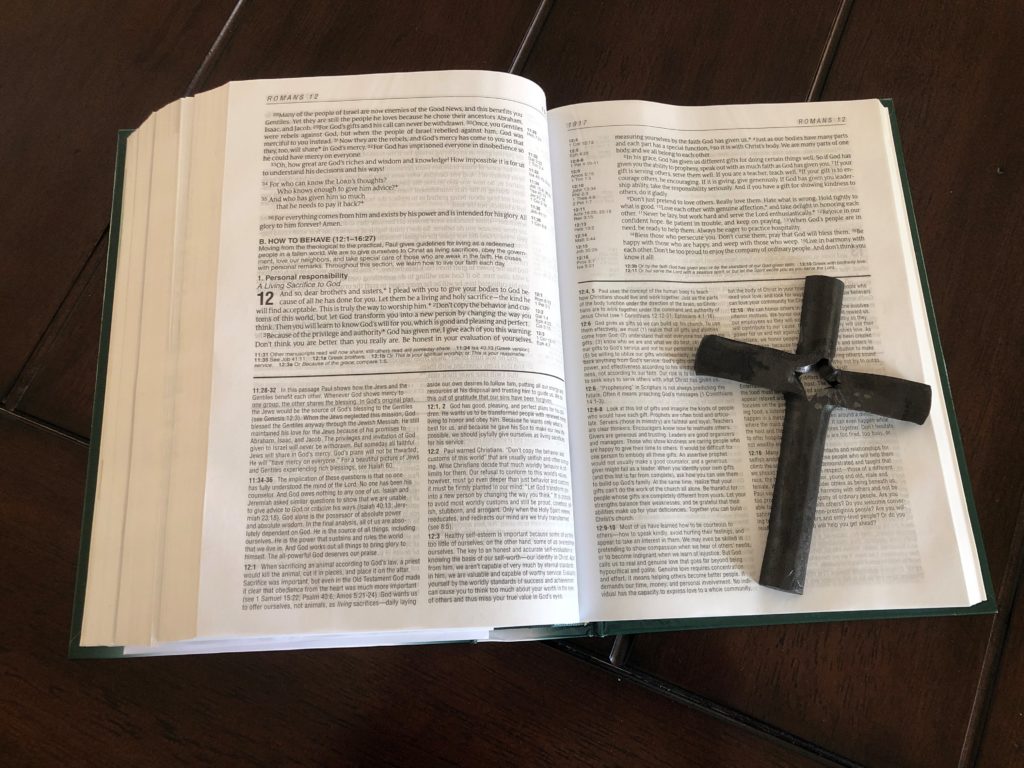
Look at the list of gifts in Romans 12:6-8 and imagine the kinds of people who would have each gift. Prophets are often bold and articulate. Servers (those in ministry) are faithful and loyal. Teachers are clear thinkers. Encouragers know how to motivate others. Givers are generous and trusting. Leaders are good organizers and managers. Those who show kindness are caring people who are happy to give their time to others. It would be difficult for one person to embody all these gifts. An assertive prophet would not usually make a good counselor, and a generous giver might fail as a leader. When you identify your own gifts (and this list is far from complete), ask God and others how you can best use them. At the same time, realize that your gifts can’t do the work of the church all alone. Be thankful for people whose gifts are completely different from yours. Let your strengths balance their weaknesses, and be grateful that their abilities make up for your deficiencies. Together you can build Christ’s church.

God gives us gifts so we can build up his church. To use them effectively, we must:

  • realize that all gifts and abilities come from God
  • understand that not everyone has the same gifts
  • know who we are and what we do best
  • dedicate our gifts to God’s service and not to our personal success
  • be willing to utilize our gifts wholeheartedly, not holding back anything from God’s service

God’s gifts differ in nature, power, and effectiveness according to his wisdom and graciousness, not according to our faith. Our role is to be faithful and to look for ways to serve others using the gifts God has given us.

Life Application Study Bible Gospel of John
Take a Look Inside the Life Application Study Bible

Going Beyond Content

For Nate, Christianity was just something you did—you go to church, you try to do good, and you just live your life. He was happy. He had an amazing wife, two energetic and wonderful kids, and found fulfillment in his job as a police officer.

“I complained to my wife that I didn’t understand the Bible. Being a busy dad, my job as a police officer, I had other priorities that I thought kept me too busy to spend time reading and studying it,” said Nate.

As a gift, his wife bought him a Life Application Study Bible. Though Nate thought it was a nice, he didn’t feel he needed to open it. It remained on the shelf as the busyness of life continued until the flu knocked him off his feet and forced him into isolation. Nate’s wife quarantined him to his room for four days so it didn’t spread throughout the house. In boredom, he started looking for things to do when his eyes landed on the Life Application Study Bible. With nothing else to distract him, he started reading.

“I opened it up and it changed my life. I read Genesis and Proverbs and just couldn’t stop—it just spoke directly to me. I said, ‘This is truth.’ Right there in my room I told God, ‘I am going to be working for you. I want you to use me.’ I confessed everything, and because of it I was able to conquer a lot of stuff I had been struggling with for years,” said Nate. “I finally felt joy, and I realized that joy came from reading the Bible and spending that time with God.”

Nate just couldn’t get enough of it. He was excited to read what’s next and just wanted to consume as much of Scripture as he could.

“Soon I realized I couldn’t keep this to myself. I’ve always been good with other people. It’s why I’m a police officer; I want to help others. But this changed my view of other people. We are all made in God’s image. So, I started to look for ways that I could reach out and give other people a nudge. Help them find what I found,” said Nate.

In just a few months, he had handed out fifteen Life Application Study Bibles.

“Life can be tough. No matter what we believe, we are going to face challenges—God says that to us. What’s different now in my life is I know who to rely on, who can give me guidance,” said Nate. “When I give someone a Bible I tell them, ‘this worked for me. It’s up to you if you want to use it or not, but it completely changed my life, and I’ve found peace that I didn’t know existed.’ You can’t force people to read it, but I’ve never had anyone turn it down when I’ve handed them a Bible.”

When one of his long-time friends was facing some dark moments, Nate didn’t hesitate. He reached out and shared his experience.

“Like me, he believed in God, but he didn’t have a relationship with God. I was thinking what could I do to help? What could make his life different? And it was like something hit me, it was a moment of clarity. Only God could help—that’s it,” said Nate. “I asked him, ‘do you have a good study Bible?’ He just kind of looked at me. Then I said, ‘You know I’m dumb and can hardly read, but this one I understand. It’s like God is talking right to me. It changed me.’”

Nate mailed him the Bible and encouraged his friend to read it with him. He saw his friend’s life transformed. He was even asked to read Scripture at his friend’s recent wedding.

“I pray the people who receive these Bibles open them and actually use them. That they let God speak his truth to them,” said Nate. “I hope it has the same impact that it had on me so others can be the light of the world. We are to be disciples that make disciples. Use what God has given us to serve him,” said Nate.

“In his grace, God has given us different gifts for doing certain things well. So if God has given you the ability to prophesy, speak out with as much faith as God has given you. If your gift is serving others, serve them well. If you are a teacher, teach well. If your gift is to encourage others, be encouraging. If it is giving, give generously. If God has given you leadership ability, take the responsibility seriously. And if you have a gift for showing kindness to others, do it gladly.” (Romans 12:6-8, NLT)

Life Application Study Bible Gospel of John
Take a Look Inside the Life Application Study Bible

Samuel, Israel’s Last Judge and First Prophet

Taken from the Illustrated Study Bible

Samuel lived at the end of the period of the judges and ushered in the period of kingship. He was Israel’s last judge (1 Sam 7:6, 15‑17) and first prophet (3:20; Acts 3:24; 13:20). He functioned as a priest (1 Sam 2:18) and was a great man of faith (Heb 11:32).

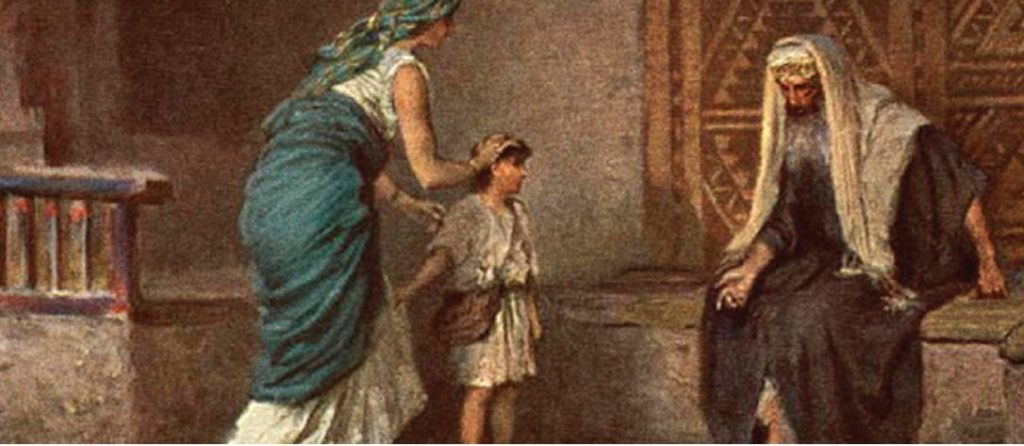
Samuel was born in response to his mother Hannah’s prayers. Samuel’s parents traveled annually from Ramah to the Shiloh sanctuary (1 Sam 1:3). While at the sanctuary, Hannah, who was infertile, prayed for a son and promised him to God for full-time service (1:9‑11). God answered the prayer, and Samuel was born (1:19‑20). When Samuel was weaned, Hannah took him to serve in the sanctuary with Eli, the high priest (1:24‑28).

Eli’s sons were wicked and pagan, but Samuel served the Lord. Soon it became clear that God spoke more intimately with Samuel than with Eli. God spoke to Samuel (3:1‑18) to warn Eli of the coming disaster when the Philistines defeated Israel, killed Eli’s sons, and took the Ark of the Covenant (chs 4–6). Later, under Samuel’s leadership, the people repented of their sin of idolatry and succeeded in winning an important battle against the Philistines (7:3‑17).

But as Samuel grew older, it became obvious that he suffered from the same weakness as Eli before him. Samuel’s sons were evil (8:1‑3), and the people did not want them to assume leadership over the nation. So the people saw the need for a king who could lead them in battle against their enemies (8:4‑5).

The transition from the era of the judges to kingship was turbulent. As priest, Samuel prayed for the people; as prophet, he reproved Saul for impatience and disobedience (13:5‑14; 15:20‑23). When God rejected Saul as king, Samuel anointed David as God’s chosen one (16:1‑13) and protected David from Saul (19:18‑24).

Through prayer and perseverance, Samuel was a faithful leader (Jer 15:1; Acts 13:20; Heb 11:32) who cherished his people’s well-being and courageously rebuked kings and elders. He led Israel from tribal disunity to national solidarity and established the monarchy. He wrote The Record of Samuel the Seer (1 Chr 29:29) and defined ideal kingship (1 Sam 10:25).

When he died, he was mourned by all Israel. He was buried in Ramah, his hometown (25:1).

Illustrated Study Bible Book of Acts
Take a look inside the Illustrated Study Bible

Growing as a Christian

Taken from the Christian Basics Bible

“Rather, you must grow in the grace and knowledge of our Lord and Savior Jesus Christ. All glory to him, both now and forever! Amen.”

2 Peter 3:18, NLT

The birth of a baby always brings excitement to a family, but how worried that family would be if the baby always stayed a baby! After all, babies are born for one thing: to grow up. And that’s exactly how it is when we become Christians. God does not want us to stay spiritual babies; he wants us to grow up, in both our knowledge and experience, as Peter encourages in 2 Peter 3:18.

Businesswomen discussing and having fun

Acts 2:42 lists four key practices that helped the first Christians to grow: “All the believers devoted themselves to the apostles’ teaching, and to fellowship, and to sharing in meals (including the Lord’s Supper), and to prayer.”

We can follow their example, first, by studying the Bible—for if we do not read it, how can we know what God is like and what he wants?—second, by sharing fellowship with other Christians to encourage one another; third, by sharing the Lord’s Supper together to remind us of Christ’s sacrifice and to keep him central in our lives; and fourth, by praying—talking to God—both alone and with others. Note that these four things weren’t occasional occurrences; rather, the first Christians devoted themselves to them. Doing the same today will help us grow and mature, not just intellectually, but in a living experience of God’s grace.


Divine Appointments

“And now, in my old age, don’t set me aside. Don’t abandon me when my strength is failing.” Psalm 71:9, NLT

In the busyness of life, it can be easy to forget those who have walked in our shoes. We may get annoyed that our day is interrupted as someone slowly attempts to complete a routine task. And in a culture that idolizes youth and beauty, lines on a face or gray hair can make someone feel less valuable or that they no longer contribute to a world that seems to be quickly passing by. But to God, each person is of infinite value.

For 50 years, Doug and his wife, Helga, have lived out this truth. Though a tutor by profession, he found his calling bringing God’s love to people others might not even notice. Whether it’s to someone tucked away in a nursing home or rehab center or to a person in a halfway house or addictions program, Doug has devoted his life to bringing God’s Word to the often forgotten.

“It doesn’t matter who we are, God has a calling for each of us. He has a desire for us to become more like him and to share him with a world that needs to hear his Word,” said Doug. “Every Christian is called to be a blessing to others, and I have found my calling.”

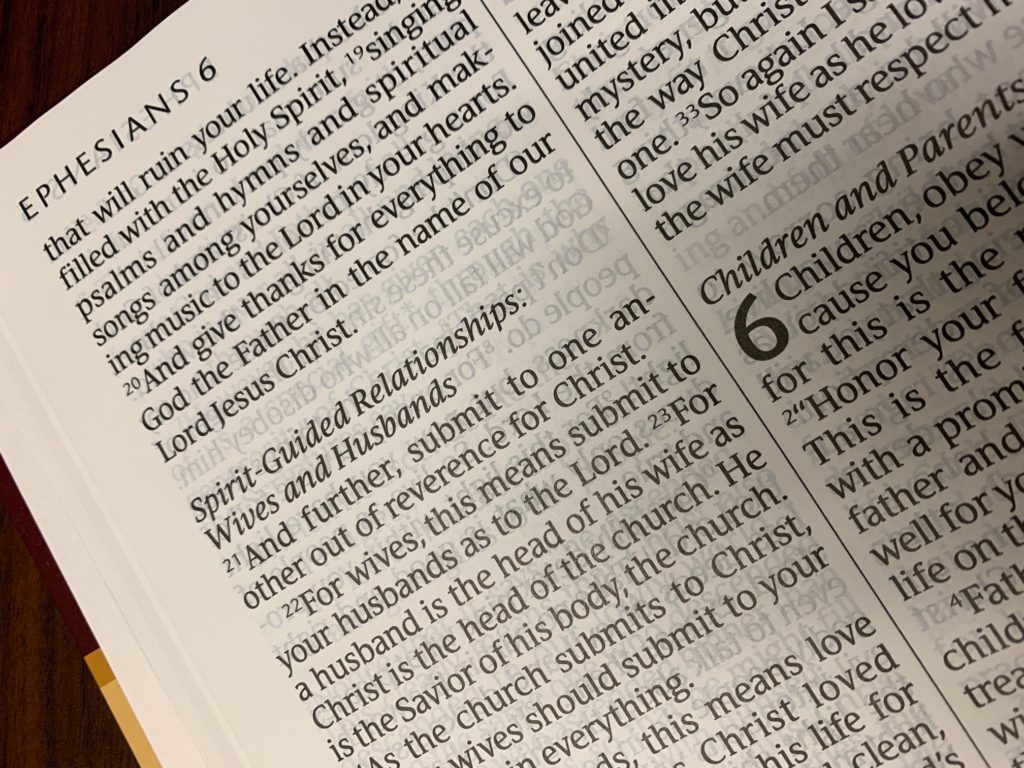
Each month, Doug visits at least fifteen nursing homes. As he went from facility to facility, one thing he noticed was the lack of Bibles with text large enough for the residents to read.

“At one of the facilities, the activities cart had the largest Bible I had ever seen. It was enormous! I asked the activities person about it, and she said when a person requested a Bible they wheeled the cart into the room and read to him or her,” said Doug. “That day I knew I needed to do something. Many of these people needed the comfort of the Word of God right next to them and shouldn’t have to wait for someone to wheel in a cart to engage with God’s Word.”

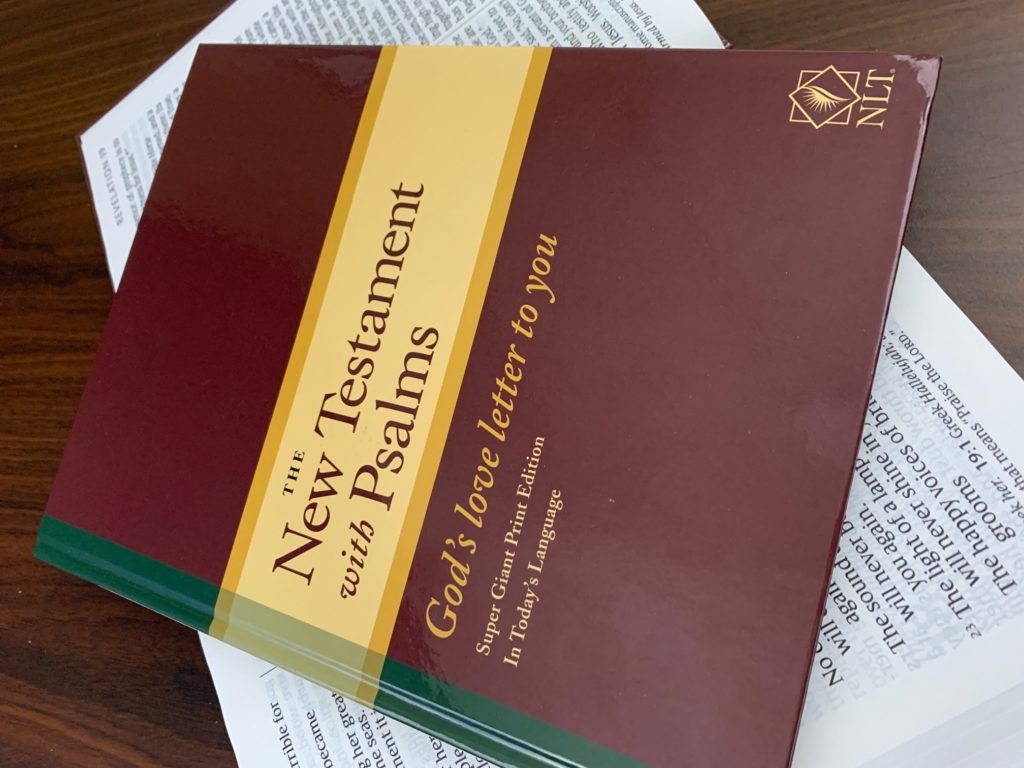
With the help of Tyndale House Publishers, Doug was able to create a Giant Print New Testament and Psalms special edition. In less than two years, he has personally given out 8,000 of these Bibles and is working with nursing home ministers to distribute additional Bibles to people in residential facilities in several states.

“The New Living Translation really conveys the warmth and intimate love God has for each us. It is so well received by the residents everywhere I go. Not just the nursing homes but also the halfway houses and addictions and rehabilitation centers. People of all ages can relate and understand it. Throughout the text, you feel God’s persevering love for us,” said Doug.

Even at 78 years old, he doesn’t have plans to slow down. Doug is part of a softball team, and when he is on his way to tournaments, he brings several copies of the special edition Bible to drop off at nursing homes and centers he passes on his way.

“Every time I talk to a resident at a nursing home or share a Bible with a staff member, I know the privilege of being able to share God’s love with them. These are divine appointments, and I never take that for granted.”

His passion for sharing the Word of God is encouraging others to share God’s love too.

“There are several homes where the residents have started their own Bible studies since they each have a Bible they can read. Others feel more confident sharing what God is doing in their lives with a Bible right there next to them,” said Doug. “God’s Spirit is in each of us, and we need to be the funnel for God’s love to be shown to everyone we come in contact with.”

The one true God

Note from the Christian Basics Bible

“These are the commands, decrees, and regulations that the Lord your God commanded me to teach you. You must obey them in the land you are about to enter and occupy, and you and your children and grandchildren must fear the Lord your God as long as you live. If you obey all his decrees and commands, you will enjoy a long life. Listen closely, Israel, and be careful to obey. Then all will go well with you, and you will have many children in the land flowing with milk and honey, just as the Lord, the God of your ancestors, promised you. Listen, O Israel! The Lord is our God, the Lord alone. And you must love the Lord your God with all your heart, all your soul, and all your strength.” Deuteronomy 6:1-5, NLT

With Israel about to enter Canaan, with its many religions and various gods and idols, Moses needed to underline that there was only one true God: “Listen, O Israel! The Lord is our God, the Lord alone” (Deuteronomy 6:4).

In declaring the uniqueness of Israel’s God, Moses was affirming what the Bible says from the beginning. “In the beginning God . . .”—not a god, or the gods, but God. This belief in one God lay at the heart of Israelite faith—though sometimes they would forget that and so would be challenged by the prophets (e.g., 1 Kings 18:16-18; 2 Kings 17:7-20).

In light of this affirmation of the uniqueness of God, Israel was called, first, to have no other gods (Deuteronomy 5:6-7) and not to make any idols that might lead them astray (4:15-19; 5:8-10), and second, to “love the Lord your God with all your heart, all your soul, and all your strength” (6:5). Why? Because if there were no other gods, they need not keep anything in reserve to offer to them. Why? They simply do not exist.

Jesus himself said that this commandment, to love the one God with all our heart, soul, mind, and strength, was the greatest of all the commandments, and that it, along with the commandment to love our neighbor as ourselves, was the basis of God’s entire law (Matthew 22:37-40).

Look inside the Christian Basics Bible

The Power of Simplicity

Do we make the Bible too hard? Or do we think that because the Bible is our foundational truth it should be hard to validate its immense meaning? The Bible is what we build our lives and faith on. We need to be grounded in the Word, and God in his wisdom delivered it to us in letters, poems, books of history—ways that we could understand and that would bring us closer to him. But in our attempt to go deeper, have we created barriers to the powerful simplicity of reading God’s Word?

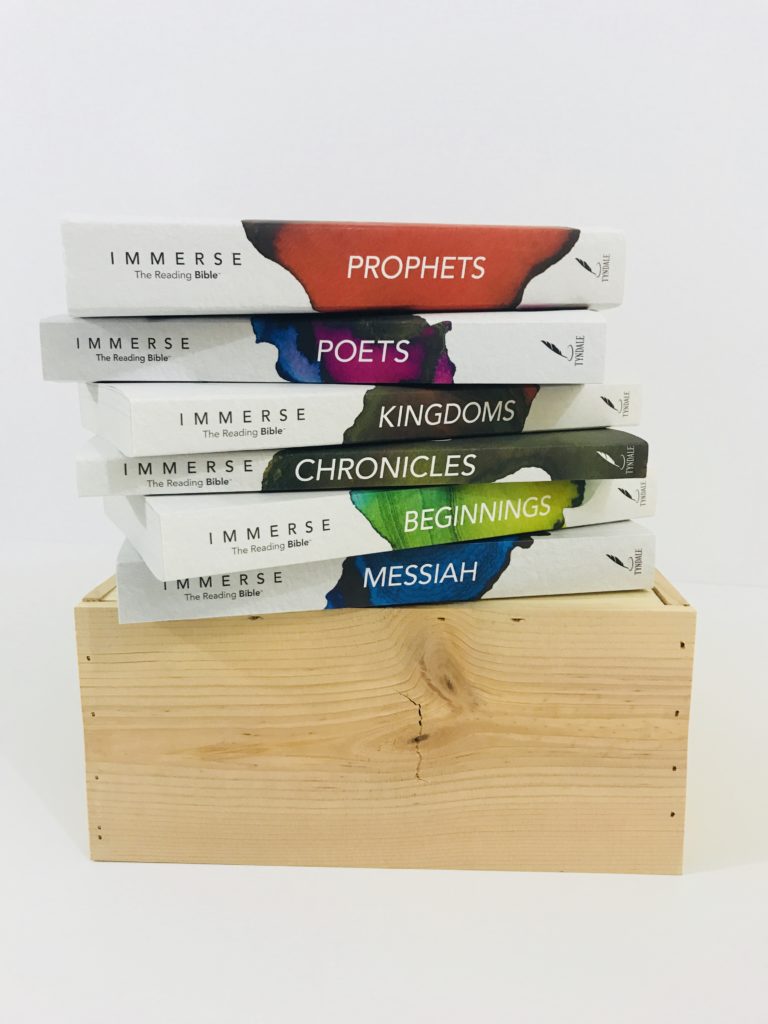
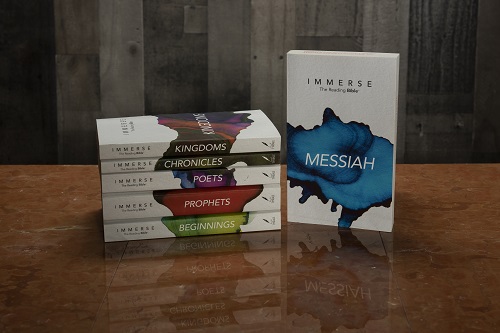
Immerse: The Bible Reading Experience was born out of the necessity to help people engage or reengage with God’s Word. Hundreds of people stop reading their Bibles every day, and if we aren’t reading God’s Word, how can we build our lives on its truth? Without Bible reading, lives are not being built on that foundational rock and are instead resting on the shifting sands of others’ beliefs and cultural norms.

Immerse focuses on three core ideas: reading a naturally formatted Bible, reading at length, and having unmediated discussions about it together. By simply reading and then gathering once per week in “book club” style groups, people have a place to voice their questions, talk about their concerns, and celebrate “aha!” moments together.

Friends enjoying a hot coffee

Each Immerse experience is designed to take a group through a significant portion of the Bible in eight weeks. It’s intentionally uncomplicated. It simply gives people the opportunity to read the Bible, discover its story, and journey through it with their community. By returning to a more natural Bible reading experience, we believe people can truly read and understand God’s Word.

We’re delighted that entire church congregations, small groups, book clubs, families, and even unexpected communities (read how Immerse is being used in Angola Prison) across the country are reading Immerse together. By creating an environment where people feel encouraged to share, it invites people into a better understanding of God’s Word and a deeper relationship with him and each other.