Do we make the Bible too hard? Or do we think that because
the Bible is our foundational truth it should be hard to validate its immense
meaning? The Bible is what we build our lives and faith on. We need to be
grounded in the Word, and God in his wisdom delivered it to us in letters,
poems, books of history—ways that we could understand and that would bring us
closer to him. But in our attempt to go deeper, have we created barriers to the
powerful simplicity of reading God’s Word?
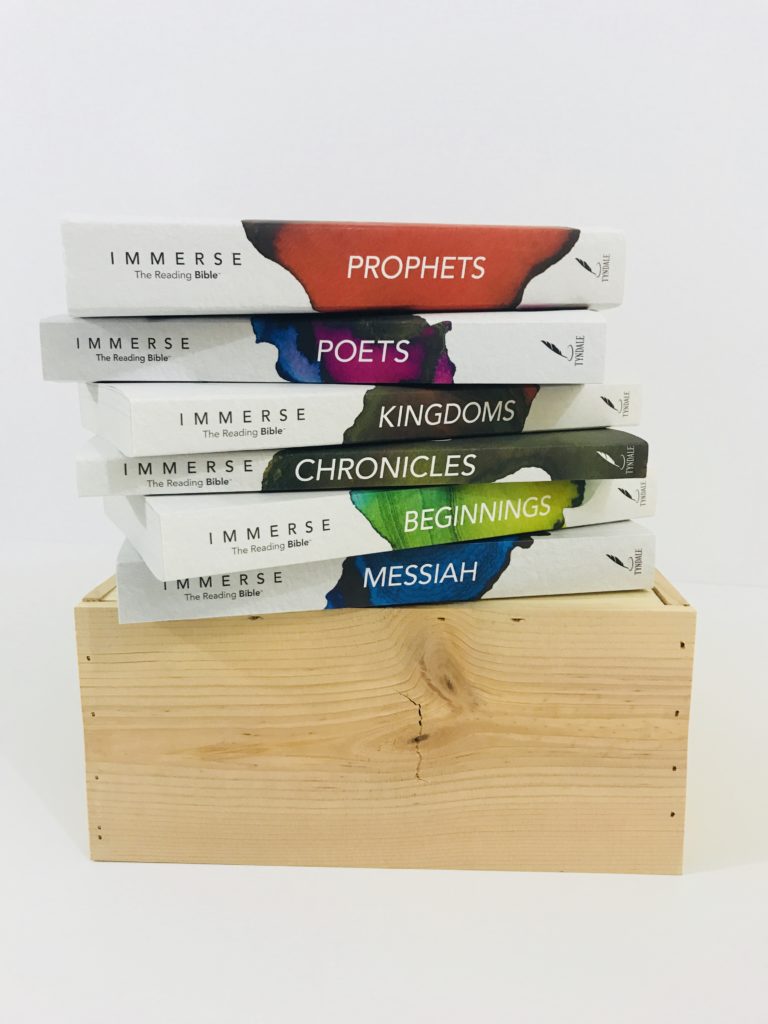
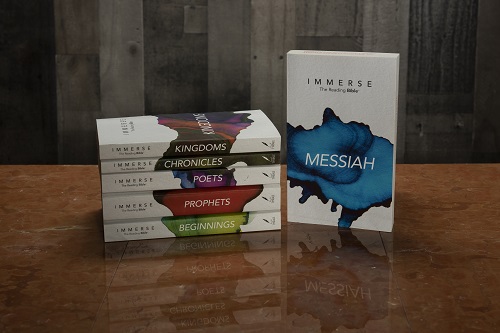
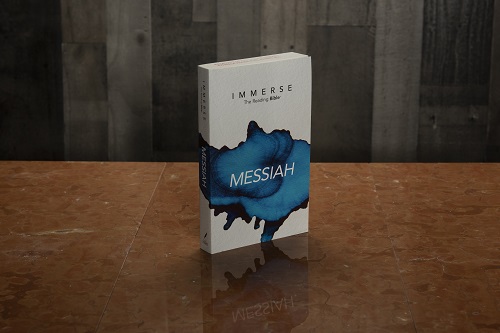
Immerse: The Bible Reading Experiencewas born out of the necessity to help people engage or reengage with God’s Word. Hundreds of people stop reading their Bibles every day, and if we aren’t reading God’s Word, how can we build our lives on its truth? Without Bible reading, lives are not being built on that foundational rock and are instead resting on the shifting sands of others’ beliefs and cultural norms.
Immerse focuses on three core ideas: reading a naturally formatted Bible, reading at length, and having unmediated discussions about it together. By simply reading and then gathering once per week in “book club” style groups, people have a place to voice their questions, talk about their concerns, and celebrate “aha!” moments together.
Friends enjoying a hot coffee
EachImmerse experience is designed to take a group through a significant portion of the Bible in eight weeks. It’s intentionally uncomplicated. It simply gives people the opportunity to read the Bible, discover its story, and journey through it with their community. By returning to a more natural Bible reading experience, we believe people can truly read and understand God’s Word.
We’re delighted that entire church congregations, small groups, book clubs, families, and even unexpected communities (read how Immerse is being used in Angola Prison) across the country are reading Immerse together. By creating an environment where people feel encouraged to share, it invites people into a better understanding of God’s Word and a deeper relationship with him and each other.
If you’ve ever spent two hours stuck in traffic or held a crying baby at 2:00 a.m., you know something about patience. According to the Bible, patience is a form of perseverance that allows us to respond to frustrating circumstances with grace and self-control. Contrary to popular opinion, patience is not merely a personality trait but instead is a byproduct of the Holy Spirit’s presence and work. Let’s see what the Bible has to say about growing in patience.
How can I grow in patience?
• JAMES 5:7 | Consider the farmers who patiently wait for the rains in the fall and in the spring. They eagerly look for the valuable harvest to ripen. Whether you’re waiting for crops to ripen, a traffic jam to unsnarl, a child to mature, or God to perfect you, you can grow in patience by recognizing that these things take time and there is only so much you can do to speed them up. A key to understanding God’s will is to understand God’s timing.
• EXODUS 5:22 | Then Moses went back to the Lord and protested, “. . . Why did you send me?” Focusing less on your agenda and more on God’s agenda for you will provide a big picture perspective and help you be more patient.
• PSALM 40:1 | I waited patiently for the Lord to help me, and he turned to me and heard my cry. Prayer is a necessary tool in developing your patience and giving you God’s perspective on your situation.
• HABAKKUK 2:3 | “If it seems slow in coming, wait patiently, for it will surely take place. It will not be delayed.” Patience can actually give you an attitude of anticipation for each new day. If God is going to do what is best for you, then his plan for you will be accomplished on his schedule, not yours. Keeping that in mind, you can actually become excited about waiting for him to act, anticipating what good thing he will work in your life that is just right for you at the present time.
• GALATIANS 5:22 | But the Holy Spirit produces this kind of fruit in our lives: love, joy, peace, patience. The more you let the Holy Spirit fill and inspire you, the more patient you will become. All fruit takes time to grow and mature, including the fruit of the Holy Spirit.
• 1 CORINTHIANS 13:4 | Love is patient and kind. Patience is one of the evidences of love.
• ROMANS 8:25 | But if we look forward to something we don’t yet have, we must wait patiently and confidently. Patience is produced by the hope a believer has in God’s plans, especially his eternal plans. When your long-range future is totally secure, you can be more patient with today’s frustrations.
• 2 TIMOTHY 2:24 | A servant of the Lord must not quarrel but must be kind to everyone, be able to teach, and be patient with difficult people. God develops patience in you through your relationship with others. Abrasive relationships teach you to patiently endure. Even in loving relationships patience is necessary.
• ROMANS 5:3-4 | We can rejoice, too, when we run into problems and trials, for we know that they help us develop endurance. And endurance develops strength of character, and character strengthens our confident hope of salvation. God uses life’s circumstances to develop your patience. You can’t always choose the circumstances that come your way, but you can choose how you will respond to them.
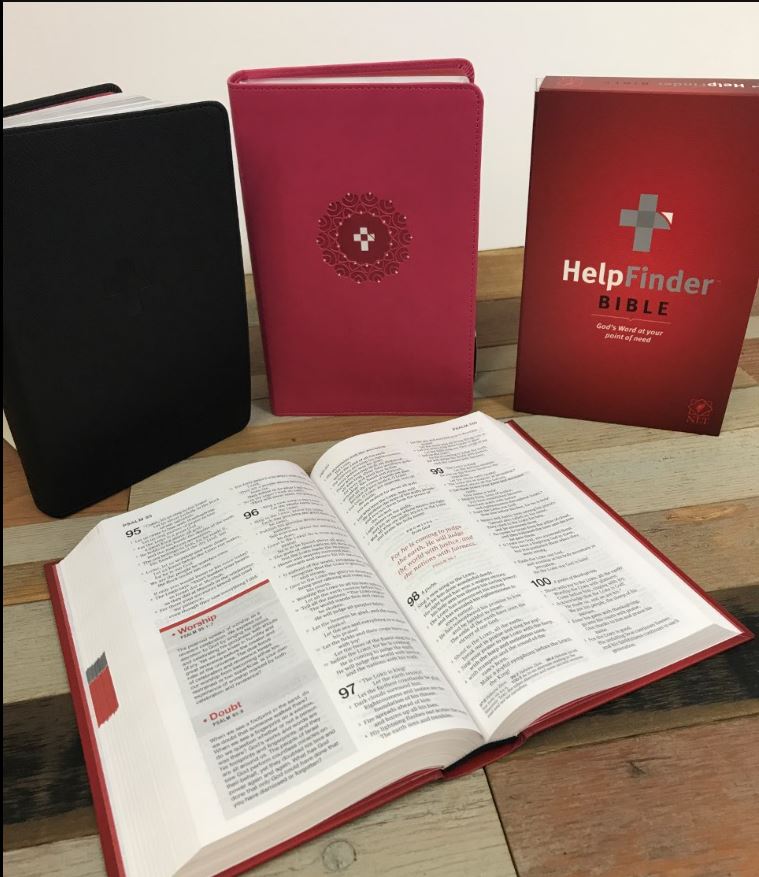
Click above to take a look inside the HelpFinder Bible
Prisoners Requesting Life Recovery Bibles In Record Numbers
by Jim Jewell, NLT Communications Director
Bible reading is showing an enormous
uptick in the most unlikely of places: prisons.
To keep their minds sharp and their hearts encouraged, many
prisoners turn to reading, but reading materials are often in high demand and
low supply, especially personal Bibles.
According to a recent survey of prison chaplains conducted by Prison
Fellowship, most prisoners do not have easy access to individual Bibles.
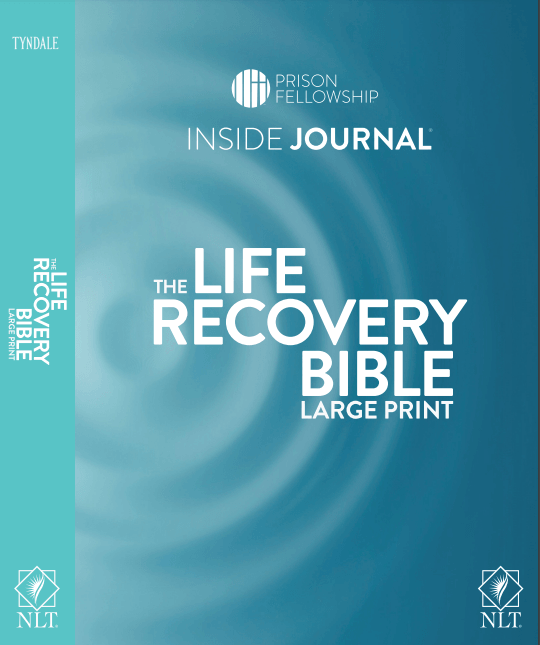
To help meet this need, Tyndale House Publishershas partnered with Prison Fellowship to offer free Inside
JournalNLT Life Recovery Biblesto prisoners who request them by mail. Inside Journal®
is Prison Fellowship’s quarterly newspaper for men and women behind bars.
Since the release of the special edition prison editions of the Life Recovery Bible in July 2018, more than 10,000 copies have been provided to prisoners across the country.
Offered in English and Spanish, the Bibles are easy to read and
understand. Each Bible includes supplemental content that’s relevant to prisoners.
The large-print format is invaluable to the aging prison population, and in
cases where cell lighting is poor.
Over the years, Inside Journal has received numerous
letters from men and women behind bars longing to receive their own Bible. Here
are a few examples:
“I was really wondering if you could please
send one [Inside Journal Bible] to me please. I have no one to send me
any Bible or mail, and I would really appreciate it. I used to be a drug
addict, and I think the recovery Bible will help with my new journey with the
Lord.” —Michael, Florida
“I had my own Bible, but I got transferred [to a different
prison] and I wasn’t allowed to bring my belongings along with me. … I miss my
Bible that kept me busy, kept me learning, and how to forgive and love. I never
read the Bible until I came to prison this third time around, and what I can
say is what a learning experience it is.” —Wilson, Pennsylvania
“Hello brothers, God bless you. My name is Abraham and I’m in
prison. I first met God here in the prison, and so I believe God has a purpose
for me in this place, and I’m glad I came. I would like [an Inside Journal
Bible] please. Because right now I do not have [a Bible]. Thank you so much,
and may God bless you.” —Abraham, Florida
“I had my own Bible, but I got transferred [to
a different prison] and I wasn’t allowed to bring my belongings along with me …
I miss my Bible that kept me busy, kept me learning, and how to forgive and
love.”
###
Since its founding in 1962, Tyndale House Publishers has been a voice to trust for generations of readers. Today, Tyndale is
one of the largest independent publishers in the world. Tyndale’s mission is to
make the Bible accessible to as many people as possible in language that they
can relate and respond to. Tyndale publishes the Holy Bible, New Living
Translation (NLT) and offers nonfiction books that equip readers with
Christ-centered insight, counsel, and life-improving stories. In addition,
Tyndale publishes fiction from fresh, new voices and celebrated authors alike,
capturing the imagination of millions of readers. With a deep understanding of
the importance of nurturing future generations, Tyndale also publishes
children’s products that make God’s Word and wisdom come alive.
Prison Fellowship® is the nation’s largest Christian nonprofit serving
prisoners, former prisoners, and their families, and a leading advocate for
criminal justice reform. The organization was founded in 1976 by Charles
Colson, a former aide to President Nixon who served a seven-month sentence for
a Watergate-related crime. Today, Prison Fellowship brings restoration to those
affected by crime and incarceration nationwide by facilitating prisoners’
transformation, supporting prisoners’ families and returning citizens, and advocating
for a criminal justice system that reflects the God-given dignity and potential
of each life. Through an awakening to new hope and life purpose, those who once
broke the law are transformed and mobilized to serve their community, replacing
the cycle of crime with a cycle of renewal.
A Swahili proverb says, Muvumbo wa kañonyi ye witubula kajo ko aja, meaning, “The beak of the bird is what tells us the things it eats.” In other words, the kind of person that you are is shown by your words.
Psalm 77 is a typical psalm of lament. The writer is in deep trouble and crying out to God. Like a bird’s beak, the psalmist’s own words describe him as crying out and shouting (Psalm 77:1), troubled (Psalm 77:2), moaning (Psalm 77:3), searching for God (Psalm 77:2), longing for help (Psalm 77:3), and so distressed he cannot pray or sleep (Psalm 77:4). Some Christians think that showing these kinds of emotions is a lack of faith, that a person of deep faith only expresses positive emotions like joy and peace. Some people teach that the emotional words found in this psalm show that a person is spiritually weak and does not trust God. But the psalms of lament teach us something different. The very fact that over one-third of all the Psalms are laments or complaints shows us that God is ready to hear our cry. He chose to include an important number of these kinds of prayers in his holy Word so we could learn how to express our distress.
Lament psalms follow a pattern with certain characteristics, some of which can be seen in Psalm 77. Four of the main parts are calling out to God and asking for help (Psalm 77:1- 3), expressing the lament (Psalm 77:4-10), then choosing to remember how God acted in the past, and then praising him on that basis (Psalm 77:11-20).
Verses 10 and 11 are the turning point of the psalm. The writer was so discouraged that he wondered if God had turned against him, but then he chose to start thinking about all the wonderful things God did in the past and it changed his outlook.
God does not ask his children to pretend to be something they are not or to be dishonest about their struggles. He encourages us to tell the truth about our distress and trouble, to give voice to our doubts and fears. But we should not stop there. We must go on to remember with praise and thanksgiving all the ways God has proved himself in the past. Those memories and offering praise for God’s great deeds give us hope for the future. Let our words show that we are weak and struggling people who choose to trust in a powerful and faithful God, even when all seems dark around us!
Read Psalm 77
I cry out to God; yes, I shout.
Oh, that God would listen to me!
When I was in deep trouble,
I searched for the Lord.
All night long I prayed, with hands lifted toward heaven,
but my soul was not comforted.
I think of God, and I moan,
overwhelmed with longing for his help.
Interlude
You don’t let me sleep.
I am too distressed even to pray!
I think of the good old days,
long since ended,
when my nights were filled with joyful songs.
I search my soul and ponder the difference now.
Has the Lord rejected me forever?
Will he never again be kind to me?
Is his unfailing love gone forever?
Have his promises permanently failed?
Has God forgotten to be gracious?
Has he slammed the door on his compassion?
Interlude
And I said, “This is my fate;
the Most High has turned his hand against me.”
But then I recall all you have done, O Lord;
I remember your wonderful deeds of long ago.
They are constantly in my thoughts.
I cannot stop thinking about your mighty works.
O God, your ways are holy.
Is there any god as mighty as you?
You are the God of great wonders!
You demonstrate your awesome power among the nations.
What’s the Greatest Gift for Mom This Mother’s Day?
by Kim Adetunji, Bible Brand Manager
You, of course! Your time, your smile, your kindness, a note,
a call—or in some circumstances, your apology or forgiveness. That’s probably the
absolute best gift you could give
this Mother’s Day!
If you’re like me, you’re always looking for a meaningful gift to give Mom—so we pulled together a list for you:
5 Reasons a
Bible Is the (Second) Greatest Gift for Mom on Mother’s Day
#1: Your Mom deserves the very BEST, and what gift could be
better than the living and powerful Word of God? (Plus, there are so many
options to choose from that you are bound to find one that she’ll love!)
#2: What other gift—besides prayer, maybe—connects Mom so
directly to God than the Bible? When Mom (or you or I) reads through the Bible,
God speaks to her (and us)!
#3: It will be a gift your Mom will cherish for a very, very
long time—and not just because it’s from you
(which is a really huge reason!), but also because being a student of the Word
and growing in knowledge of God and his plan for us is a life-long journey. We
will never fully mine the riches and depths of this treasure house that is the
Bible.
#4: No matter where your Mom is (or isn’t) on her spiritual
journey, a new (or first!) Bible could be the fresh inspiration she needs to make
spending daily time with God a (new or renewed) priority in her life.
#5: As Mom reads her Bible and reflects on its truths, the more she will become transformed into Christlikeness. The Bible promises us that time spent in God’s Word will never return void! (We saved the very best reason for last!)
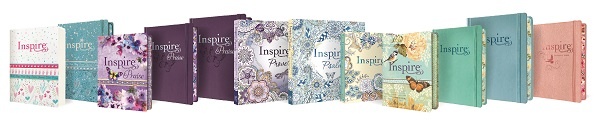
Includes 500+ illustrations to color, 300+ devotional
readings and prayers, 160+ journaling prompts, fun facts, a beautiful two-color
interior & so much more!
Over 500 all-new Scripture line-art illustrations to color,
wide margins for journaling, plus 32 beautiful full-color vellum pages
(pictured below). It’s the only Bible with vellum pages! Now available in large
print.
A square-trimmed, coloring-book-style complete book of
Proverbs that is beautifully designed with line-art illustrations to color and
extra-wide margins for journaling. Printed on thick art paper.
A square-trimmed, coloring-book-style complete book of
Psalms that is beautifully designed with line-art illustrations to color and
extra-wide margins for journaling. Printed on thick art paper.
Our latest addition to the line, the beautiful rose gold
Inspire Catholic Bible has over 450 Scripture line-art illustrations to color,
plus wide margins for journaling.
Inspirehas drawn people of all ages and stages of faith deeper into God’s Word.
Let the
Word of God Inspire You.™
All Scripture is
inspired by God and is useful to teach us what is true and to make us realize
what is wrong in our lives. It corrects us when we are wrong and teaches us to
do what is right. – 2 Timothy 3:16, NLT
Although burning the breakfast toast is a mistake, it is trivial and leaves no lasting consequences. On the other hand, a doctor who misreads a chart has made a mistake of considerably greater implications. We all make mistakes. Some of our mistakes are innocent—we forget an appointment, we know the right answer on a math test but accidentally put down a different number.
Other mistakes are caused by bad judgment or a disregard for a rule or principle. For example, your boss asks you to do an important task and gives you detailed instructions on how to accomplish it. But you ignore those instructions because you think you know how the job should be done. You botch the job, and your company loses a lot of money. That is a significant mistake that could have been avoided if you had simply followed instructions.
The Bible is God’s instruction manual for life. If you neglect or ignore it, you will make many avoidable mistakes that will bring adversity and grief into your life. God wrote the Bible so that we could understand the rules, techniques, and principles for living the most effective, productive, and satisfying life possible. Follow its words, and many big mistakes can be avoided.
What does God think of my mistakes? Will he still love me if I’ve made a big mistake? • PSALM 32:3, 5 | When I refused to confess my sin, my body wasted away, and I groaned all day long. . . . Finally, I confessed all my sins to you and stopped trying to hide my guilt. I said to myself, “I will confess my rebellion to the Lord.” And you forgave me! All my guilt is gone. • 1 JOHN 1:9 | But if we confess our sins to him, he is faithful and just to forgive us. • PSALM 51:7 | Purify me from my sins, and I will be clean; wash me, and I will be whiter than snow. • PROVERBS 1:8-9 | My child, listen when your father corrects you. Don’t neglect your mother’s instruction. What you learn from them will crown you with grace and be a chain of honor around your neck.
If your mistake is sin, confess it as such! God will forgive you completely. When you make a mistake that isn’t a sin, learn from it so that you can grow in character and maturity.
P R O M I S E S F R O M G O D • JAMES 3:2 | Indeed, we all make many mistakes. For if we could control our tongues, we would be perfect and could also control ourselves in every other way. • ROMANS 8:28 | And we know that God causes everything to work together for the good of those who love God and are called according to his purpose for them.
Many adults are struggling to read the Bible. We know this.
At some level it’s understandable because the Bible is a big, complicated, and
very ancient book. Yet the Bible is where Christianity gets its story, so the
faith community needs to be deeply committed to knowing it well regardless of
the challenges.
If adults are struggling, what should we expect from kids? If
the Bible is tough going for the grownups, it’s going to be even tougher for
young readers, right?
In a word . . . yes. But maybe it’s time to look
at how we’ve been trying to introduce kids to the Bible. What, exactly, has
been our goal? What’s the right expectation for kids reading, knowing, and
understanding the Bible? And what would the path to solid Bible fluency look
like for kids?
Where We’ve Been
Simply from looking at our standard Bible curricula, it
would seem that what’s actually happening is that we have other goals besides
fluency (spiritual formation, teaching morals, building faith, etc.) that cause
us to use the Bible in certain ways. The intended purpose is not often to
foster a deep engagement with Scripture itself. As a result, within any given
lesson the Bible is encountered merely as either a theme verse or two, or a
safely paraphrased version of a “Bible story.”
Perhaps this approach is seen as a good and necessary
adaptation of the Bible for readers who are young and not yet proficient. That makes
sense, right? Well. . .
The problem with giving children only a verse or two is that
this approach tends to stick around as readers get older. Even into adulthood we
continue to show and teach the Scriptures by referring to select Bible verses.
The consequence of this is that many people persist in thinking the Bible is in
fact a collection of these verses (and if they are honest, admitting that some
verses are better than others).
And the problem with an ongoing diet of paraphrased Bible
stories is that such narrations are not actually the Bible. They are typically
told with any age-inappropriate elements toned down or taken out. And of course,
any paraphrase represents someone’s interpretation of the essence of a
particular story.
All of this is appropriate in a sense, but there’s also a
danger here. Many of these “safe” versions of the stories are never replaced
with the actual biblical texts as kids turn into teenagers and then young
adults. This means that young readers often wind up not learning the way
biblical language actually sounds and actually works. And older kids never learn
to engage with the stronger, stranger, more complex versions of these stories
that the Bible actually tells.
When do we get around to teaching young adults how to handle
the real Bible?
Furthermore, these collections of paraphrased stories are
often treated as stand-alone lessons, so kids don’t ever learn how the stories are
connected and how they build on each other to tell the bigger biblical
narrative. And rarely are different kinds of literary writings acknowledged. A
curriculum constructed of “Bible stories” will naturally have difficulty
incorporating letters, songs, wisdom sayings, and other literary varieties in
Scripture.
So are we discipling kids into not being Bible readers?
What would the average child take away from their long-term
experience with the Bible in our current teaching approach? Have they taken the
first steps toward receiving the Bible on its own terms? Or have they been
taught to use the Bible in simplistic and misleading ways?
I’m reminded of a conversation we had with a prominent
publisher of children’s Sunday School resources and Bible curricula. After
reviewing their programs and comparing them with our perspective on Bible
engagement, one of their executives, deep in thought, looked up and said, “So
you’re telling me that if our programs are successful, we are actually
producing generations of non–Bible readers.”
Are kids growing up learning that the Bible is a book to be
read? Do kids have any inkling of the big story? Are they falling in love with
Jesus—that is, with Jesus as understood in the context of the overall
narrative?
What To Do?
At the Institute for Bible Reading, we’re working on answers to these reading problems. As young people within the church grow up, graduate, and head out on their own in various ways, a healthy and hearty appetite for Bible reading doesn’t seem to be going with them. It shouldn’t be a surprise, then, that there is a low number of adults in the church who are engaged in Bible reading and comprehension. People are following the path that’s been laid out for them, and then we scramble to convert adults into Bible readers. We are failing to show them the way in the first place.
So what would change look like?
The downward trajectory of Bible engagement in the church
needs to be reversed if we are to fully receive the profound gift that we have
in God’s Word. A Bibleless Christianity won’t be a vibrant and affective
Christianity.
Let’s chart a course for a new future for kids and the
Bible, so that kids know the Bible the right way at the right age and stage, and
appropriately grow into the Bible. We want kids who not only love the Bible but
also learn how to read it intelligently and well, so they don’t turn away from
it the first time they encounter its opponents.
What Happens When We Let Teens Actually Read the Bible?
“Our students have heard a lot of words about the words of the Bible. When it comes to actually reading or hearing the words of Scripture themselves, they find it more interesting than the words about the words of Scripture that they have been hearing their whole lives,” Matt Laidlaw, Dean of Students, Calvin Christian High School.
Hear what happens when the sophomore New Testament class at Calvin Christian High School is immersed in the life-transforming Word of God—not simply being told about the Bible but reading the Bible without distractions.
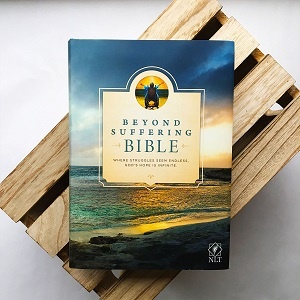
Throughout the Beyond Suffering BibleJoni Eareckson Tada shares personal insights on how God can use anything, even suffering, to bring us closer to him and display his glory. When our lives don’t go the way we want, when the suffering and pain seem too much to bear we have a choice, we can either rely on God or let bitterness consume us. Read what Joni has to say about a time when God brought her face-to-face with her own tendency to hold on to bitterness.
Troubles. Hardships. Calamities. Ever heard that old adage,
“Bad things come in threes”? It’s only folk wisdom, but somehow it seems true.
Bitterness was a temptation for me in the early days of my
paralysis. Deep inside I knew it was wrong, but I justified myself by saying,
“Surely God won’t mind if I let off a little steam now and then. After all, I
am paralyzed!” But as many of us have learned, indulging in bitterness leads us
down a path to even more despair and bitterness.
As if that trouble wasn’t enough, God added a second
hardship. Several months into my hospital stay, I had an operation on my lower
spine. After the surgery, I was forced to life face down for fifteen days while
the stiches healed. “I am sick and tired of this,” I complained out loud.
Then, the third distress came: I caught the flu. Suddenly,
not being able to move was peanuts compared to not being able to breathe. I was
miserable! But as I thought about it, I understood what God was doing. No
longer was my bitterness a tiny trickle; it was a raging torrent that could not
be ignored. It was as if God was holding my anger up before my face and saying
lovingly but firmly, “Stop turning your head and looking the other way. This
bitterness has got to go. What are you going to do about it?”
The pressure had gotten so strong that I was either going to
give the situation over to him completely or allow myself to wallow in
bitterness. Faced with that ultimatum, I was able to clearly see what a wicked
course bitterness would be. Sometimes troubles, hardships, and distresses—in
groups of three (or more!)—back us into a corner and force us to seriously
consider the lordship of Christ.
Lord, when troubles
pile on, may I look to you for help and hope.
WAY-FM’s World’s Biggest Small Group recently did a study on where God is in suffering. They used theBeyond Suffering Bible to explore how to connect the goodness of God with the pain and suffering we see in this world.
Having been a quadriplegic for fifty years after a tragic
diving accident, suffering from chronic pain, and battling breast cancer, Joni
understands the why question. But it wasn’t until she stopped asking why with a
clenched fist and started asking why with a searching heart that she found
hope.
In this study she shares the 10 words that changed her life and motivated her to bring God’s infinite hope to a hurting world. Hear her share her heart.
Learn more about the Beyond Suffering Bible study on WAY Nation