None of us set out to become addicted to something. We were seeking something else—escape from pain, perhaps, or something to make up for our losses and brokenness—or maybe we had a subconscious desire for self-destruction.
Unfortunately, the things we turned to could not satisfy our deepest needs or desires. Our needs are legitimate. What must be changed is the tendency to go the wrong way to try to meet those needs. The Bible says, “My child, don’t lose sight of common sense and discernment. Hang on to them, for they will refresh your soul. They are like jewels on a necklace. They keep you safe on your way, and your feet will not stumble” (Proverbs 3:21-23).
Godly wisdom leads to great benefits in life. As we seek wisdom, we will find the other things we desire. “Joyful is the person who finds wisdom, the one who gains understanding. For wisdom is more profitable than silver, and her wages are better than gold. Wisdom is more precious than rubies; nothing you desire can compare with her. She offers you long life in her right hand, and riches and honor in her left. She will guide you down delightful paths; all her ways are satisfying” (Proverbs 3:13-17).
As we change our focus and begin to seek after wisdom, we will find our lives more fulfilled and secure. Godly wisdom will also help us avoid the destructive paths we have previously taken as we tried to fulfill our unmet needs and desires.
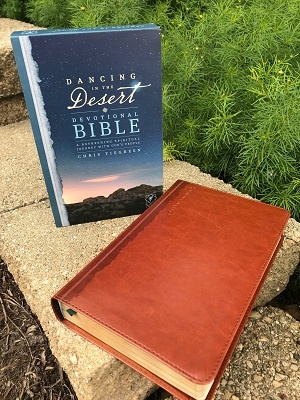
Zephaniah might be a book that is often overlooked but the prophet brings an important message about pure worship. Read more from the Dancing in the Desert Devotional Bible
Only decades before Jerusalem’s fall and one generation before Jeremiah, Zephaniah warned of judgment. On the surface, he was an unlikely source for such severe words. He was a descendant of one good king (Hezekiah) prophesying during the reign of another (Josiah). Josiah was early in the process of tearing down unholy altars and revitalizing the nation’s worship. Things seemed to be moving in the right direction. What could be so bad that God would overthrow his people?
But Judah’s idolatry was too deeply entrenched to be reversed by Josiah’s reforms, though God would promise to withhold judgment until after the good king’s death (2 Chronicles 34:28). So Zephaniah predicts the worst: “a day of terrible distress and anguish, a day of ruin and desolation, a day of darkness and gloom, a day of clouds and blackness” (Zephaniah 1:15). At times, his words seem broader than for just Judah and point to a greater, later judgment. But they are painfully urgent for his hearers. These spiritually complacent people are sabotaging their own destiny and are apparently desensitized to God’s voice. Zephaniah’s words are meant to jolt them out of their apathy. They need to know they will begin to experience God’s painful discipline in less than a generation.
Zephaniah’s prophecy doesn’t end in despair, of course. A restoration is coming, and God will delight in his people and rejoice over them with songs (3:17). Again, Zephaniah’s words seem broader than for his nation alone. God’s restoration will have global consequences—the purification of all people for unified worship. Entire nations will come to worship him (3:9). Israel will be the centerpiece of a much bigger salvation than its people have expected.
That’s the goal of God’s plan. This ongoing battle throughout Scripture and history is about one primary issue: worship. Idolatry, along with all its symptoms, derails our ultimate purpose. Pure worship fulfills it. And God will do everything necessary to bring the hearts of multitudes into alignment with his own.
The world goes by at a million miles per hour, and it seems
to get faster and become more complicated at every turn. It’s quite easy to get
distracted, disgruntled, and even disillusioned. We chase so hard after the
things we think we are supposed to pursue—success, respect, love, money, etc.
We adopt the causes we are supposed to adopt, get outraged over the latest injustice
that we are supposed to be outraged about. And next week it all changes.
Somewhere along the way, as the routines and cares of the
world have distracted us, we have forgotten the reality of our faith. In all
the busyness of life, our faith threatens to float away like dandelion seeds in
the wind. We need a firm foundation.
Becoming a Christian
is not about deciding to live better, trying to be more holy, going to church,
or following certain religious practices or behaviors. It is about beginning a
personal relationship with God. Religious rules and duties will always end up
tying us up, as Jesus often reminded the highly religious Pharisees of his day.
Jesus came not to tie us up but to set us free (see, e.g., John 8:31-32;
Galatians 5:1). He came with good news (the meaning of the word “gospel”); and
this good news is that ordinary people—even people who feel unworthy or have
failed or have done bad things—can know God personally and live in harmony with
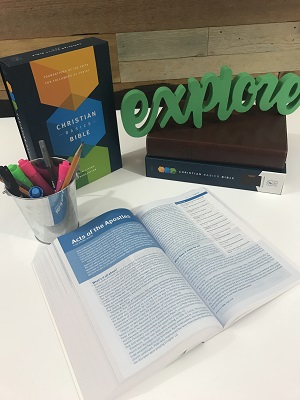
him. (p. A11)
That’s a pretty “back to basics” truth right there. It’s
also unbelievably freeing if we take the time to actually read it, digest it,
and be changed by it. But the busyness of life, even the trappings of our
faith, can rob us of this truth.
So how can we make a practice of getting back to basics, of
being a “basic believer”? There are a lot of good answers to that question, but
here’s a starting point, a first step if you will. In the book of 2 Timothy,
the apostle Paul wrote to his young apprentice Timothy. Timothy was leading a
church in the city of Ephesus. Ephesus was rich, influential, and cosmopolitan.
It was a center of religion and commerce and the most important city in the
Roman province of Asia. It was the place to be. In fact, minus the technology,
it probably had a lot of similarities to the type of crazy environment we find
ourselves in today. Unfortunately, the church in Ephesus had all kinds of
problems. Here’s what Paul tells Timothy:
“Preach the word of God. Be prepared, whether the time is
favorable or not. Patiently correct, rebuke, and encourage your people with
good teaching. For a time is coming when people will no longer listen to sound
and wholesome teaching. They will follow their own desires and will look for
teachers who will tell them whatever their itching ears want to hear. They will
reject the truth and chase after myths. But you should keep a clear mind in
every situation. Don’t be afraid of suffering for the Lord. Work at telling
others the Good News, and fully carry out the ministry God has given you.” (2 Timothy
4:2-5, NLT)
A lack of studying Scripture
had led the Ephesian church to be led astray by every new idea that came along.
So Paul urges Timothy to keep studying Scripture so he can use it to correct
error and explain the truth (4:2-5). We need this book because it is not like
any other book, secular or sacred. It is “inspired by God” (3:16). That is,
God’s Spirit directed the thoughts of its writers so that what they wrote was
exactly what God wanted written. The Bible is therefore God’s revelation to
us—revealing his nature, heart, and purposes—and his invitation to join in his
story. (p. 1387)
Maybe you’re not in a pastoral role like Timothy—and maybe you
never will be—but the advice still stands. The only way Timothy could teach
others was to be captured by the truth himself, to really know it. Getting back
to the basics of our faith and of our relationship with God starts with getting
back into his Word.
Can Immerse Help You Keep Your New Years Resolution?
by Alex Goodwin
Reading the Bible more is one of the most common resolutions for Christians heading into 2019. But statistics show that 80% of new year’s resolutions fail by mid-February.
Maybe this has been your experience. You find a new reading plan, you try harder. But by springtime, that same feeling of guilt and failure is back.
How about trying something different?
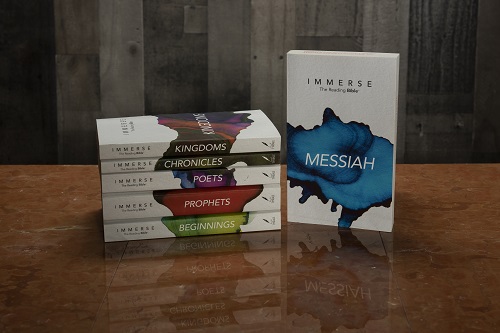
This year, Immerse can help you accomplish your Bible reading goals. Here are a few tips for getting started:
• Start small. Setting out to read the entire Bible in a year is admirable. It’s also really difficult. Try starting with a smaller goal, like reading the New Testament in 8 weeks or 16 weeks.
• Use a different Bible. Each volume of Immerse: The Reading Bible was crafted with one goal in mind: to provide the best reading experience possible. If you’re trying to create a habit of reading the Bible, it helps to use a Bible made for reading.
• Don’t do it alone. Group support gives a huge boost to the odds of achieving your goals. So how about starting an Immerse group? Get a few friends, neighbors, or family members who will commit to a reading and discussion schedule. Having a community of encouragement and accountability will not only help you stick to your Bible reading, it’ll make it much more enjoyable and enriching
“Then those who feared the Lord spoke with each other, and the Lord listened to what they said. In his presence, a scroll of remembrance was written to record the names of those who feared him and always thought about the honor of his name.” Malachi 3:16, NLT
Some people assume that holy and sacred things only take place within the walls of the church, yet this verse says that every time you talk about the Lord with believers God is paying close attention. In fact, the phrase Malachi uses here means “to bend down so as not to miss a word.”
What an incredible thought! God deeply desires that we spend time discussing him, his attributes, and what he is doing in our lives with other believers. That gives us one more reason to make friends with other believers and take part in Bibles studies and church activities.
The next time you get together with your Christian friends, don’t just make small talk. Make the Lord, a central part of your conversation. He is listening.
TODAY WE KNOW JOHN as “the apostle of love,” but he didn’t start out that way. Had he not allowed Christ to soften his personality and temperament, history might have remembered him in a very different light.
Whenever the Gospels mention John, they usually tie him to his brother, James. The pair ran a fishing operation with their father, Zebedee. John was among the first disciples to hear and follow Jesus Christ (Matthew 4:21-22). John tended to think in black and white with little gray, and he interpreted any slight as a personal attack. Early on, John’s hot- blooded temperament prompted Jesus to give him and his brother the nickname Boanerges, “Sons of Thunder” (Mark 3:17).
As the time grew near for Jesus to die, the disciples’ travel plans took them through Samaria. But when the Samaritans— who detested the Jews as much as the Jews hated them— heard that Jesus intended to visit Jerusalem, they refused to welcome him. When John and his brother learned of this slight, they snapped, “Lord, should we call down fire from heaven to burn them up?” John learned an important lesson that day when Jesus rebuked him for his hateful question (Luke 9:51-56).
At another time these “Sons of Thunder” approached Jesus privately and asked him for a favor: They wanted special seats of honor in the coming Kingdom . When the other disciples heard about their secret request, they were less than impressed. Jesus used the ugly incident to teach his followers that honor and positions of spiritual leadership come through service, not through power plays or personal striving (Mark 10:35-45).
As John watched his Master live and work and minister over the course of three and a half years, he gradually changed. Being part of an inner circle of three (with Peter and James), John gained a special insight into the character of his Lord. He witnessed Jesus bring a dead girl back to life (Luke 8:49-56). He saw Jesus robed in light at the Mount of Transfiguration (Mark 9:2-13). And he joined Jesus in the garden of Gethsemane on the night of his Lord’s arrest (Mark 14:32-42).
By this time, John had softened considerably. A combination of personal failures and his Master’s stubborn grace began to transform him. John was the only disciple who saw Christ’s crucifixion— and it was John to whom Jesus gave the responsibility of caring for his grieving mother (John 19:25-27).
John is a perfect example of the power of Jesus Christ to change lives. This hard nosed, hot- tempered businessman became an example of grace and love— and eventually wrote five books of the New Testament. The next time you read 1 John, remember that a former “Son of Thunder” penned the compassionate words.
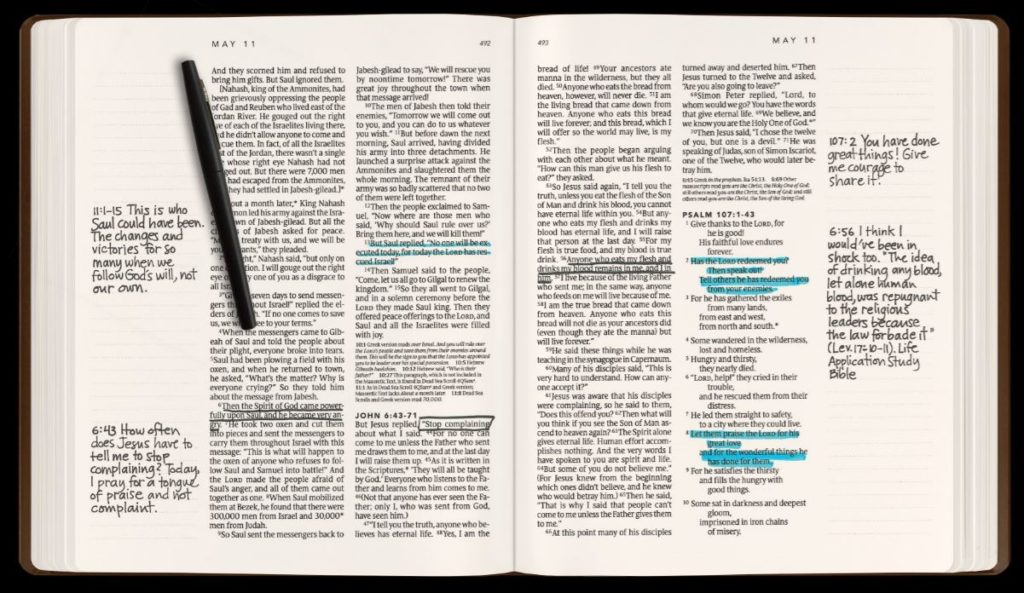
Did you or someone you know receive a journaling Bible for Christmas? You may be excited to get started but aren’t exactly sure how. Or maybe you are afraid to mess up. Sometimes all the extra space in the wide margins can be intimidating. Where do you start? How will you identify what to journal about? What does a creative response to Scripture even look like? What supplies do you need? There are many great questions that people wrestle with when they are just getting started. But just remember, your Bible is the holy Word of God. And God speaks to you through his Word! Our goal as followers of Jesus is for Scripture to be written on our hearts so that we can live it out in our daily lives. We want to know God and to make him known, and we want to become more like him. Bible journaling can help us do this. Not only does it give us a beautiful, meaningful tool for Bible study; it also gives us a collection of entries that we can look back to time and time again and be reminded of truths from the Bible and of God’s faithfulness.
Our advice for those who are just
getting started is: Just get started! Dive in. Do what feels comfortable and
natural to you right now. Use supplies you already have. Let God lead you.
Instead of buying all the supplies you see others using, be creative about
using things around the house. Use a cool Christmas card you received to make an
amazing insert, or place a picture of a family member near a Scripture you are
praying over them. (Many people tape on such items by using decorative tape
called washi tape, but any kind of tape works great!)
Your Bible journaling doesn’t need to be anything
extravagant to be meaningful. This is your Bible. This is your time with God.
Let God lead you, and don’t let your fears or questions (whatever they may
be!) hold you back from jumping in. No matter what your finished page looks
like, what is of utmost importance is being in the Word. Soak it in. Meditate
on it. Live it out. Bible journaling is a mechanism by which we can draw nearer
to God through his Word and through using our God-given creativity. We all have creativity, but it’s often expressed
very differently by each of us. Don’t let all the glitz and glitter of supplies and
techniques distract you from the One who is pursuing you!
If you are looking for more Bible-journaling resources, check out this 15-minute video by Amber Bolton. In it, Amber gives you a small taste of her two-hour-long workshops. You’ll learn about her 4-Step Bible Study Process and find encouragement to get started. The video is a study of 1 John 4:7-21. Get out your Bible and let’s get started!
In this video, Amber is using theInspire PRAISE Bible.Inspire PRAISE is the second Bible in the bestselling InspireBible line, with over 500 all-new line-art illustrations to color, including full-page illustrations. It has some special features that the original InspireBible did not have, such as thicker white paper, colorful vellum see-through journaling page inserts, stickers, and even a pocket in the back. There is a large-print edition now available as well, though it does not include the stickers or the pocket.
If you are ever able to attend one of Amber Bolton’sInspireBible TOUR workshops, we would encourage you to go! Or if you would be interested in hosting an event in your community, contact us. Workshops are for people of all ages and stages of faith. They are for those who have never Bible journaled before and for those who are experienced Bible journalers. Each workshop is unique because of the diverse mix of people that attend, and it’s a fun way to meet others from your community who are interested in Bible journaling. You’ll likely come away feeling inspired and blessed to be a part of the community of believers seeking to know God more through this creative avenue.
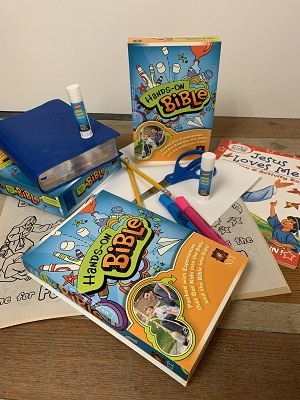
Sometimes we feel that we are too ordinary for God to use for his purposes. Throughout the Bible we see God using everyday, ordinary objects in extraordinary ways. Check out this list from the Hands-On Bible of common items God used in the Bible for his glory then imagine what he can do with your life.
God often uses simple, ordinary objects to accomplish his tasks in the world. They just need to be dedicated to him for his use. Look at these everyday objects from Bible times to see how God used them. Then ask yourself: “What do I have that God can use?” Anything and everything is a possible “instrument” for him!
Object
Reference
Who Used it?
How Was It Used?
Shepherd’s Staff
Exodus 4:2-4
Moses
To work miracles before Pharaoh
Ram’s Horn
Joshua 6:3-5
Joshua
To flatten the wall of Jericho
Fleece
Judges 6:36-40
Gideon
To confirm whatGod wanted Gideon to do
Horns, Jars and Torches
Judges 7:19-22
Gideon
To defeat the Midianites
Jawbone
Judges 15:15
Samson
To kill the enemy: 1,000 Philistines
Small Stone
1 Samuel 17:40
David
To kill Goliath
Oil
2 Kings 4:1-7
Elisha
To show God’s power to provide
River
2 Kings 5:9-14
Elisha
To heal a man of leprosy
Pottery
Jeremiah 18:1-0; 19:1-13
Jeremiah
As an object lesson about God the creator
Five Loaves of Bread and Two Fish
Mark 6:30-44
Jesus
To feed a crowdof over 5,000 people
This is just a start. Tell us in the comments what objects from the Bible would you add to the list?
As the year winds down and a new year is on the horizon,
many people begin reflecting on the previous year and making plans for the new
one. Our thoughts may return to the highlights and lowlights of the year we are
in as well as remembering God’s faithfulness and the lessons we learned. We
then turn to our goals and aspirations for the new year, the things we want to
get right this year and the things we want to keep—or start—doing. The new year
holds so much hope and promise, especially when the current year has been a
difficult one. It’s a brand new beginning—365 days to pursue God, become more
like Christ, rest in his presence, listen for his voice, and follow where he
leads. It’s exciting to think of the possibilities that lie ahead.
Will the new year hold new friendships, a new job, or new
opportunities? Will we finally reach that goal we’ve been striving for? Will our
long-time prayers for a spouse or healing or a mended relationship or a
different heartache finally be answered? Will our trust in God grow deeper than
we ever thought possible? Will our hard hearts soften? Will we experience joy
once again? Will we finally be able to put aside that fear, anger, resentment,
disbelief, or “you name it” that is holding us back from trusting God fully?
Will we surrender new areas of our lives to God? In what ways will God stretch
us beyond what we think we are capable of? Will we sense God’s deep,
unconditional love anew? Who will we share the Good News with this year?
We may even think about new ways we’d like to grow
spiritually, whether it’s growing more patient with our spouse or kids or
letting the peace of Christ rule more fully in our hearts. How could we move
toward God’s plan for us rather than shrinking away from where we hear God
calling us to. What are new ways to step out into obedience this year? How can
we slow down our schedule just a little bit more to create space to listen for
God’s gentle whisper? What truths from Scripture have I dismissed? How can I
give God my very best each day? Do I dedicate enough of my day to those things
that draw me closer to God and allow me to hear his voice? Am I following through
on God’s promptings? Am I open to allowing God to challenge me in a new area?
Do you plan to track your prayers in the new year? the ways
you intentionally follow God’s lead? your service projects and how God expands
your heart through those experiences? the ways you’ve seen God’s faithfulness
in your life? answered prayers? words from him? verses you’ve memorized? There
are so many unique ways to track our spiritual growth and keep focused on our
goal to pursue and honor God. Each of us is unique, and there is no one right
way to do it. If you’re like me, you may be constantly seeking new ways to
become more efficient with recording and tracking everything that is
meaningful—all in one place.
As the new year approaches, you may search for a new journal, notebook, daily planner, or app to help you organize your year and capture all the memories, highlights, and learnings. Journaling Bibles are a great way to capture all that God is doing in your life in one place. There are two One Year Bible journaling editions—Expressions and Reflections—that give you a daily reading plus space in the wide margins alongside each day’s reading to reflect on the passage you’ve read, write notes or journal entries, keep track of highlights from your day, or archive mementos or pictures. It’s a very practical way to document God-sightings in your life while being intentional about reading God’s Word daily.
Many people have been doing this, where their Bible becomes
a treasured keepsake with 365 days’ worth of investment in knowing and
following God, including observations from his Word and practical applications.
The One Year Bible readings offer a
portion from the Old Testament, the New Testament, Psalms, and Proverbs for
each day. It is organized so you’ll finish the Bible in one year with the
investment of just 15 minutes a day. At the end of the year, you will have an
incredible collection of highlights, milestones, and so much more to look back
on in your Bible as you look toward the new year.
A recent popular trend is ancestry kits. People want to know their heritage—where they came from and who they are. Throughout the Bible we see the importance of lineage. Slugging through those difficult names can seem like a burden, but the point is that each of those names has a story. It is a lineage of choices, mistakes, triumphs, joys, and sorrows.
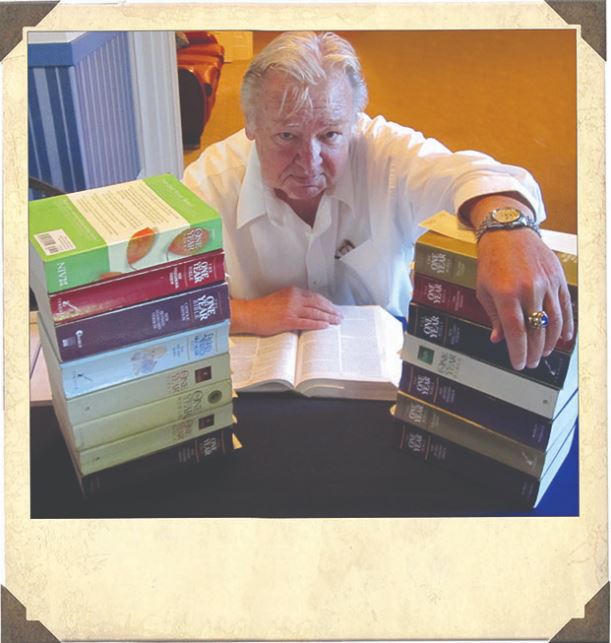
Through Christ we are part of God’s lineage of grace. We can pass on more than just DNA to the next generation. We can leave a legacy of faith. That’s what our friend Hank is doing.
Each year he chooses a different family member and reads through a One Year Bible, making specific notes and sharing personal insights that he felt God calling him to share with that loved one. Is there a more beautiful gift than a legacy of faith and love?
“For 19 years I read a One Year Bible, and each year I dedicated it to a family member to be given to them when I die. The notes in the margin were personal, such as ‘This is my prayer for you.’ I’ve underlined,circled, and highlighted many passages, letting them know what inspires me. It is my legacy to them.” – Hank Snyder
What notes, reflections, inspirations, and prayers would you share with your loved one? What has helped guide you through God’s Word?