How To Translate a Bible

I will never forget the meeting at the airport hotel in the late 1980s. With the encouragement and blessing of Kenneth Taylor ’38, Litt.D. ’65, I and five other biblical scholars were there to discuss a revision of The Living Bible. Ken had produced this work, a paraphrase of the American Standard Version, specifically to communicate biblical truth to his children. We all know what happened. The Living Bible became much more than an aid for promoting spiritual growth in one family in Wheaton, Illinois. With Ken’s determination to cast the Scriptures in language and forms that people actually speak and understand, it broke down barriers between the sacred text and modern readers.

Ken Taylor was sharply criticized, and in many circles The Living Bible was viewed as a sinister project that not only represented idiosyncratic interpretations of one individual, but with its loose renderings of treasured texts also undermined the authority of the Scriptures. For his part, Ken felt that scholars often were more interested in preserving formal equivalence in translation than actually communicating the Scripture’s life-giving message. Nevertheless, Ken authorized the leaders in his company, Tyndale House Publishers, to engage evangelical biblical scholars to address the problems the critics had raised.

We spent that first weekend asking each other what it was about The Living Bible that gripped the imagination of millions of people in the English-speaking world, and exploring how that quality could be preserved even as we addressed the problems that many—especially biblical scholars—had with Ken Taylor’s work. The decision was made to appoint a Bible Translation Committee (BTC) that included six biblical scholars (general reviewers) to lead the project. In addition, three scholars would assist in drafting a base translation of one or more books for the BTC to discuss and approve. Unlike the original Living Bible, which was a paraphrase, this New Living Translation (NLT) would be a true translation, based off the original Hebrew and Greek. Since all translation involves interpretation, however, sometimes we on the committee would disagree on how a passage was rendered; but after a discussion a vote would be called, and in the end the majority ruled.

Although the translation philosophy underlying the NLT is generally classified as a dynamic equivalence theory, for us the question was more practical: If this biblical book were written today, how would the author have written it? The question applies both to vocabulary and syntax. Formal translations (“word for word”) are not necessarily more accurate, because few words in any source language have the same semantic range as the words in the target language. Jesus’ quotation of Deuteronomy 6:5 demonstrates that the Savior himself had adopted NLT’s translation theory:

Deuteronomy 6:5Luke 10:27
You must love the LORD your God with all your heart (leb), all your soul (nephesh), and all your strength (me’od). You must love the LORD your God with all your heart (kardia), all your soul (psyche),
all your strength (ischus), and all your mind (dianoia)

How could Jesus render a statement that had three critical elements in the Hebrew original with four Greek words? The answer is obvious when we realize that Hebrew leb cannot be fully represented with a single word “heart.” In almost half the occurrences in the Old Testament, the word represents primarily the seat of thought, rather than the seat of the will or emotion. Therefore to represent it with only one word in the target language is to skew the meaning, which apparently led Jesus to add “with all your mind” at the end. Here a word for word translation would have been lexically precise, but inaccurate in meaning.
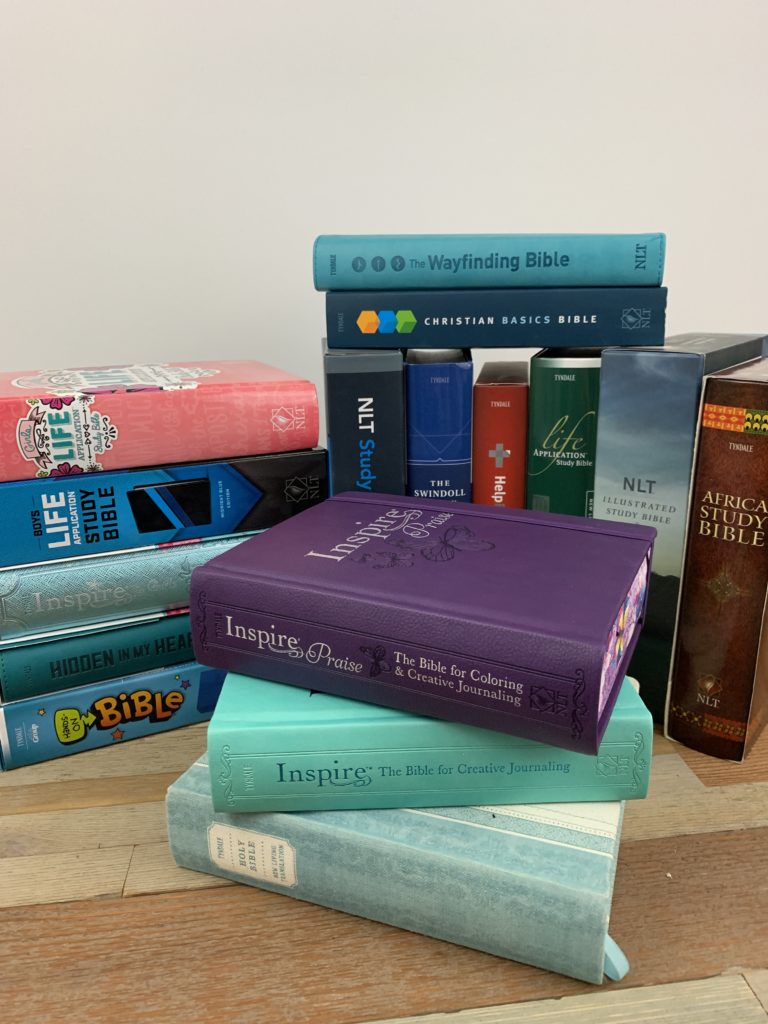
The first edition of the NLT was formally celebrated in 1996, and a thoroughly reworked version was published in 2004. More than 27 million copies of the NLT have been sold over the past sixteen years. As a participant in this project almost from the beginning, I must say there is no greater honor than to be involved in the communication of the Word of God, and there is no greater blessing than to hear the stories of those for whom the Scriptures have come to life, and actually for whom the Scriptures have brought them to new life in Christ Jesus.

This article was originally published in the winter 2013 issue of Wheaton magazine, a publication of Wheaton College (IL). www.wheaton.edu/magazine
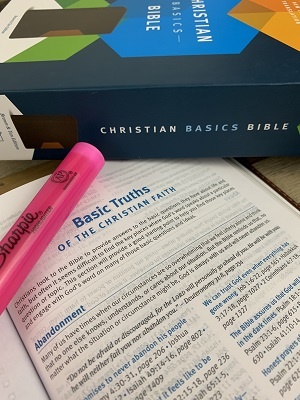
The one true God

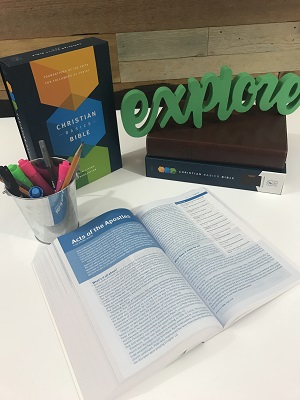
Note from the Christian Basics Bible

“These are the commands, decrees, and regulations that the Lord your God commanded me to teach you. You must obey them in the land you are about to enter and occupy, and you and your children and grandchildren must fear the Lord your God as long as you live. If you obey all his decrees and commands, you will enjoy a long life. Listen closely, Israel, and be careful to obey. Then all will go well with you, and you will have many children in the land flowing with milk and honey, just as the Lord, the God of your ancestors, promised you. Listen, O Israel! The Lord is our God, the Lord alone. And you must love the Lord your God with all your heart, all your soul, and all your strength.” Deuteronomy 6:1-5, NLT

With Israel about to enter Canaan, with its many religions and various gods and idols, Moses needed to underline that there was only one true God: “Listen, O Israel! The Lord is our God, the Lord alone” (Deuteronomy 6:4).

In declaring the uniqueness of Israel’s God, Moses was affirming what the Bible says from the beginning. “In the beginning God . . .”—not a god, or the gods, but God. This belief in one God lay at the heart of Israelite faith—though sometimes they would forget that and so would be challenged by the prophets (e.g., 1 Kings 18:16-18; 2 Kings 17:7-20).

In light of this affirmation of the uniqueness of God, Israel was called, first, to have no other gods (Deuteronomy 5:6-7) and not to make any idols that might lead them astray (4:15-19; 5:8-10), and second, to “love the Lord your God with all your heart, all your soul, and all your strength” (6:5). Why? Because if there were no other gods, they need not keep anything in reserve to offer to them. Why? They simply do not exist.

Jesus himself said that this commandment, to love the one God with all our heart, soul, mind, and strength, was the greatest of all the commandments, and that it, along with the commandment to love our neighbor as ourselves, was the basis of God’s entire law (Matthew 22:37-40).

Look inside the Christian Basics Bible

The Power of Simplicity

Do we make the Bible too hard? Or do we think that because the Bible is our foundational truth it should be hard to validate its immense meaning? The Bible is what we build our lives and faith on. We need to be grounded in the Word, and God in his wisdom delivered it to us in letters, poems, books of history—ways that we could understand and that would bring us closer to him. But in our attempt to go deeper, have we created barriers to the powerful simplicity of reading God’s Word?

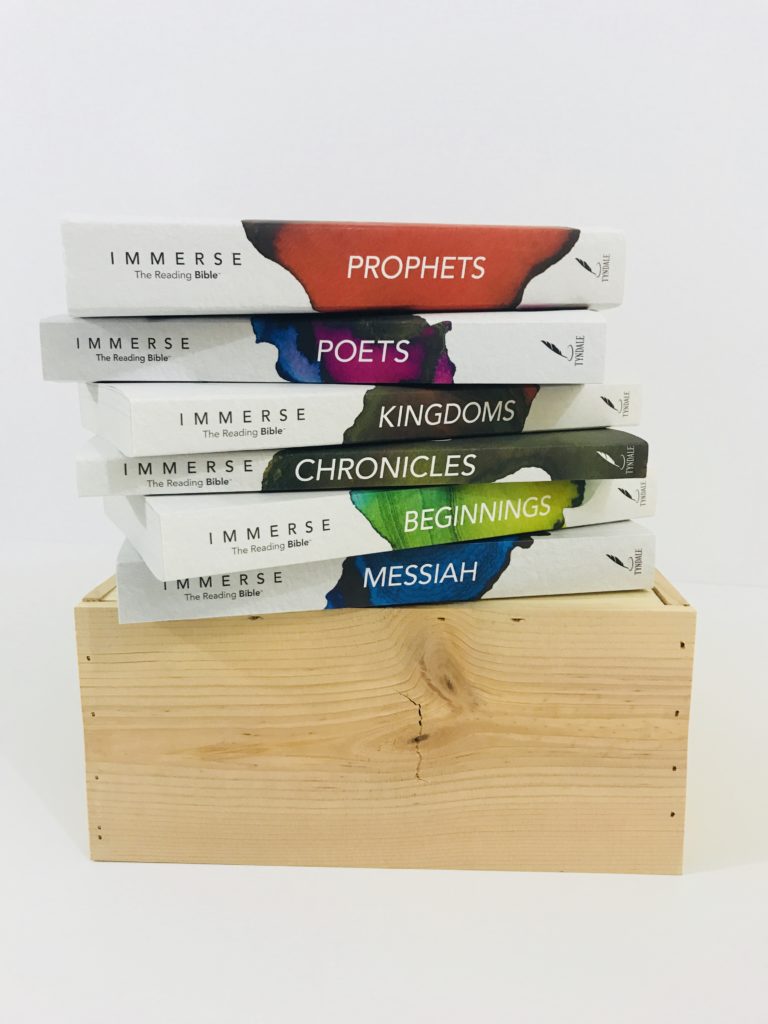
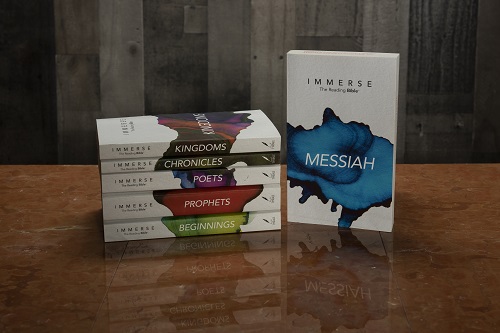
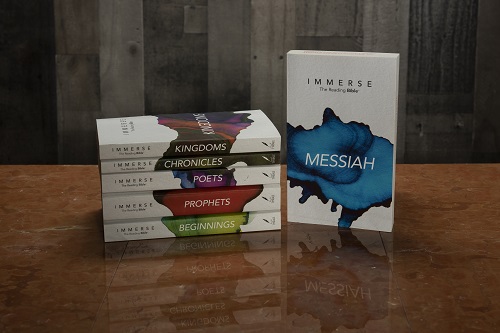
Immerse: The Bible Reading Experience was born out of the necessity to help people engage or reengage with God’s Word. Hundreds of people stop reading their Bibles every day, and if we aren’t reading God’s Word, how can we build our lives on its truth? Without Bible reading, lives are not being built on that foundational rock and are instead resting on the shifting sands of others’ beliefs and cultural norms.

Immerse focuses on three core ideas: reading a naturally formatted Bible, reading at length, and having unmediated discussions about it together. By simply reading and then gathering once per week in “book club” style groups, people have a place to voice their questions, talk about their concerns, and celebrate “aha!” moments together.

Friends enjoying a hot coffee

Each Immerse experience is designed to take a group through a significant portion of the Bible in eight weeks. It’s intentionally uncomplicated. It simply gives people the opportunity to read the Bible, discover its story, and journey through it with their community. By returning to a more natural Bible reading experience, we believe people can truly read and understand God’s Word.

We’re delighted that entire church congregations, small groups, book clubs, families, and even unexpected communities (read how Immerse is being used in Angola Prison) across the country are reading Immerse together. By creating an environment where people feel encouraged to share, it invites people into a better understanding of God’s Word and a deeper relationship with him and each other.


Bringing Immerse into Angola Prison

by Paul Caminiti, Institute for Bible Reading

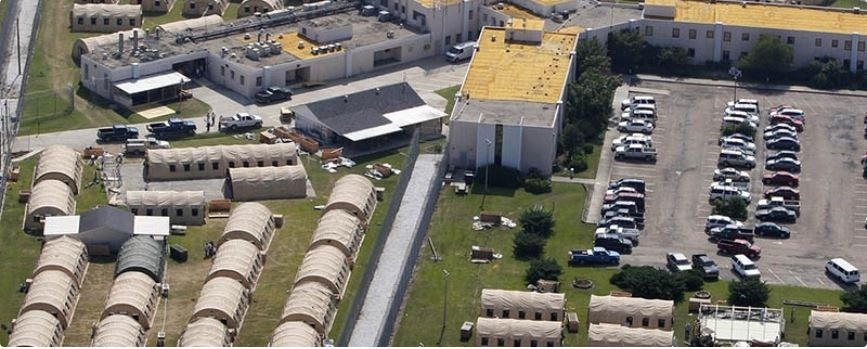
Angola Prison, nicknamed “The Alcatraz of the South,” is one of the world’s most notorious prisons. Located outside Baton Rouge, LA, it’s the largest maximum-security prison in the country, with the property bigger in area than Manhattan. It began in the mid-1880s as a slave plantation, named “Angola” after the African country from which most of the slaves came.

When Angola was converted to a state prison in 1901, the inhumane practices from the slave plantation carried over. Convicts were frequently abused, underfed, and subjected to unregulated violence. Prisoners were often worked to death under the harsh conditions.

I was recently invited to Angola to present Immerse: The Bible Reading Experience to the 28 Protestant churches that operate inside the prison. Thanks to a partnership with New Orleans Baptist Seminary, there is a seminary program within the prison that has trained and ordained over 100 prisoner-pastors.

Our relationship with Pastor Jim Cymbala at The Brooklyn Tabernacle (BT) opened the door at Angola. (Hear what Pastor Cymbala has to say about Immerse.) After Immerse was successfully launched to 5,000 people at BT, Pastor Cymbala caught a vision for Immerse in Angola. BT has a long partnership with Angola, with groups traveling there every year to visit the prison hospital and minister to the men on death row.

Louisiana has one of the strictest penal codes in the country. Nine out of ten prisoners will die there, either by execution or by natural death. Many of the men I met committed crimes when they were teenagers and will never taste freedom again.

There is a long history of violence and abuse at Angola. I talked to men who told me how before going to bed, they would stuff magazines under their T-shirts and into their shorts to keep from being stabbed to death in their sleep.

We toured a housing unit referred to as “Red Hat,” named after the red paint-coated straw hats that its occupants wore when they worked in the fields. The building, located next door to the execution chamber and electric chair, consisted of 30 cell blocks. Each cell measured 5 feet by 7 feet, with a cement bunk and no mattress. Dinner was served in stinking buckets splashed onto the floors. During times of overcrowding, fifteen prisoners, often naked, were pressed into a single cell. Red Hat officially closed in 1972.

In 1995, a work of redemption began with a new warden, Burl Cain. Cain adopted the posture that if you treat people like animals, they’ll act like animals. He built several dormitory-like units where inmates could move for good behavior. He started a rodeo where prisoners could become cowboys for a day and where artistically-gifted inmates could sell their creations to the 10,000 spectators who come for the rodeo. It was Warden Cain who invited New Orleans Baptist Seminary into the prison.

The presence of Christ’s church in Angola has been palpable. The most violent prison in America went from 1,387 assaults in 1990 to 371 assaults in 2012.

Immerse immediately captured the imagination of lead chaplain Jim Rentz. A Bible in the New Living Translation that was easier to read, with no chapters and verses and with the books in a better historical order. He also liked that Immerse is more of a book club than a Bible study.

Chaplain Rentz told me there’s lots of good preaching in the churches, but structurally it’s always been very top-down. Immerse provides what’s been missing: the invitation for the inmates to simply read and dialogue together. Another chaplain, Liz McGraw, is excited. “The churches have been pretty siloed,” she told me, “but Immerse offers us the opportunity to come together as one, all different denominations, to read God’s Word!”

But how would the pastors react? I was able to present and explain Immerse to them for about 90 minutes. During my presentation I sensed they were tracking with me, but then came the moment of truth. With some trepidation I asked for a show of hands: “Who is interested in taking this to their church?” Without hesitation, all 28 hands shot up. We’re all in.

Later that night, to a packed house, I shared the Immerse vision with a larger group of 400-500. The meeting ended, and I was swarmed with inmates who were full of questions, wanting to know when the Bibles would arrive. There were tears. The hope of the gospel and the power of the Scriptures has shone a light into the darkness at Angola.

This year, all 28 Angola churches are reading the New Testament together with Immerse: Messiah.

This is a powerful story in the making, but it needs your prayers. Already we’re seeing the domino effect. A large state prison in Michigan, upon hearing about Angola, has launched Immerse to 300 inmates.

“The Spirit of the Sovereign Lord is upon me, for the Lord has anointed me to bring good news to the poor. He has sent me to comfort the brokenhearted and to proclaim that captives will be released and prisoners will be freed.” ~ The prophet Isaiah

Learn more about Immerse

Learn more about the Institute for Bible Reading

Have Patience?

Taken from the HelpFinder Bible

If you’ve ever spent two hours stuck in traffic or held a crying baby at 2:00 a.m., you know something about patience. According to the Bible, patience is a form of perseverance that allows us to respond to frustrating circumstances with grace and self-control. Contrary to popular opinion, patience is not merely a personality trait but instead is a byproduct of the Holy Spirit’s presence and work. Let’s see what the Bible has to say about growing in patience.

How can I grow in patience?

JAMES 5:7 | Consider the farmers who patiently wait for the rains in the fall and in the spring. They eagerly look for the valuable harvest to ripen.
Whether you’re waiting for crops to ripen, a traffic jam to unsnarl, a child to mature, or God to perfect you, you can grow in patience by recognizing that these things take time and there is only so much you can do to speed them up. A key to understanding God’s will is to understand God’s timing.

• EXODUS 5:22 | Then Moses went back to the Lord and protested, “. . . Why did you send me?”
Focusing less on your agenda and more on God’s agenda for you will provide a big picture perspective and help you be more patient.

• PSALM 40:1 | I waited patiently for the Lord to help me, and he turned to me and heard my cry.
Prayer is a necessary tool in developing your patience and giving you God’s perspective on your situation.

• HABAKKUK 2:3 | “If it seems slow in coming, wait patiently, for it will surely take place. It will not be delayed.”
Patience can actually give you an attitude of anticipation for each new day. If God is going to do what is best for you, then his plan for you will be accomplished on his schedule, not yours. Keeping that in mind, you can actually become excited about waiting for him to act, anticipating what good thing he will work in your life that is just right for you at the present time.

• GALATIANS 5:22 | But the Holy Spirit produces this kind of fruit in our lives: love, joy, peace, patience.
The more you let the Holy Spirit fill and inspire you, the more patient you will become. All fruit takes time to grow and mature, including the fruit of the Holy Spirit.

• 1 CORINTHIANS 13:4 | Love is patient and kind.
Patience is one of the evidences of love.

• ROMANS 8:25 | But if we look forward to something we don’t yet have, we must wait patiently and confidently.
Patience is produced by the hope a believer has in God’s plans, especially his eternal plans. When your long-range future is totally secure, you can be more patient with today’s frustrations.

• 2 TIMOTHY 2:24 | A servant of the Lord must not quarrel but must be kind to everyone, be able to teach, and be patient with difficult people.
God develops patience in you through your relationship with others. Abrasive relationships teach you to patiently endure. Even in loving relationships patience is necessary.

• ROMANS 5:3-4 | We can rejoice, too, when we run into problems and trials, for we know that they help us develop endurance. And endurance develops strength of character, and character strengthens our confident hope of salvation.
God uses life’s circumstances to develop your patience. You can’t always choose the circumstances that come your way, but you can choose how you will respond to them.

Helpfinder Sampler
Click above to take a look inside the HelpFinder Bible


Psalms of Lament

Taken from the Africa Study Bible

A Swahili proverb says, Muvumbo wa kañonyi ye witubula
kajo ko aja, meaning, “The beak of the bird is what tells us
the things it eats.” In other words, the kind of person that you
are is shown by your words.


Psalm 77 is a typical psalm of lament. The writer is in
deep trouble and crying out to God. Like a bird’s beak, the
psalmist’s own words describe him as crying out and shouting
(Psalm 77:1), troubled (Psalm 77:2), moaning (Psalm 77:3),
searching for God (Psalm 77:2), longing for help (Psalm 77:3),
and so distressed he cannot pray or sleep (Psalm 77:4). Some
Christians think that showing these kinds of emotions is a lack
of faith, that a person of deep faith only expresses positive
emotions like joy and peace. Some people teach that the
emotional words found in this psalm show that a person is
spiritually weak and does not trust God. But the psalms of
lament teach us something different. The very fact that over
one-third of all the Psalms are laments or complaints shows
us that God is ready to hear our cry. He chose to include an
important number of these kinds of prayers in his holy Word
so we could learn how to express our distress.


Lament psalms follow a pattern with certain characteristics,
some of which can be seen in Psalm 77. Four of the main
parts are calling out to God and asking for help (Psalm 77:1-
3), expressing the lament (Psalm 77:4-10), then choosing to
remember how God acted in the past, and then praising him
on that basis (Psalm 77:11-20).

Verses 10 and 11 are the turning point of the psalm. The
writer was so discouraged that he wondered if God had turned
against him, but then he chose to start thinking about all the
wonderful things God did in the past and it changed his outlook.

God does not ask his children to pretend to be something
they are not or to be dishonest about their struggles.
He encourages us to tell the truth about our distress and
trouble, to give voice to our doubts and fears. But we should
not stop there. We must go on to remember with praise and
thanksgiving all the ways God has proved himself in the past.
Those memories and offering praise for God’s great deeds give
us hope for the future. Let our words show that we are weak
and struggling people who choose to trust in a powerful and
faithful God, even when all seems dark around us!

Read Psalm 77

I cry out to God; yes, I shout.

Oh, that God would listen to me!

When I was in deep trouble,

I searched for the Lord.

All night long I prayed, with hands lifted toward heaven,

but my soul was not comforted.

I think of God, and I moan,

overwhelmed with longing for his help.

Interlude

You don’t let me sleep.

I am too distressed even to pray!

I think of the good old days,

long since ended,

when my nights were filled with joyful songs.

I search my soul and ponder the difference now.

Has the Lord rejected me forever?

Will he never again be kind to me?

Is his unfailing love gone forever?

Have his promises permanently failed?

Has God forgotten to be gracious?

Has he slammed the door on his compassion?

Interlude

And I said, “This is my fate;

the Most High has turned his hand against me.”

But then I recall all you have done, O Lord;

I remember your wonderful deeds of long ago.

They are constantly in my thoughts.

I cannot stop thinking about your mighty works.

O God, your ways are holy.

Is there any god as mighty as you?

You are the God of great wonders!

You demonstrate your awesome power among the nations.

By your strong arm, you redeemed your people,

the descendants of Jacob and Joseph.

Interlude

When the Red Sea*  saw you, O God,

its waters looked and trembled!

The sea quaked to its very depths.

The clouds poured down rain;

the thunder rumbled in the sky.

Your arrows of lightning flashed.

Your thunder roared from the whirlwind;

the lightning lit up the world!

The earth trembled and shook.

Your road led through the sea,

your pathway through the mighty waters—

a pathway no one knew was there!

You led your people along that road like a flock of sheep,

with Moses and Aaron as their shepherds.

Learn more about the Africa Study Bible

Mary’s Testimony: He Is Risen From the Dead

“After Jesus rose from the dead early on Sunday morning, the first person who saw him was Mary Magdalene, the woman from whom he had cast out seven demons.” Mark 16:9, NLT

Devotional from the Dancing in the Desert Devotional Bible

In a legal setting, the testimony of a woman was considered unreliable, subject to undue influences of the heart and imagination and therefore inadmissible. Men of the first century—Jewish, Greek, Roman, Arab—all held this view, albeit in varying degrees. They easily dismissed the words of a woman if those words didn’t fit their assumptions. The disciples rejected Mary Magdalene’s testimony of having seen Jesus (16:11), and they were later rebuked for that by Jesus himself (16:14). Yet of all the followers of Jesus—of all those whom the biblical text refers to as disciples, whether directly or by implication—Jesus appeared first to Mary and the women with her. Not only that, he sent her to tell the news to the men (Matthew 28:10).

Some biblical scholars consider this one of the clearest signs of the Gospel’s authenticity. No man of the first century would fabricate a story about a miracle and then undermine it by having women as the first witnesses to it. It had to be true. But Jesus held an unusual view of women, and Mary of Magdala seemed to be foremost among the women who followed him. She is listed first in every mention of female followers of Jesus, who apparently traveled with him throughout Galilee and, at least on this unusual occasion, to Jerusalem for Passover. We don’t know much about Mary other than the fact that she had been tormented by demons before she met Jesus and then followed him closely But we do know that no other rabbi at this point included women in his circle of followers. Jesus did, even though the sight of women traveling with men who weren’t their relatives surely unnerved a lot of people. And on this trip to Jerusalem, it was good they were there. Many women watched from a distance as Jesus hung dying (Matthew 27:55), long after most of the men had fled.

Mary probably thought she was only going to Jerusalem for Passover, never envisioning Jesus as the sacrificial Lamb. But when he was executed and her world shattered, she remained there. She came to the tomb with her companions, not to witness a resurrection, but to anoint a body. And Jesus put her world together again, better than before, and gave her a testimony for the ages.

What’s the Greatest Gift for Mom This Mother’s Day?

by Kim Adetunji, Bible Brand Manager

You, of course! Your time, your smile, your kindness, a note, a call—or in some circumstances, your apology or forgiveness. That’s probably the absolute best gift you could give this Mother’s Day!

If you’re like me, you’re always looking for a meaningful gift to give Mom—so we pulled together a list for you:

5 Reasons a Bible Is the (Second) Greatest Gift for Mom on Mother’s Day

#1: Your Mom deserves the very BEST, and what gift could be better than the living and powerful Word of God? (Plus, there are so many options to choose from that you are bound to find one that she’ll love!)

#2: What other gift—besides prayer, maybe—connects Mom so directly to God than the Bible? When Mom (or you or I) reads through the Bible, God speaks to her (and us)!

#3: It will be a gift your Mom will cherish for a very, very long time—and not just because it’s from you (which is a really huge reason!), but also because being a student of the Word and growing in knowledge of God and his plan for us is a life-long journey. We will never fully mine the riches and depths of this treasure house that is the Bible.

#4: No matter where your Mom is (or isn’t) on her spiritual journey, a new (or first!) Bible could be the fresh inspiration she needs to make spending daily time with God a (new or renewed) priority in her life.

#5: As Mom reads her Bible and reflects on its truths, the more she will become transformed into Christlikeness. The Bible promises us that time spent in God’s Word will never return void! (We saved the very best reason for last!)

Inspire Mom This Mother’s Day!

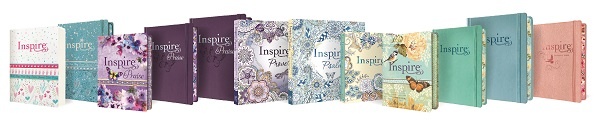
The #1–selling Inspire Bible line is available in 6 unique editions (pictured above, from left):

Inspire Bible for Girls

Includes 500+ illustrations to color, 300+ devotional readings and prayers, 160+ journaling prompts, fun facts, a beautiful two-color interior & so much more!

Inspire PRAISE Bible

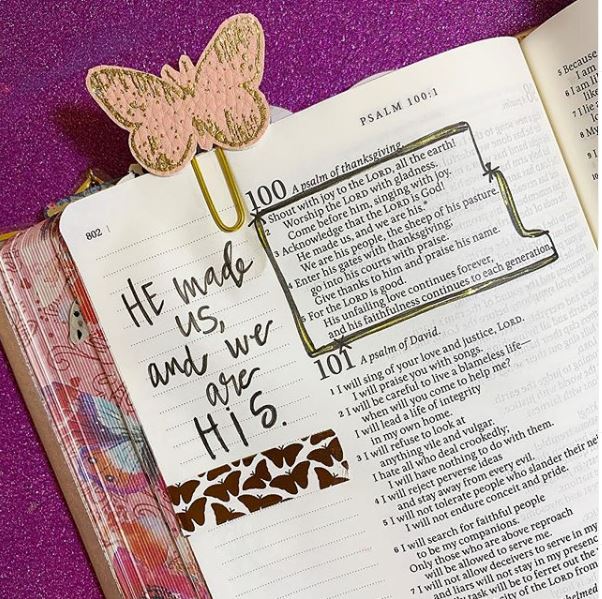
Over 500 all-new Scripture line-art illustrations to color, wide margins for journaling, plus 32 beautiful full-color vellum pages (pictured below). It’s the only Bible with vellum pages! Now available in large print.

Inspire: Proverbs

A square-trimmed, coloring-book-style complete book of Proverbs that is beautifully designed with line-art illustrations to color and extra-wide margins for journaling. Printed on thick art paper.

Inspire: Psalms

A square-trimmed, coloring-book-style complete book of Psalms that is beautifully designed with line-art illustrations to color and extra-wide margins for journaling. Printed on thick art paper.

Inspire Bible (the original)

Over 400 Scripture line-art illustrations to color, plus wide margins for journaling. Available in full-size and large-print editions.

Inspire Catholic Bible NEW!

Our latest addition to the line, the beautiful rose gold Inspire Catholic Bible has over 450 Scripture line-art illustrations to color, plus wide margins for journaling.

Inspire has drawn people of all ages and stages of faith deeper into God’s Word.

Let the Word of God Inspire You.™

All Scripture is inspired by God and is useful to teach us what is true and to make us realize what is wrong in our lives. It corrects us when we are wrong and teaches us to do what is right. – 2 Timothy 3:16, NLT

What Does It Mean to Be Saved?

Taken from the HelpFinder Bible

The scene is played out before us many times every year: A man is dramatically rescued from a swollen river; a child is pulled by firefighters from a burning apartment building; a woman is delivered from a would-be assailant by a brave bystander. Each scenario includes a situation of impending peril or destruction, a rescuer or deliverer who intervenes, and a second chance at life for the one saved.

Although the word is rarely used in the media, each is a picture of salvation. The Bible teaches that sin threatens us with broken relationships, spiritual death, and judgment. But God, through the death and resurrection of Jesus Christ, has provided a way to rescue us from sin’s consequences. He offers us salvation so that we can have a second chance at life, an opportunity to experience a spiritual rebirth into a new and abundant life in the Spirit, and ultimately, eternal life with him forever.

If you’ve gone to church you’ve probably heard people talking about being saved. But what does the Bible say that it means to be saved? Using the HelpFinder Bible index let’s dig into that question.

ROMANS 4:8 | “What joy for those whose record the Lord has cleared of sin.”
ROMANS 3:24 | “Yet God, in his grace, freely makes us right in his sight.”


Being saved, spiritually speaking, means your sins no longer count against you toward an eternal death sentence. Instead, they are forgiven by the grace of God, and you are given the free gift of eternal life. Being saved does not spare you from earthly troubles, but it does spare you from eternal judgment.

PSALM 103:12 | “He has removed our sins as far from us as the east is from the west.”

Being saved means your sins have been completely forgiven and removed.

PSALM 51:9-10 | “Remove the stain of my guilt. Create in me a clean heart, O God.”

Being saved means the stain of guilt has been washed away. Guilt doesn’t just appear to be gone—it is gone! You are given a clean slate!

JOHN 10:28-29 | “I give them eternal life, and they will never perish. No one can snatch them away from me, for my Father has given them to me, and he is more powerful than anyone else. No one can snatch them from the Father’s hand.”
JOHN 5:24 | “I tell you the truth, those who listen to my message and believe in God who sent me have eternal life. They will never be condemned for their sins, but they have already passed from death into life.”


Being saved means you are assured of living forever in heaven, which will actually be a new earth where there will no longer be sin, pain, and suffering. What greater hope could you have?

Learn more about the HelpFinder Bible

It Doesn’t Take Much

How often do we think “I don’t have the skills to make a difference” or “I don’t have the resources to make it worth it”? Throughout the pages of Scripture we are reminded that it’s often the least likely people who can make the biggest impact, and the same is true today.

It’s so exciting to hear stories of how God uses everyday people who are sold out to him to accomplish things that they could never imagine (check out Jeff Hilliard’s story). But it doesn’t have to be on a large scale. Maybe it’s just talking to a friend who needs support, connecting with someone at an outreach event at your church, meeting a new neighbor, or being Christ’s hands of compassion to a person in need.

Here are a few inexpensive resources that can help as you reach out:

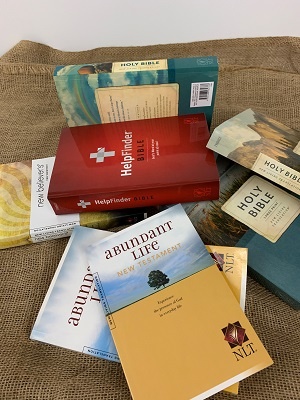
Abundant Life Bibles are value-priced and offer readers insights about living the abundant life through a relationship with Jesus Christ. They cover topics such as joy, peace, and dealing with life’s tough issues and offer practical guidance for daily life.

Economy Outreach Editions are softcover Bibles with the entire NLT text that come in three different editions, depending on audience, and can only be ordered in bulk.

The Economy Outreach and Large Print Editions feature resources such as “Welcome to the Bible,” “How to Know Jesus Personally,” “Where Can I Find It,” and “The Apostles’ Creed Bible Reading Plan” that provide helpful guidance to readers who may be encountering the Bible for the first time or are reconnecting with its words of hope and healing.

The Children’s Outreach Edition includes kid-friendly features that answer kids’ questions about the Bible, has a graphic of the books of the Bible, and has a quick guide to the Bible’s big story using 30 images—each described by a single sentence. It also includes first steps to following Jesus and a 10-day reading plan to help kids in their first steps after they accept Christ.

New Believers Bible is uniquely designed to help the new Christian read, study, and understand the Bible. It includes features that help Christians develop and deepen their faith while providing a foundation for their new life in Christ.

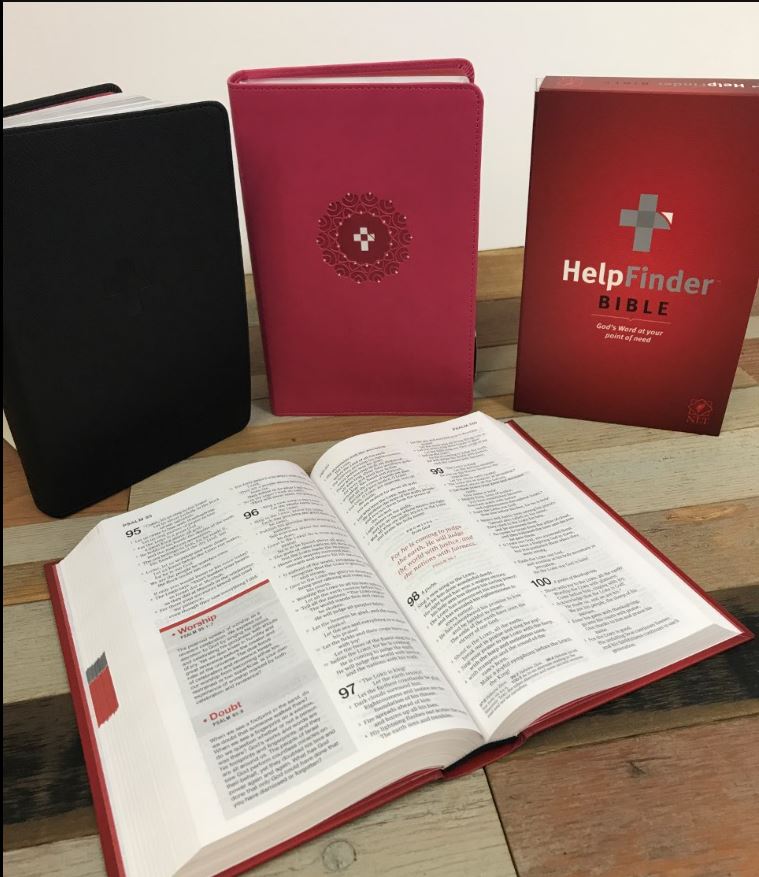
HelpFinder Bible makes it easy for anyone, whether familiar with Scripture or not, to find help in the Bible for their immediate needs. Application notes connect the Bible’s truths to today’s issues, and the extensive index points readers to verses where answers can be discovered, issues resolved, and freedom found. The HelpFinder Bible is God’s Word at your point of need.

Tyndale Bibles also has Scripture portions such as an Abundant Life New Testament or the Gospel of John that may be easier for someone just getting to know the Bible.

A verse often quoted by a member of our team reminds us of the power of sharing God’s Word.

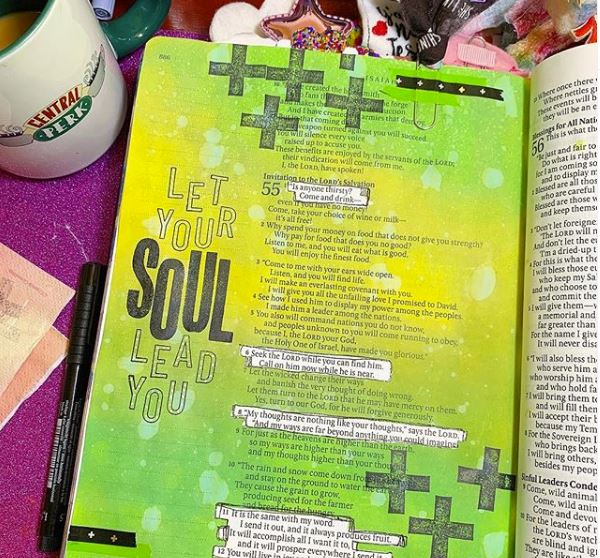
“It is the same with my word. I send it out, and it always produces fruit. It will accomplish all I want it to, and it will prosper everywhere I send it.” Isaiah 55:11, NLT