Stay Awake!

Disappointments, frustrations, worries, the list goes on and on. We live in an age where we can quickly become overwhelmed by all that is happening around us and be lulled into a state of uncaring and complacency. Read as Chuck Swindoll shares from the book of Mark about the importance of staying awake and alert, especially in times of confusion and despair.

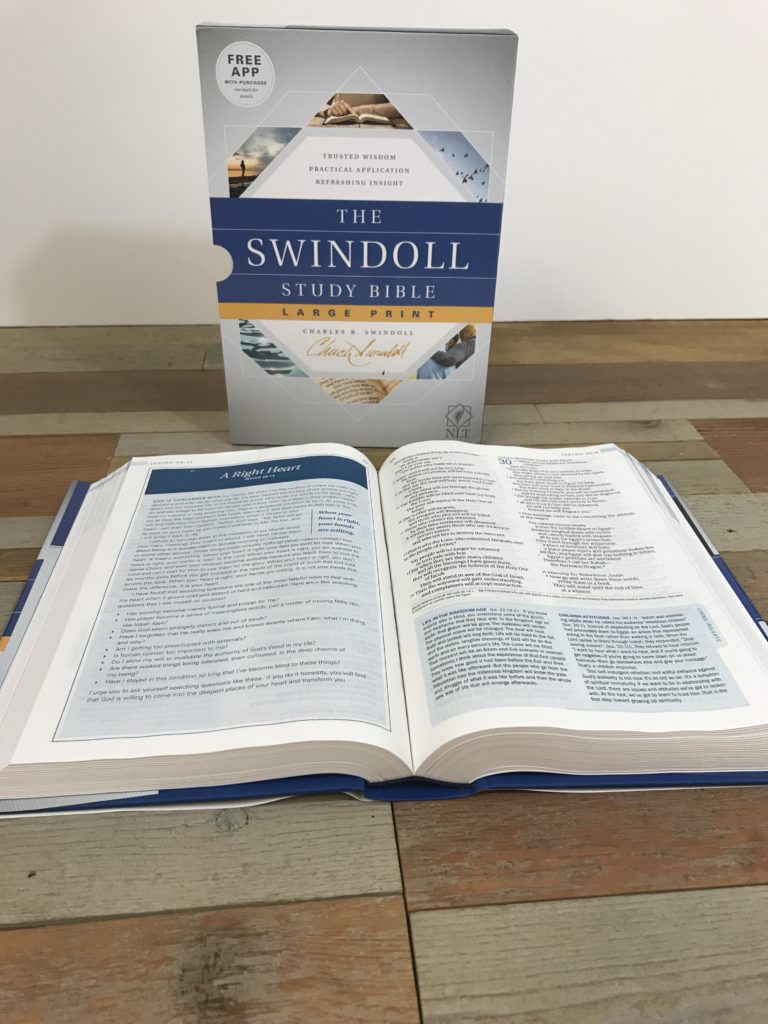
Article from The Swindoll Study Bible

“Then he returned and found the disciples asleep. He said to Peter, ‘Simon, are you asleep? Couldn’t you watch with me even one hour? Keep watch and pray, so that you will not give in to temptation. For the spirit is willing, but the body is weak.’ Then Jesus left them again and prayed the same prayer as before. When he returned to them again, he found them sleeping, for they couldn’t keep their eyes open. And they didn’t know what to say.” Mark 14:37-40, NLT

What do you do when someone strong in your life suddenly becomes weak? For as long as you can remember, you’ve been able to lean on that individual. You’ve found that person stable, strong, and reliable. But now all of that has changed.

Children face this when a parent suddenly becomes ill and then the illness doesn’t get better. They’ve always been able to rely on their mother or father, and now they can’t do that.

It happens in divorce. The children have always known Mom and Dad to work together and pull through, but then suddenly their home is fractured, and their parents may be at outright war. The children are left confused and lost.

Those who play sports rely on their coaches to be strong. The coach is always thinking about a plan for winning. As the season runs on, that intensity only grows greater. Even in a losing season, the team looks to the coach for encouragement and a boost. But when a coach throws in the towel and loses heart, the entire team loses its confidence.

Maybe you work for a company where you’ve always been able to rely on those at the top to be people of integrity. If you suddenly discovered that they aren’t, it’d be completely disheartening.

A church is dismayed if its pastor, who has always been true to the Word in the past, becomes soft in his convictions, or shows himself not to have financial accountability, or is discovered to lack moral purity. It starts a big scandal, pits people against one another, and can even destroy a congregation. Disillusionment, especially among new believers, often follows.

That state of disillusionment is exactly where the disciples found themselves in the garden of Gethsemane. For three and a half years, the disciples had trusted that Jesus would take care of everything. If they were caught in a storm on the Sea of Galilee, He could calm it. If there was a disease, He could heal it. If there was a physical abnormality, He could change it. If there were demons, He could face off against them and make them stand down. If there were critics, He could stand toe to toe with them and bring them to silence.

Suddenly, the One they counted on and relied upon was somewhere out there in the dark, crying His heart out, overwhelmed with tormenting anguish. Can you imagine how they must have felt? Jesus seemed to be falling apart, and they weren’t able to handle it. Perhaps that’s part of the reason they fell asleep, in addition to the lateness of the hour. They didn’t know what to do when they heard their Master wrestling in prayer.

Jesus came back to them and asked, “Couldn’t you watch with me even one hour? Keep watch and pray, so that you will not give in to temptation. For the spirit is willing, but the body is weak” (Mark 14:37-38).

We would do well to consider His words. “Keep watch and pray.” Temptation is all around us. Temptation is within us. When people disappoint us or their strength seems to be lacking, ultimately our only hope is in our heavenly Father. But He needs us awake and paying attention—not getting lulled into the sleep of complacency. The world is a dangerous place. Our spirits may be willing, but our bodies are weak. When people disappoint us or their strength seems to be lacking, ultimately our only hope is in our heavenly Father.

SwindollStudyBible-John
Take a Look Inside the Swindoll Study Bible


John the Baptist

Personality Profile taken from the Life Application Study Bible

There’s no getting around it—John the Baptist was unique. He wore odd clothes and ate strange food and preached an unusual message to the Judeans who went out to the wastelands to see him.But John did not aim at uniqueness for its own sake. Instead, he aimed at obedience. He knew he had a specific role to play in the world—announcing the coming of the Savior— and he put all his energies into this task. Luke tells us that John was in the wilderness when God’s word of direction came to him. John was ready and waiting. The angel who had announced John’s birth to Zechariah had made it clear that this child was to be a Nazirite—one set apart for God’s service. John remained faithful to that calling.



This wild-looking man had no power or position in the Jewish political system, but he spoke with almost irresistible authority. People were moved by his words because he spoke the truth, challenging them to turn from their sins and baptizing them as a symbol of their repentance. They responded by the hundreds. But even as people crowded to him, he pointed beyond himself, never forgetting that his main role was to announce the coming of the Savior.

The words of truth that moved many to repentance goaded others to resistance and resentment. John even challenged Herod to admit his sin. Herodias, the woman Herod had married illegally, decided to get rid of this wilderness preacher. Although she was able to have him killed, she was not able to stop his message. The one John had announced was
already on the move. John had accomplished his mission.

God has given each of us a purpose for living, and we can trust him to guide us. John did not have the complete Bible as we know it today, but he focused his life on the truth he knew from the available Old Testament Scriptures. Likewise, we can discover in God’s Word the truths he wants us to know. And as these truths work in us, others will be drawn to him. God can use you in a way he can use no one else. Let him know your willingness to follow him today.

Strengths and accomplishments
● The God-appointed messenger to announce the arrival of Jesus
● A preacher whose theme was repentance
● A fearless confronter
● Known for his remarkable lifestyle
● Uncompromising

Lessons from his life
● God does not guarantee an easy or safe life to those who serve him
● Doing what God desires is the greatest possible life investment
● Standing for the truth is more important than life itself

Vital statistics
Where: Judea
Occupation: Prophet
Relatives: Father: Zechariah. Mother: Elizabeth. Distant relative: Jesus.
Contemporaries: Herod, Herodias

Key verse
“I tell you the truth, of all who have ever lived, none is greater than John the Baptist. Yet even the least person in the Kingdom of Heaven
is greater than he is!” (Matthew 11:11).

John’s story is told in all four Gospels. His coming was predicted in Isaiah 40:3 and Malachi 4:5; and he is mentioned in Acts 1:5, 22; 10:37; 11:16; 13:24, 25; 18:25; 19:3, 4.

Is It Ok To Make Fun of Someone?

Taken from the Boys Life Application Study Bible

Is it okay to make fun of someone who deserves it? This question has a simple answer: No.

Do you want some proof?

“You should not have gloated when they exiled your relatives to distant lands. You should not have rejoiced when the people of Judah suffered such misfortune. You should not have spoken arrogantly in that terrible time of trouble,” Obadiah 1:12, NLT

“Don’t rejoice when your enemies fall; don’t be happy when they stumble. For the Lord will be displeased with you and will turn his anger away from them,” Proverbs 24:17-18, NLT.

“Do not judge others, and you will not be judged. For you will be treated as you treat others. The standard you use in judging is the standard by which you will be judged,” Matthew 7:1-2, NLT.

It’s so easy to make fun of others—to gloat over someone who’s been mean to you and to laugh when someone you don’t like gets embarrassed or hurt.

But in Obadiah 1:12, God rebuked the people of Edom for laughing when his people were in trouble. God didn’t laugh with them. In fact, God punished the Edomites for laughing at his people. When you’re tempted to make fun of someone else, first imagine yourself in that person’s shoes. Think about how it would feel if people were laughing at you. Then choose to be quiet and kind.

Boys Life Application Study Bible Gospel of John Sampler
Look Inside the Boys Life Application Study Bible

From Valley of Trouble To Gateway of Hope

Taken from the Swindoll Study Bible

“Then Joshua said to Achan, ‘My son, give glory to the Lord, the God of Israel, by telling the truth. Make your confession and tell me what you have done. Don’t hide it from me.’ Achan replied, ‘It is true! I have sinned against the Lord, the God of Israel. Among the plunder I saw a beautiful robe from Babylon, 200 silver coins, and a bar of gold weighing more than a pound. I wanted them so much that I took them. They are hidden in the ground beneath my tent, with the silver buried deeper than the rest.’” Joshua 7:19-21, NLT

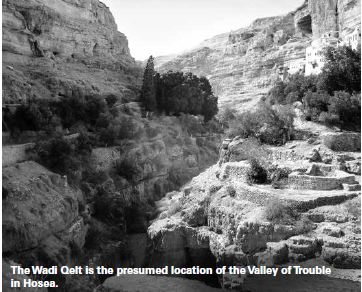
After Joshua’s Victory at Jericho, the Israelites suffered defeat at Ai because a man named Achan had buried banned spoils of war under his tent (Josh. 7:1-26). Following this event, the valley of Achor (or the “Valley of Trouble”) served as a reminder of failure, setback, and defeat. The word Achor means “trouble,” so with a slight variation on Achan’s name, Joshua asked him, “Why have you brought trouble on us?” (Josh. 7:25). After Achan’s execution, the valley where he died took on the name “Valley of Trouble.” This valley may well be the Wadi Qelt just west of Jericho.

When the Jews returning from the Exile came across this story in the genealogical record, they would have remembered Achan as Achar, “disaster” But they also would have recalled that the prophets described the valley of Achor—a place once linked with sin, discipline, and death—as a place of promise. In Hosea, God declares that He will change the place from a site of trouble to a place of triumph. Most notably, the prophet Hosea spoke of the valley as a future “gateway of hope” (Hos. 2:15). Isaiah referred to the dry valley as the spot where herds will someday be pastured (Isa. 65:10).

The Valley of Trouble serves as a reminder that God can produce hope in spite of our worst situations. Even if the trouble we have experienced is a result of our own doing, God can heal us as we come to terms with and repent of our sin. As Christians, we have the promise that when we confess our buried, hidden sins, God will “cleanse us from all wickedness” (1 Jn. 1:9)— even from those sins buried so deep we don’t know to confess them. Forgiveness in Christ is not an emotion to feel. It is a promise to claim. God can change our trouble into triumph, but how and when He chooses to do so is up to Him. We simply must cling to the promise that He will.

SwindollStudyBible-John
Take a look inside the Swindoll Study Bible

What Does the Bible Say About Conflict?

Taken from the HelpFinder Bible

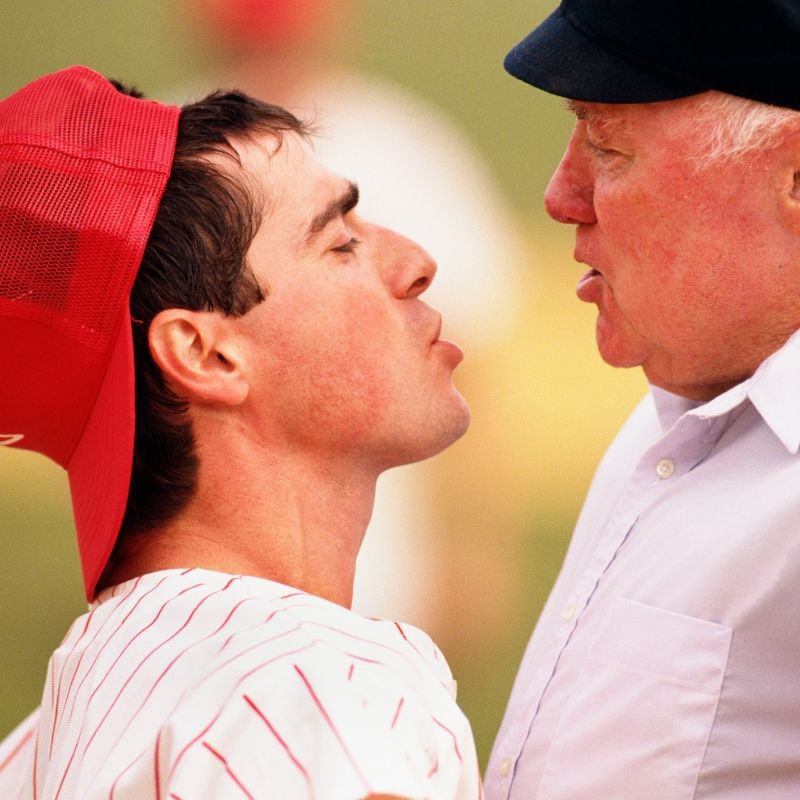
Grown men stand toe to toe, faces beet red, veins standing out on their necks as they shout at each other, “I was safe!” “You were out!” “Safe!” “Out!” If a ball player disagrees with an umpire’s call, a spectacular and entertaining argument sometimes ensues.

Since people have differing opinions on everything from politics to sports to religion, conflict seems to be a given in human relationships. The Bible does not hide from the issue of conflict, nor does it condemn all conflict as sinful.

From Moses to David to Jesus to Paul, the Bible’s greatest figures found themselves in conflict with someone or something. According to the Bible there is nothing inherently wrong with conflict. Disagreements happen. But the way we are to resolve our conflicts is extremely important. Conflict can become the catalyst to greater understanding, intimacy, and depth of relationship; or it can bring anger, bitterness, and broken relationships. How you deal with conflict will literally shape the direction of your life.

What are some ways to resolve conflict?

GENESIS 13:8-9 | Abram said to Lot, “Let’s not allow this conflict to come between us or our herdsmen. . . . Take your choice of any section of the land.”
Solving conflict takes initiative; someone must make the first move. Abram gave Lot first choice, putting family peace above personal desires.

GENESIS 26:21-22 | Isaac’s men then dug another well, but again there was a dispute over it. . . . [He] dug another well. This time there was no dispute.
Solving conflict takes humility, a desire to see peace more than personal victory.

2 SAMUEL 3:1 | That was the beginning of a long war between those who were loyal to Saul and those loyal to David. Solving conflict involves compromise, finding common ground that is bigger than your differences. If neither side is willing to take the initiative or show the necessary humility to seek common ground, conflict will result in a broken relationship or even war.

NUMBERS 12:1-2 | Miriam and Aaron criticized Moses because he had married a Cushite woman. They said, “Has the Lord spoken only through Moses? Hasn’t he spoken through us, too?”
Solving conflict requires that we focus on the real issue. We focus only on resolving the problem, not attacking the person.

2 TIMOTHY 2:24 | A servant of the Lord must not quarrel but must be kind to everyone, be able to teach, and be patient with difficult people.
When someone disagrees with what you are saying, maintain a gracious, gentle, and patient attitude instead of becoming angry and defensive.

Helpfinder Sampler
Take a Look Inside the HelpFinder Bible

Samuel, Israel’s Last Judge and First Prophet

Taken from the Illustrated Study Bible

Samuel lived at the end of the period of the judges and ushered in the period of kingship. He was Israel’s last judge (1 Sam 7:6, 15‑17) and first prophet (3:20; Acts 3:24; 13:20). He functioned as a priest (1 Sam 2:18) and was a great man of faith (Heb 11:32).

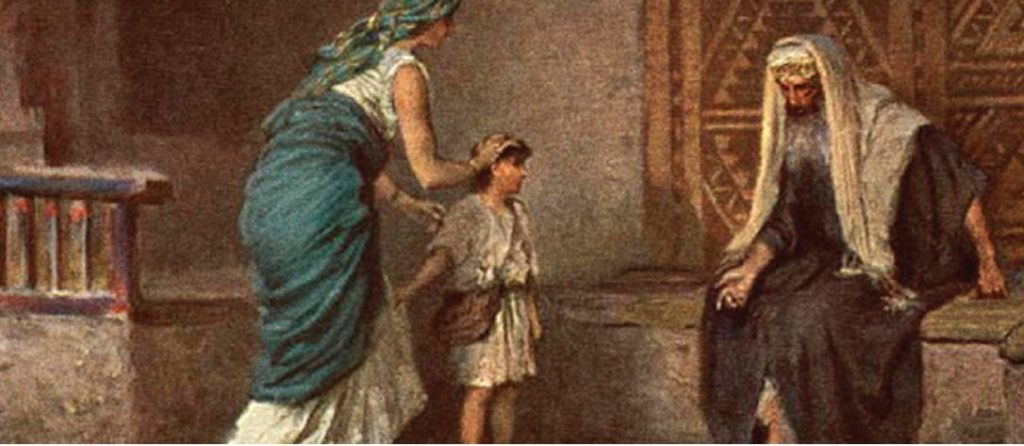
Samuel was born in response to his mother Hannah’s prayers. Samuel’s parents traveled annually from Ramah to the Shiloh sanctuary (1 Sam 1:3). While at the sanctuary, Hannah, who was infertile, prayed for a son and promised him to God for full-time service (1:9‑11). God answered the prayer, and Samuel was born (1:19‑20). When Samuel was weaned, Hannah took him to serve in the sanctuary with Eli, the high priest (1:24‑28).

Eli’s sons were wicked and pagan, but Samuel served the Lord. Soon it became clear that God spoke more intimately with Samuel than with Eli. God spoke to Samuel (3:1‑18) to warn Eli of the coming disaster when the Philistines defeated Israel, killed Eli’s sons, and took the Ark of the Covenant (chs 4–6). Later, under Samuel’s leadership, the people repented of their sin of idolatry and succeeded in winning an important battle against the Philistines (7:3‑17).

But as Samuel grew older, it became obvious that he suffered from the same weakness as Eli before him. Samuel’s sons were evil (8:1‑3), and the people did not want them to assume leadership over the nation. So the people saw the need for a king who could lead them in battle against their enemies (8:4‑5).

The transition from the era of the judges to kingship was turbulent. As priest, Samuel prayed for the people; as prophet, he reproved Saul for impatience and disobedience (13:5‑14; 15:20‑23). When God rejected Saul as king, Samuel anointed David as God’s chosen one (16:1‑13) and protected David from Saul (19:18‑24).

Through prayer and perseverance, Samuel was a faithful leader (Jer 15:1; Acts 13:20; Heb 11:32) who cherished his people’s well-being and courageously rebuked kings and elders. He led Israel from tribal disunity to national solidarity and established the monarchy. He wrote The Record of Samuel the Seer (1 Chr 29:29) and defined ideal kingship (1 Sam 10:25).

When he died, he was mourned by all Israel. He was buried in Ramah, his hometown (25:1).

Illustrated Study Bible Book of Acts
Take a look inside the Illustrated Study Bible

Growing as a Christian

Taken from the Christian Basics Bible

“Rather, you must grow in the grace and knowledge of our Lord and Savior Jesus Christ. All glory to him, both now and forever! Amen.”

2 Peter 3:18, NLT

The birth of a baby always brings excitement to a family, but how worried that family would be if the baby always stayed a baby! After all, babies are born for one thing: to grow up. And that’s exactly how it is when we become Christians. God does not want us to stay spiritual babies; he wants us to grow up, in both our knowledge and experience, as Peter encourages in 2 Peter 3:18.

Businesswomen discussing and having fun

Acts 2:42 lists four key practices that helped the first Christians to grow: “All the believers devoted themselves to the apostles’ teaching, and to fellowship, and to sharing in meals (including the Lord’s Supper), and to prayer.”

We can follow their example, first, by studying the Bible—for if we do not read it, how can we know what God is like and what he wants?—second, by sharing fellowship with other Christians to encourage one another; third, by sharing the Lord’s Supper together to remind us of Christ’s sacrifice and to keep him central in our lives; and fourth, by praying—talking to God—both alone and with others. Note that these four things weren’t occasional occurrences; rather, the first Christians devoted themselves to them. Doing the same today will help us grow and mature, not just intellectually, but in a living experience of God’s grace.


Divine Appointments

“And now, in my old age, don’t set me aside. Don’t abandon me when my strength is failing.” Psalm 71:9, NLT

In the busyness of life, it can be easy to forget those who have walked in our shoes. We may get annoyed that our day is interrupted as someone slowly attempts to complete a routine task. And in a culture that idolizes youth and beauty, lines on a face or gray hair can make someone feel less valuable or that they no longer contribute to a world that seems to be quickly passing by. But to God, each person is of infinite value.

For 50 years, Doug and his wife, Helga, have lived out this truth. Though a tutor by profession, he found his calling bringing God’s love to people others might not even notice. Whether it’s to someone tucked away in a nursing home or rehab center or to a person in a halfway house or addictions program, Doug has devoted his life to bringing God’s Word to the often forgotten.

“It doesn’t matter who we are, God has a calling for each of us. He has a desire for us to become more like him and to share him with a world that needs to hear his Word,” said Doug. “Every Christian is called to be a blessing to others, and I have found my calling.”

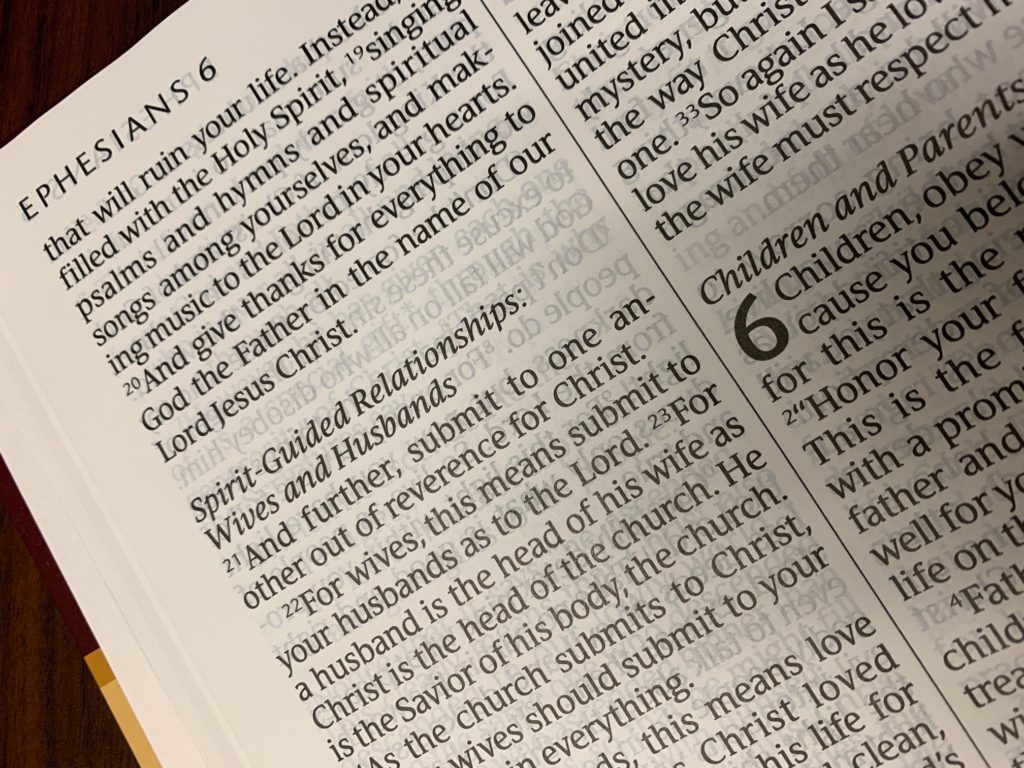
Each month, Doug visits at least fifteen nursing homes. As he went from facility to facility, one thing he noticed was the lack of Bibles with text large enough for the residents to read.

“At one of the facilities, the activities cart had the largest Bible I had ever seen. It was enormous! I asked the activities person about it, and she said when a person requested a Bible they wheeled the cart into the room and read to him or her,” said Doug. “That day I knew I needed to do something. Many of these people needed the comfort of the Word of God right next to them and shouldn’t have to wait for someone to wheel in a cart to engage with God’s Word.”

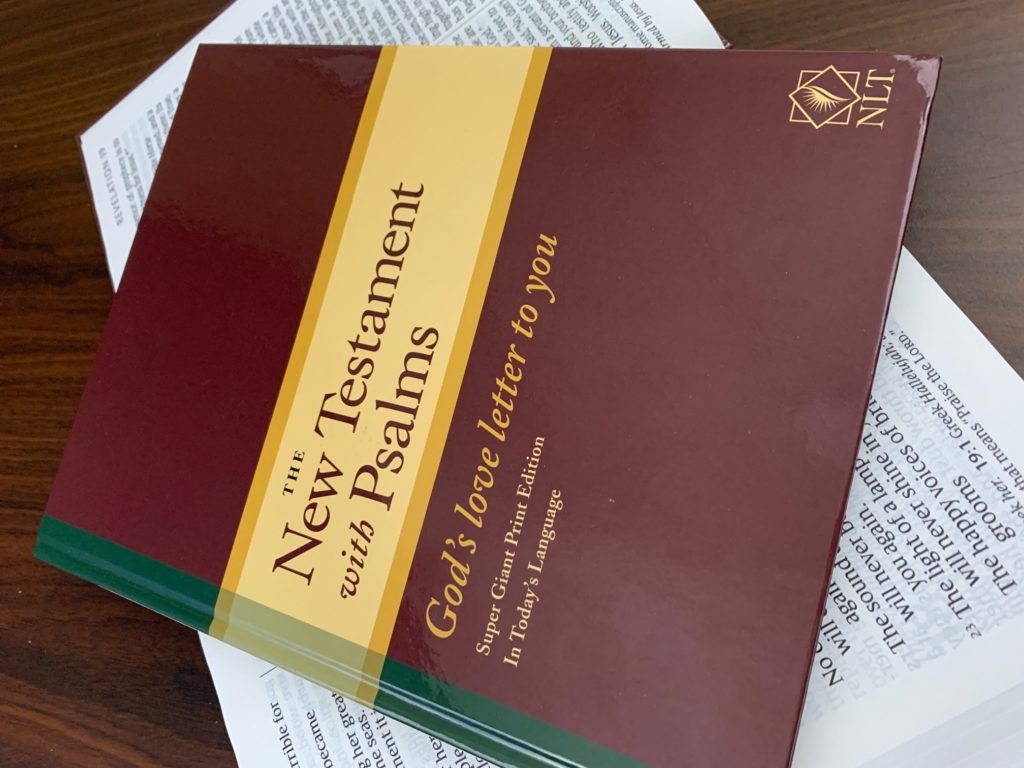
With the help of Tyndale House Publishers, Doug was able to create a Giant Print New Testament and Psalms special edition. In less than two years, he has personally given out 8,000 of these Bibles and is working with nursing home ministers to distribute additional Bibles to people in residential facilities in several states.

“The New Living Translation really conveys the warmth and intimate love God has for each us. It is so well received by the residents everywhere I go. Not just the nursing homes but also the halfway houses and addictions and rehabilitation centers. People of all ages can relate and understand it. Throughout the text, you feel God’s persevering love for us,” said Doug.

Even at 78 years old, he doesn’t have plans to slow down. Doug is part of a softball team, and when he is on his way to tournaments, he brings several copies of the special edition Bible to drop off at nursing homes and centers he passes on his way.

“Every time I talk to a resident at a nursing home or share a Bible with a staff member, I know the privilege of being able to share God’s love with them. These are divine appointments, and I never take that for granted.”

His passion for sharing the Word of God is encouraging others to share God’s love too.

“There are several homes where the residents have started their own Bible studies since they each have a Bible they can read. Others feel more confident sharing what God is doing in their lives with a Bible right there next to them,” said Doug. “God’s Spirit is in each of us, and we need to be the funnel for God’s love to be shown to everyone we come in contact with.”

A Bible of My Own

by Evie Polsley, Bible Team Marketing Coordinator

It was pink, slim, and had a snap to keep the front and back covers closed. I will never forget the first Bible my mom and dad gave me when I made the decision to follow Jesus at 7 years old. It is still a prized possession, and I gave it to my daughter when she turned 9 years old and asked for a Bible of her own.

Though I’ve just started down the road of my “middle” years, the variety of Bibles available has greatly increased since I held that pink Bible in my hands. What hasn’t changed is the beauty that emulates from the text of God’s Word to us.

Picking out a Bible can be overwhelming. There are notes, wide margins, coloring options, devotionals, and etc.—so many features. But even if you just want a Bible without any additional features, the choices can still seem daunting.

Here are a few questions we think might be helpful when choosing a text Bible.

  1. Determine which translation to go with (we are partial to the NLT, but there are lots of great English translations available).
  2. Is this a Bible that will travel with you or stay at home?
  3. What’s the smallest font or print size that you can comfortably read?
  4. What materials do you prefer when handling the Bible? A hardcover is great for a stay-at-home library edition, while genuine leather feels like a fine pair of driving gloves that you want to use wherever you happen to be. LeatherLikes are great alternatives as they have the feel of leather without the associated higher price.
  5. Bibles come in a variety of colors now, so it is likely that you will find just the right Bible that fits your personal taste. And now there are even options to create your own cover. (Want to know more about custom covers? Check out Cover Expressions.)

Whether it’s your first or 51st, a Bible of your own is a wonderful opportunity to grow closer to God. We’d love to hear stories about important Bible moments in your life. Please share in the comments.

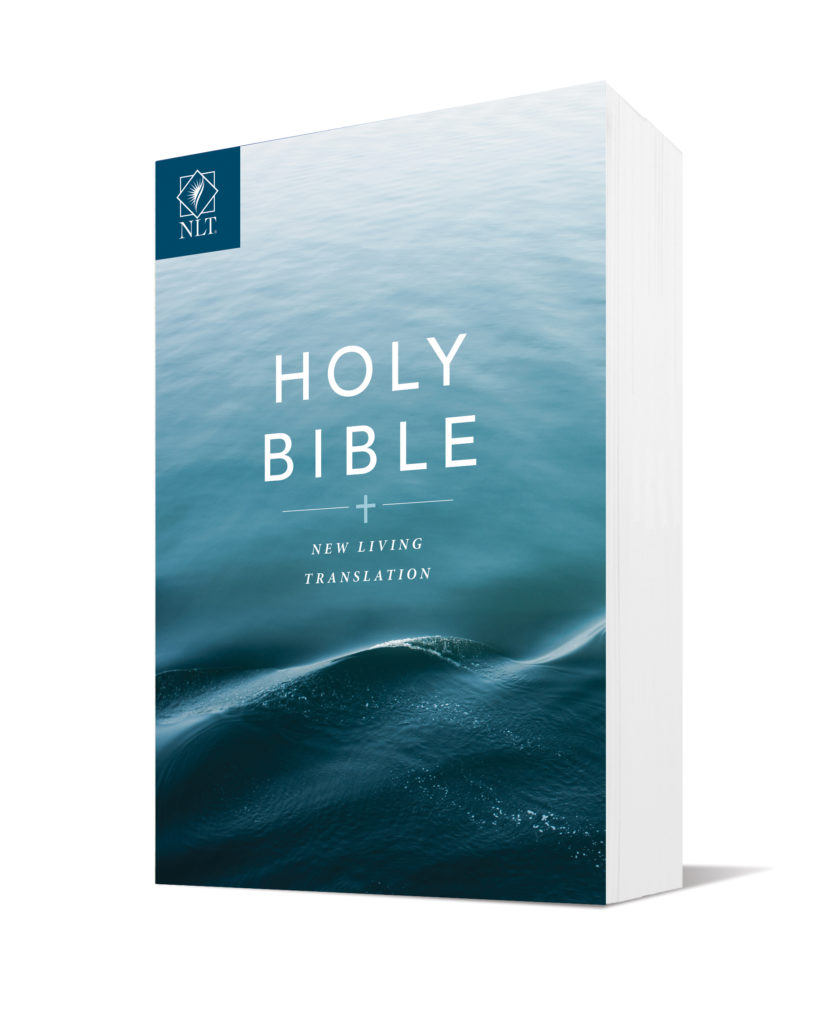
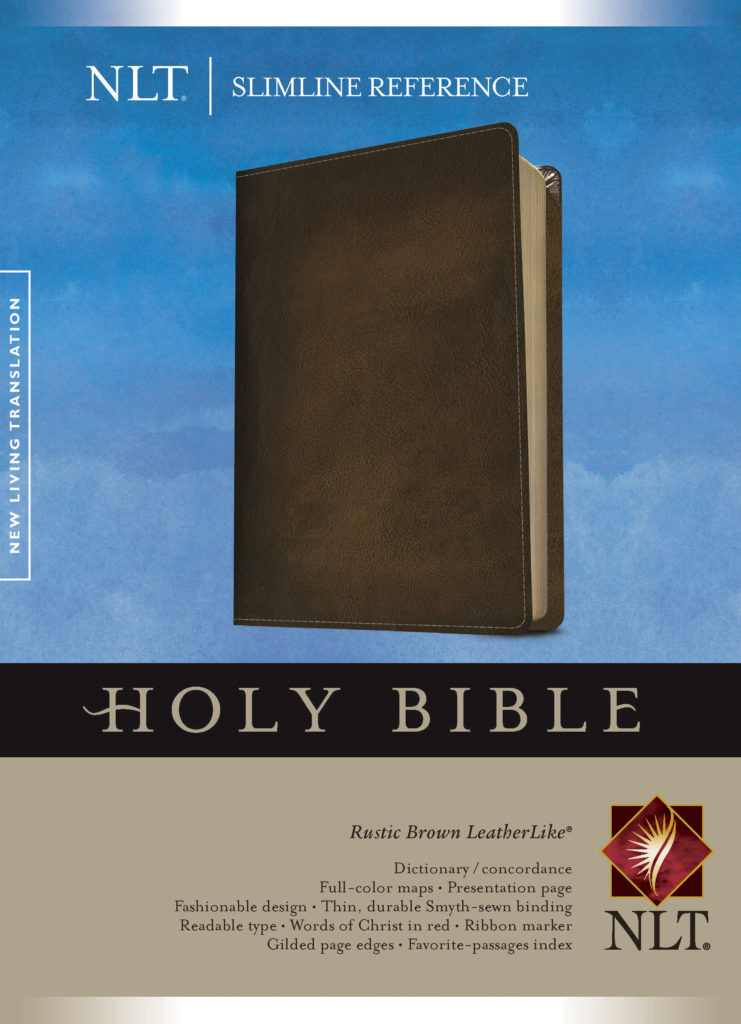
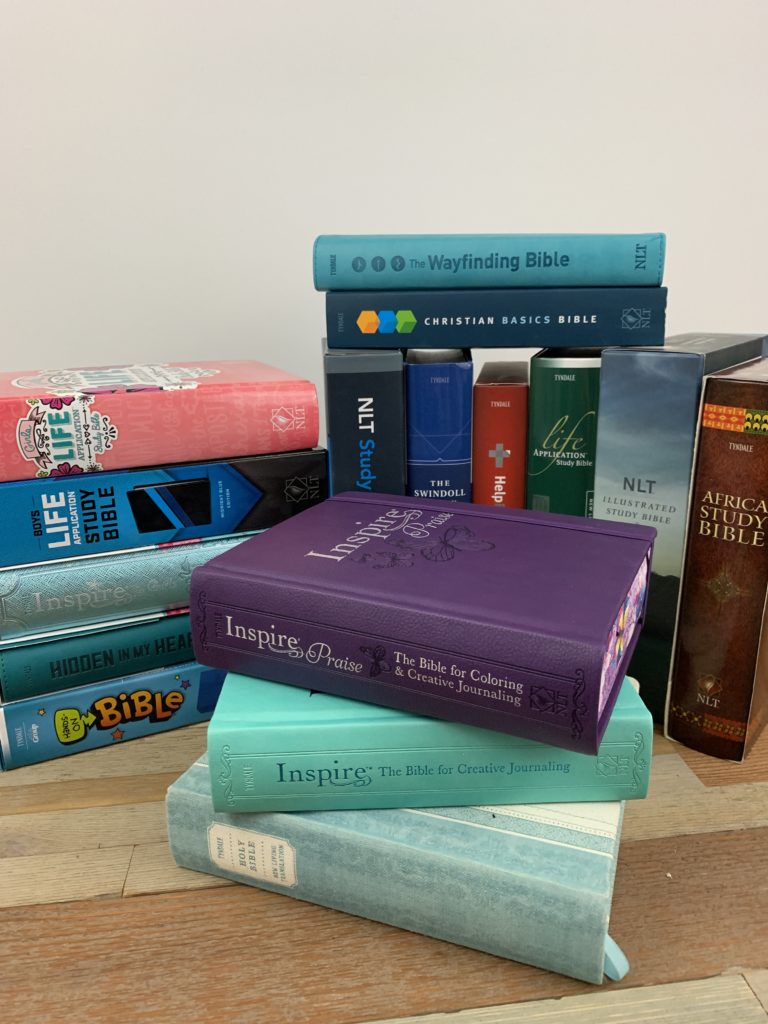
Looking for some examples of differences in text Bibles? Click on the images to learn more about each one.

How To Translate a Bible

I will never forget the meeting at the airport hotel in the late 1980s. With the encouragement and blessing of Kenneth Taylor ’38, Litt.D. ’65, I and five other biblical scholars were there to discuss a revision of The Living Bible. Ken had produced this work, a paraphrase of the American Standard Version, specifically to communicate biblical truth to his children. We all know what happened. The Living Bible became much more than an aid for promoting spiritual growth in one family in Wheaton, Illinois. With Ken’s determination to cast the Scriptures in language and forms that people actually speak and understand, it broke down barriers between the sacred text and modern readers.

Ken Taylor was sharply criticized, and in many circles The Living Bible was viewed as a sinister project that not only represented idiosyncratic interpretations of one individual, but with its loose renderings of treasured texts also undermined the authority of the Scriptures. For his part, Ken felt that scholars often were more interested in preserving formal equivalence in translation than actually communicating the Scripture’s life-giving message. Nevertheless, Ken authorized the leaders in his company, Tyndale House Publishers, to engage evangelical biblical scholars to address the problems the critics had raised.

We spent that first weekend asking each other what it was about The Living Bible that gripped the imagination of millions of people in the English-speaking world, and exploring how that quality could be preserved even as we addressed the problems that many—especially biblical scholars—had with Ken Taylor’s work. The decision was made to appoint a Bible Translation Committee (BTC) that included six biblical scholars (general reviewers) to lead the project. In addition, three scholars would assist in drafting a base translation of one or more books for the BTC to discuss and approve. Unlike the original Living Bible, which was a paraphrase, this New Living Translation (NLT) would be a true translation, based off the original Hebrew and Greek. Since all translation involves interpretation, however, sometimes we on the committee would disagree on how a passage was rendered; but after a discussion a vote would be called, and in the end the majority ruled.

Although the translation philosophy underlying the NLT is generally classified as a dynamic equivalence theory, for us the question was more practical: If this biblical book were written today, how would the author have written it? The question applies both to vocabulary and syntax. Formal translations (“word for word”) are not necessarily more accurate, because few words in any source language have the same semantic range as the words in the target language. Jesus’ quotation of Deuteronomy 6:5 demonstrates that the Savior himself had adopted NLT’s translation theory:

Deuteronomy 6:5Luke 10:27
You must love the LORD your God with all your heart (leb), all your soul (nephesh), and all your strength (me’od). You must love the LORD your God with all your heart (kardia), all your soul (psyche),
all your strength (ischus), and all your mind (dianoia)

How could Jesus render a statement that had three critical elements in the Hebrew original with four Greek words? The answer is obvious when we realize that Hebrew leb cannot be fully represented with a single word “heart.” In almost half the occurrences in the Old Testament, the word represents primarily the seat of thought, rather than the seat of the will or emotion. Therefore to represent it with only one word in the target language is to skew the meaning, which apparently led Jesus to add “with all your mind” at the end. Here a word for word translation would have been lexically precise, but inaccurate in meaning.

The first edition of the NLT was formally celebrated in 1996, and a thoroughly reworked version was published in 2004. More than 27 million copies of the NLT have been sold over the past sixteen years. As a participant in this project almost from the beginning, I must say there is no greater honor than to be involved in the communication of the Word of God, and there is no greater blessing than to hear the stories of those for whom the Scriptures have come to life, and actually for whom the Scriptures have brought them to new life in Christ Jesus.

This article was originally published in the winter 2013 issue of Wheaton magazine, a publication of Wheaton College (IL). www.wheaton.edu/magazine