Real Freedom Found Behind Real Bars

Women in Prison Unlock Hope and Healing with The Life Recovery Bible

By Stephen Arterburn, Editor, The Life Recovery Bible

I was raised in Bryan, Texas, so I did not think it was unusual to be opening a letter from a woman who lived in Brazos County near Bryan. What follows was anything but usual. She wrote:

“I am filled with joy to inform you that your Life Recovery Bible has changed about twenty lives filled with different kinds of addiction in my community. I regret to inform you that the women (including me) are all locked up in The Brazos County Detention Center in Bryan, Texas.

I was incarcerated on the 29th of March, 2018

Twenty-five years ago, I held the first Life Recovery Bible in my hands and quickly passed it on to a woman who was addicted to crack and headed for prison. She went home and, rather than allow her Life Recovery Bible to take on the role of most Bibles as Chief Dust Collector, she actually opened it up and started reading it. Through her drug addicted, half on and half off, cracked brain, she discovered that God could help her out of her addiction and that the path involved 12 steps based on and found within that Bible. The impact was so great and the transformation so radical that she was not incarcerated, and within six months she was helping other young women in their recovery.
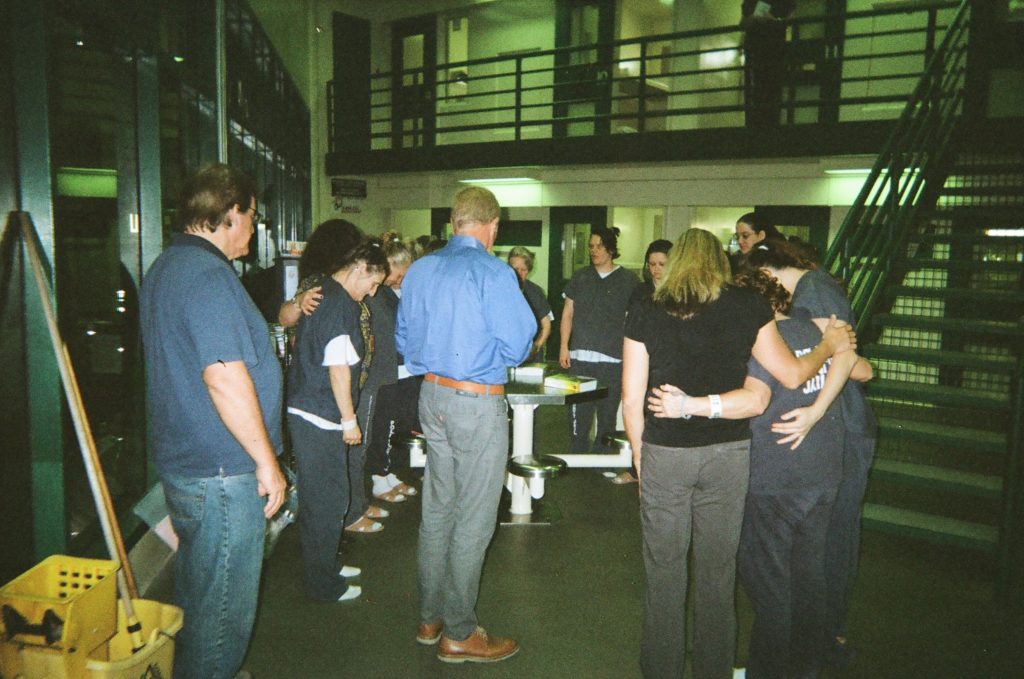
Twenty years later I found myself in the midst of some very normal everyday housewives who just happened to be in the Polk County Florida prison after being arrested for making, selling, or being in possession of methamphetamines. These meth addicts, in a weak moment of desperation or a curious moment of living on the edge, decided to try using meth, just once, and never again. But that one time became a lifetime of using and finding ways to make stuff or sell stuff, including themselves, to be able to feed the addiction that seemed to develop instantly with that first hit.

I was invited to join these women, who looked and talked like anything but a hardened criminal, in their daily Life Recovery Bible study. This Bible was a reward for those entering the drug rehab program offered by a group of women who were once addicted and also had been incarcerated in the same prison. They loved this Bible because it was unlike anything they had ever experienced. Up until then, the Bible was just something that was old, difficult to understand, and even more difficult to apply to your life in any meaningful way. But this Bible is different, and there is a reason why.

When Dr. Dave Stoop and I developed this Bible we included many helpful features not found in other Bibles, including devotionals for each of the 12 Steps, The Serenity Prayer, and Recovery Principles. While those provide deep insights and spiritual inspiration, they are not the feature that make The Life Recovery Bible so amazing to anyone in recovery. The most valuable and unique feature is the study notes found at the bottom of each page. Why? Because they are written by recovering Bible scholars who teach at Universities and Seminaries all over the world. They not only have PhDs in Theology, but every one of them has had a problem that involved them in 12 Step Recovery. Rather than a study note having to do with some remote or abstract theological construct, the note speaks to the struggle for freedom within the heart of anyone imprisoned by the power of addiction, incarcerated or not.
The Life Recovery Bible does not bring the Bible into the recovery process. It brings the recovery process back to the Bible where it began. Bill W. and Dr. Bob worked together to develop the 12 Steps of Alcoholics Anonymous after they had found victory over an illness that rarely spared the life of anyone who contracted it. Both men had been members of the Oxford Group, which had purported 4 Absolute Truths: Absolute Honesty, Absolute Purity, Absolute Un-selfishness, and Absolute Love, which were all based in Scripture. In the transcript from the last talk ever given by Dr. Bob, he tells where he and Bill found the 12 Steps. He said “We got them from the Good Book. Especially the Book of James, the Sermon on the Mount and 1 Corinthians 13, the love chapter.” So The Life Recovery Bible brings the 12 Steps full circle and identifies the true higher power of the 12 Steps as the God of the Old and New Testaments.

Twenty-five years ago, I couldn’t have imagined the impact The Life Recovery Bible would have on those around me both in Brazos County and many thousands of miles away from where I grew up. God has blessed this Bible and the people who read it, teach it, and share it, and for that I am thankful. He alone is the true source of recovery and the author of transformation—always has been, always will be.


Life Recovery Bible
Look Inside the Life Recovery Bible

Immersed as Family

I read an interesting article a few months ago that poses the question: As Christians, do we put our needs and wants for our families above our sacrificial living to God? It is an intriguing question and caused me to pause, pray, and reflect on my priorities.

As I continued to think about that question, I was reminded that as parents, mentors, teachers, and anyone who has influence in a child’s life, we are instructed to train the children in our lives in the truth of Scripture and to help them understand what it means to live a life fully surrendered to God. We do this when we live sacrificially. This is emphasized throughout Scripture, but check out Deuteronomy 6, Proverbs 22, and 2 Timothy 3 as a start.

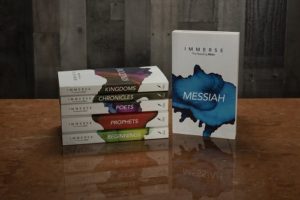
In our house, we want reading the Bible together to be a priority, but it can be difficult with varied reading levels, maturity, and understanding. Immerse: The Bible Reading Experience offers us many options to overcome these hurdles, like audio of the day’s readings, videos to help us have an overview of what’s going on, and the family reading guides.

The family reading guides are resources designed to assist parents, guardians, and other family leaders in guiding their families through the transformative Immerse experience. Essentially, it’s an abridged version of each Immerse volume. So, it’s an excellent way for young readers in your family to participate in the Immerse experience without becoming overwhelmed.

The readings are shorter and always drawn from within a single day’s reading when following the volume’s reading plan. This helps everyone in the family to stay on the same reading path. Each daily Bible reading in the family guide is introduced by a short paragraph to orient young readers to what they are about to read. This paragraph will also help to connect the individual daily Scripture passages to the big story revealed in the whole Bible.

The readings end with a feature called Talking Together, created especially for young readers. These provide reflective statements and questions to help them think more deeply about the Scriptures they have read. (Talking Together is also useful for guiding your family discussions.)

The readings in the family guide are intended primarily for children in grades 4 to 8, but they can be adapted to help younger children too. High schoolers and college students can easily read from the full volumes. In fact, many in this age group have found this experience life-changing. (Watch the videos of a high school class that read Immerse: Messiah and hear from students in a University New Testament class.)

Sometimes the best way to get everyone on the same page is to read something out loud together. If your family enjoys reading aloud together on a regular basis, that may be the most natural way for you to use the family reading guide.

For families that haven’t tried this, you may want to experiment. Begin each daily reading with the introductory paragraph to give context, followed immediately by the daily Scripture passage. Then the Talking Together feature can help you lead a family discussion. And don’t forget about the audio and video resources that are available at ImmerseBible.com.

This doesn’t have to be just your nuclear family. Why not get extended family involved so more generations can be gaining insight and wisdom from each other. The family guides are also a great way for full congregations to be immersed together in God’s Word. Bethesda Community Church in Texas is a multigenerational, multiethnic, multilingual congregation. Watch this video and hear how using Immerse has brought not only unity but community to this thriving family of God.

Learn more about our partners at the Institute for Bible Reading

Learn more about Immerse: The Bible Reading Experience

Laziness and Hard work

Taken from the Illustrated Study Bible

“I walked by the field of a lazy person, the vineyard of one with no common sense. I saw that it was overgrown with nettles. It was covered with weeds and its walls were broken down. Then, as I looked and thought about it, I learned this lesson: A little extra sleep, a little more slumber, a little folding of the hands to rest—then poverty will pounce on you like a bandit; scarcity will attack you like an armed robber.” Proverbs 24:30-34, NLT

 Proverbs pokes fun at lazy people. They are sarcastically compared to a door that swings back and forth (26:14), and lampooned for their empty excuses (e.g., 22:13). Proverbs equates lazy people with the foolish; their lack of productivity leads to poverty and death (6:6‑10; 10:26; 15:19; 18:9; 19:15, 24; 20:4; 21:25; 22:13; 24:30‑34; 26:13‑16). By contrast, diligent people are seen as wise; their activities lead to wealth and life (10:4‑6; 12:11; 13:4; 14:4; 20:13; 31:10‑27).

The theme of laziness arises in the contrast between the two women, Wisdom and Folly (ch 9). The virtuous woman of ch 31 reflects the industriousness of Wisdom (31:16‑18).

While it is true that ultimate meaning and fulfillment do not come from hard work (Eccl 2:17‑26), the lazy are still condemned (Eccl 4:5‑6). God created Adam and Eve and put them in the Garden to tend it, not just to sit back and enjoy it (Gen 2:15). Proverbs and the whole of Scripture support the truth that work is not a result of the Fall but rather is a dignified and important part of creation.

Illustrated Study Bible Book of Acts
Look inside the Illustrated Study Bible

The Book of James

The Book of James is a short, but powerful book. Learn a bit more from The Swindoll Study Bible about who wrote the book, the original audience, and why it’s important.

“So you see, faith by itself isn’t enough. Unless it produces good deeds, it is dead and useless.”

James 2:17, NLT

Taken from The Swindoll Study Bible

Who Wrote the Book?
While he does not specifically identify himself as Jesus’ brother in the letter, the author of the book of James is widely thought to be the James who was the brother of our Lord. It appears that James was not a follower of Jesus during the Savior’s time on earth (Mark 3:21-35), but eventually he became an apostle after seeing the Lord post-Resurrection (1 Cor. 15:7; Gal. 1:19). Upon witnessing the Lord in His resurrected body, James came to believe that Jesus was the Messiah and later became one of the leaders of the church in Jerusalem. Peter singled him out among the other Christians there after Peter’s own miraculous release from prison (Acts 12:17). In addition, James made the deciding speech at the Jerusalem Council (Acts 15:13-21), and Paul called him one of the “pillars of the church” (Gal. 2:9).

Where Are We?
As one of the chief leaders in the church at Jerusalem, James wrote from that city prior to the meeting of the Jerusalem Council, the account of which is recorded in Acts 15. At that council, James, along with Peter and Paul, affirmed the decision to take the gospel message to the Gentiles. This council met in ad 49, meaning that James likely wrote his letter between ad 45 and ad 49. Such a significant event as the Jerusalem Council would have warranted comment from James, especially because he was writing to a Jewish-Christian audience. But in the letter James makes no mention of Gentile Christians at all, so an early date for the letter seems most likely.

Why Is James So Important?
The book of James looks a bit like the Old Testament book of Proverbs dressed up in New Testament clothes. Its consistent focus on practical action in the life of faith is reminiscent of the Wisdom Literature of the Old Testament in the way that it encourages God’s people to act like God’s people. The pages of James are filled with direct commands, and he makes no excuses for those who do not walk their talk. In the mind of this early church leader, Christians evidence their faith by walking in certain ways and not others. According to James, faith must produce real life change (Jas. 2:17).

SwindollStudyBible-John
Look Inside The Swindoll Study Bible

Jesus Is Coming

“I, Jesus, have sent my angel to give you this message for the churches. I am both the source of David and the heir to his throne. I am the bright morning star.” Revelation 22:16, NLT

Taken from the Wayfinding Bible

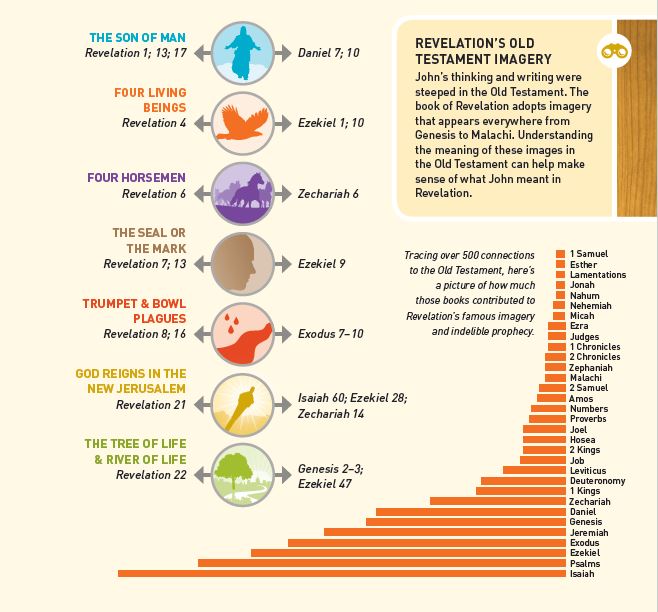
In Revelation 22:16, Jesus clearly identifies himself and ties the past to the future. Long ago God promised his people that a star would come from Jacob (Numbers 24:17). To Isaiah he promised that a shoot would come from “the stump of David’s family” (Isaiah 11:1). When Jesus walked the earth, people knew he was the son of David (Matthew 22:42). What was promised so many centuries before has come true. In one statement, Jesus unites thousands of years of prophecies and history.

John’s thinking and writing were steeped in the Old Testament. The book of Revelation adopts imagery that appears everywhere from Genesis to Malachi. Understanding the meaning of these images in the Old Testament can help make sense of what John meant in Revelation. Check out the graphic below from the Wayfinding Bible to see the connection of Revelation imagery to the Old Testament.

Wayfinding Bible
Look Inside the
Wayfinding Bible

Run to Win

“Don’t you realize that in a race everyone runs, but only one person gets the prize? So run to win!” 1 Corinthians 9:24, NLT

Devotional from the Beyond Suffering Bible

Using the metaphor of running a race, the apostle Paul instructed the church in Corinth to be disciplined in the way they live their lives as believers. They
were to run with purpose, knowing their reward would be imperishable and eternal.

In his sovereignty, God has given each one of us a race to run. For Paul, that meant purposefully living in a way that would help bring the Good News to as many people as possible. However, that race will look different for each person. For example, Brandon, a young man with Angelman Syndrome, shows great perseverance in running his unique race. Because of his disability, Brandon experiences anxiety in social settings, which makes each step of going from home to school seem like running a marathon. Going out the front door, walking to meet the school bus, getting off the bus in a parking lot filled with many students, going through the school entrance, and finally walking into the classroom is the race Brandon runs each morning with perseverance.

For a person with a disability, the race may entail going to many, many breathing treatments. For parents of children with special needs, the race may include countless doctor’s appointments and therapy sessions. The daily race for people with physical impairments can mean a several-hours-long morning routine of getting dressed and preparing for the day ahead.

We do not run our race in vain. Christ is present with us, and we are surrounded by a “huge crowd of witnesses” (Heb 12:1). In the body of Christ
we are called to cheer each other on. We run the race with Brandon and the many others involved in managing disabilities who may grow weary and lose hope. We celebrate each victory, no matter how small, as we run with endurance the unique race set before us, keeping our eyes on Jesus, who “because of the joy awaiting him . . . endured the cross” (Heb 12:2).


Take a look inside the Beyond Suffering Bible

BeyondSuffering Interior2C singlePages crop

Is God Okay with Celebrations?

“Then King David was told, ‘The Lord has blessed Obed-edom’s household and everything he has because of the Ark of God.’ So David went there and brought the Ark of God from the house of Obed-edom to the City of David with a great celebration. After the men who were carrying the Ark of the Lord had gone six steps, David sacrificed a bull and a fattened calf. And David danced before the Lord with all his might, wearing a priestly garment. So David and all the people of Israel brought up the Ark of the Lord with shouts of joy and the blowing of rams’ horns.” 2 Samuel 6:12-15, NLT.

Sometimes when we think of God, we think only of reverence, justice, and even seriousness. And God is all those things, but God is also the true source of joy. He loves when his children come to him in praise and thanksgiving. In fact, celebrations were built into the law that God gave to the people of Israel.

Read this article from the NLT Study Bible describing David’s celebration in 2 Samuel 6 when the Ark of the Covenant was returned to Jerusalem.

It took two attempts for David to bring the Ark of the Covenant to Jerusalem (6:1-11, 12-23). In the second attempt, there was a notable change in David’s mode of celebrating. Three Hebrew terms for “danced/dancing” are found in the account of the second procession of the ark (see also 1 Chr 15:25-29): karar (6:14, 16), pazaz (NLT, “leaping,” 6:16), and raqad (1 Chr 15:29, “skipping about”). All three words refer to vigorous physical expression beyond the meaning of the Hebrew term for “celebrate” (6:5). Thus, in the first procession, David celebrated; in the second procession he engaged in exultant dancing and extravagant merrymaking with intensified musical expression through the addition of shouting and trumpets.

Musical instruments played a significant role in Temple worship. In 1 Chr 25, David assigned various groups to the ministry of music. Many Psalms refer to playing musical instruments in praise and worship of God (see Ps 33:2-3; 57:8; 81:2; 92:1-3; 98:4-6). In Ps 149 and 150, dance and music are combined as a praise offering. Similarly, music and dancing were heard in the father’s house in the parable of the lost son (Luke 15:25), as the son’s return was truly a joyful occasion.

All these instances demonstrate that God welcomes exuberant expressions of joy and delight from those who worship and praise him (Isa 30:29; Jer 30:19; 31:13; Zeph 3:17; Eph 5:19; Col 3:16).

Take a Look Inside the NLT Study Bible:

NLTStudyBible Gospel of John

Prophecies about Christ

Note from the Christian Basics Bible

In chapters 53 and 61, two of Isaiah’s most famous chapters, Isaiah saw the coming Messiah with amazing clarity, about seven hundred years before he came.


Chapter 53 foresees the Messiah’s death—a death that would not only be a sacrifice but also a substitution—it is our griefs and sorrows he carried (53:4), our rebellion and sins he paid for (53:5-6), not his own. Through this death, people are healed (53:5)—brought into God’s wholeness (shalom). The prophecy also has many details about Christ’s final hours: how he was oppressed, was treated harshly, remained silent, and was buried in a rich man’s grave. But Isaiah saw that it would not all end in death; he anticipated Christ’s resurrection (53:10-11) and exaltation (53:12), which would enable him to “make it possible for many to be counted righteous” (53:11) because of the way that he “bore the sins of many” (53:12).


Chapter 61 foresees the Spirit-anointed nature of the Messiah’s work. Jesus quoted from this passage in the synagogue at the start of his ministry (Luke 4:18-19), declaring that “the Scripture you’ve just heard has been fulfilled this very day!” (Luke 4:21), thus making it clear that he saw himself as the Servant that Isaiah had prophesied.

Take a Look Inside:

Christian Basics Bible Sampler

How to Do a Word Study

The Bible wasn’t written in any modern day language, but it was written in every day languages of the times. For many of us ancient Greek and Hebrew can seem sacred or special, but for the people in biblical times it was what they spoke every day. Since most of us don’t speak either of those languages we rely on translations to help us read God’s Word in our own every day language. But it can be exciting to dig into the original language and gain a personal understanding of the words of the Bible.  Our Slimline Center Column Reference Bibles offer you just that opportunity. They include over 200 Hebrew and Greek word studies throughout the Bible text. These word studies give readers a glimpse into the inner workings of the New Living Translation and open a small window to the original languages of the Bible.


How to Do Word Studies with the Slimline Center Column Reference Bible

While reading through the Bible text, you will find at various places a superscript letter attached to the front of an English word. In the cross-reference column, there is a transliteration of the Hebrew or Greek word or phrase that underlies the translation at that point, along with the Strong’s number(s) in parentheses and the location of the next reference in that Hebrew or Greek word chain. If you follow the reference chain, eventually you will read through all of the marked instances of that word or group of words in the entire study Bible. Doing so is a good way to begin doing Hebrew and Greek word studies.

Another way to use the tool is to systematically study a particular word from those listed in an NLT Slimline Center Column Reference Bible. In these Bibles we have listed and defined all of the words that are included in the Hebrew and Greek word-study chains. The references in the chains are selective and do not represent all of the places where a Hebrew or Greek word occurs in the Bible; we chose a limited number of instances in order to show the variety of usage for a given term or group of terms. If you want to do a complete study of a biblical word, it would be a good idea to read most or all instances, which you can find with Strong’s Concordance or a similar tool.

You can take your study of Hebrew and Greek words further by obtaining a copy of Strong’s Exhaustive Concordance of the Bible. Dr. James Strong first published his exhaustive concordance of the King James Version in 1890, and the system he created for referring to every individual word in Hebrew and Greek by a number has been tremendously helpful for English readers who want to do word studies in the original languages. The Strong’s numbering system has become the de facto standard for English language word-study tools. There is a wide variety of other publications and software tools available with which you can take your study of any Hebrew or Greek term further.

The dictionary and index in an NLT Slimline Center Column Reference Bible is organized using the Strong’s numbering system, named for the system used in Strong’s Concordance. For any word you find while reading the text, you will simply have to use the Strong’s number to find the brief definition and full chain. Please note that there are separate numbers and lists for the Hebrew words in the OT and the Greek words in the NT.

If you follow the entire word chain, note each context in which the word occurs and how it has been translated. You will get a good feel for the range of uses that each word can have, and you will get a unique glimpse into the inner workings of the NLT.

Hebrew and Greek Word Studies

Because the Bible was originally written in ancient languages that are quite different from our own, the Hebrew and Greek words of the original text are often seen as strange and wonderful. Sometimes, Greek and Hebrew words are portrayed as though they are somehow a special or “divine” language containing more significant meaning than normal languages like English. In truth, biblical Greek and Hebrew are normal human languages, with words that are similar to the words of any language.

Words are complex animals. Consider, for example, the word animal in the previous sentence. In most contexts, that word conjures up images of wildlife. In this particular instance, however, it means something quite different. Words have a dynamic relationship to meaning, neither confined to a dictionary entry nor free to mean anything at all. Few readers whose mother tongue is English would have misunderstood the meaning of the sentence, “Words are complex animals,” but it could certainly cause confusion for a reader whose knowledge of English is minimal.

When confronted with a word from any foreign language, especially an ancient one like the Hebrew or Greek of the Bible, people can misunderstand if they aren’t careful to study the word in a way that makes sense with how language is used. Some common mistakes that are made in studying words in the biblical languages include the following:

  • Assuming a word means more than it does. When faced with the range of meanings a given word can have, sometimes interpreters are tempted to think that every instance of that word contains all of the possible meanings. While it is true that sometimes a writer will purposefully use a word to mean more than one thing, it is not common. Normally, a word has one meaning in a given context. For instance, the Hebrew zera‘ (2233) can mean “seed” or “offspring,” but only rarely would both meanings apply to one specific use of the word. An important part of original-language Bible study is to discern which meaning a term probably has in a given context.
  • Understanding words by their roots. Many words share common roots, but this does not necessarily mean their meanings are related. The meaning of a word is related to how it is used in the language, not where it came from. The Greek ekkle¯sia (1577) comes from two words that mean “to call” (kale¯o) and “out of” (ek). This does not mean that ekkle¯sia means “called out of,” any more than the English word goodbye means “it’s good that you’re leaving.” It is important to understand the meaning of the word from its usage rather than its roots.
  • Confusing synonyms. Many words share common meanings, or at least have very similar meanings in specific contexts. An example in English is “choose” and “select.” In many cases, the difference is negligible, and a writer could choose between them without changing the meaning at all. But in some contexts the selection is meaningful. In this tool, we sometimes string synonyms together in a single chain, but that does not mean they are completely interchangeable. Each word must be considered on its own terms in each context.
  • Failing to appreciate the difference between words and concepts. Words are only tools to communicate meaning, so any one word will never be sufficient to get a complete picture of an important concept. If you want to understand the concept of “truth” in the Bible, Hebrew ’emeth (0571) is a good place to start, but to limit study to a word alone will miss important components of the biblical picture of truth. Each concept must be studied as whole, going beyond the study of words.

Check out our Slimeline Center Column Reference Bibles

A Chat With Chuck Swindoll

Imagine studying the Bible with pastor Chuck Swindoll sitting beside you – sharing his warm personal insights, gleaning wisdom from his over 50 years of ministry and being inspired by his passion for God’s Word.  That is why he created the Swindoll Study Bible. Since he can’t physically be in all of our living rooms, he still wanted a way to encourage each of us to walk closer with Jesus. Hear about it his own words:

Why Did You Want to Do a Study Bible?

How Is Your Study Bible Different?

Learn more about the Swindoll Study Bible